Major Brentford Regeneration Project Receives Planning Approval
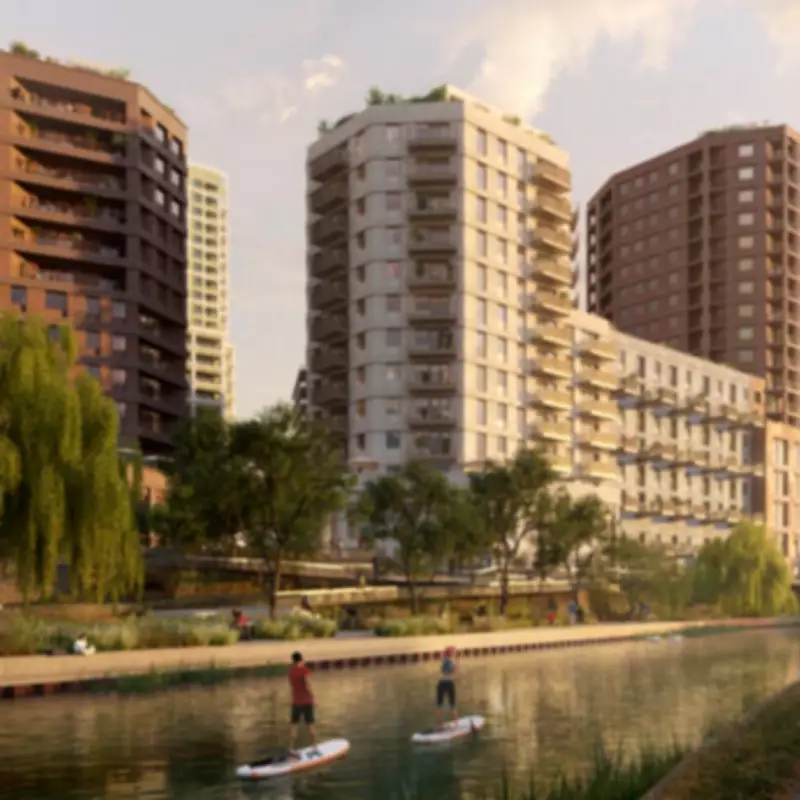
Hounslow councillors have granted planning permission for a transformative redevelopment of the former GlaxoSmithKline global headquarters in Brentford, paving the way for the creation of a comprehensive '15-minute neighbourhood' featuring over 1,500 new homes. The decision, made on Thursday, March 5, 2026, represents one of West London's most significant brownfield regeneration projects in recent years.
Comprehensive Housing Delivery Strategy
The approved scheme will deliver a total of 1,522 residential units across multiple phases, with the initial phase focusing on 761 homes distributed across five distinct tower blocks. The development's architectural centerpiece will be a 26-storey landmark tower containing 239 flats, making it the tallest structure on the site. This will be complemented by a 23-storey tower, a 17-storey block, and two 12-storey buildings, creating a varied skyline along the Great West Road corridor.
The housing mix for phase one has been carefully calibrated to address diverse needs, comprising 225 one-bedroom flats, 379 two-bedroom flats, 149 three-bedroom flats, and 8 four-bedroom flats. Of these initial 761 homes, 612 units will be sold on the private market, while 149 will be allocated to various affordable housing categories. Specifically, 116 homes will be available for social rent, with an additional 33 marketed for 'intermediate' rent—a form of affordable housing positioned between social and market rates.
Specialized Accommodation and Community Infrastructure
Beyond conventional residential units, the development incorporates specialized accommodation blocks designed to serve distinct demographic groups. Two interconnected buildings reaching 24 and 8 storeys will provide student housing for 506 individuals, featuring 96 studio apartments and 410 cluster rooms with shared communal facilities. Additionally, a 21-storey co-living block will offer 296 en-suite rooms with shared kitchen and living spaces, catering to young professionals and others seeking community-oriented living arrangements.
The scheme's community infrastructure represents a cornerstone of the '15-minute neighbourhood' concept, with plans for up to 28,611 square meters of flexible employment and educational floorspace expected to support between 455 and 635 full-time jobs. Commercial elements will include retail outlets, cafes, a micro-brewery, cinema facilities, and fitness centers, while essential services will be provided through a new NHS GP surgery and a 62-place nursery facility.
Environmental and Public Realm Enhancements
Environmental sustainability forms a central pillar of the development strategy, with planners committing to a net increase of 50 trees and achieving a 75 percent net gain in habitat areas. The scheme will dedicate over 3,700 square meters to children's play spaces and create 1.49 hectares of new public realm across five character areas, including an arrival square, main plaza, and pedestrianized zones designed to encourage community interaction.
A 'car-lite' transportation approach significantly limits vehicle parking to just 47 spaces initially, with potential expansion to a maximum of 92 spaces primarily reserved for blue badge holders. This strategy is balanced by extensive cycling infrastructure providing 1,878 long-stay and 143 short-stay bicycle parking spaces, encouraging sustainable mobility patterns aligned with London's environmental objectives.
Heritage Considerations and Political Support
The development faced scrutiny from Historic England, which expressed concerns about potential impacts on nearby heritage assets including Kew Gardens, Boston Manor, and Osterley House and Parkland. The organization argued that the proposed tall buildings could cause harm to these protected sites, though planning officers ultimately concluded that the substantial public benefits—particularly the delivery of much-needed housing—outweighed these heritage concerns.
Political support for the project proved nearly unanimous during the committee vote, with all councillors present endorsing the plans except Conservative Group Leader Councillor Peter Thompson. The scheme now proceeds to the Mayor of London and Secretary of State for Housing for final approval, required due to the project's scale and filed objections during the consultation process.
This ambitious regeneration project represents a significant step toward addressing London's housing shortage while implementing innovative urban design principles that prioritize community connectivity, environmental sustainability, and comprehensive neighborhood amenities.