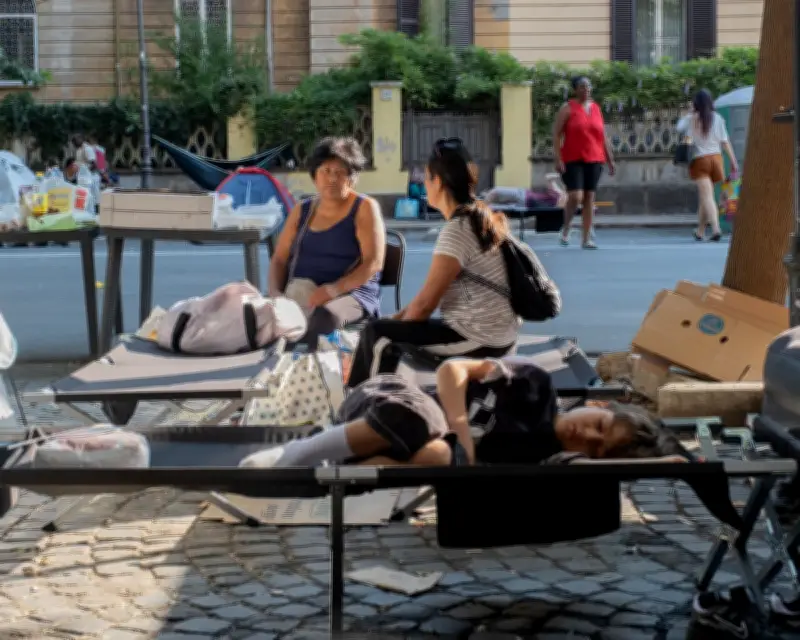
More than 200 people, including elderly and ill residents, are sleeping in tents outside Rome's Spin Time Labs building in extreme heat after eviction, as city officials scramble to find alternative housing. The former occupants were forced out on 29 July following a minor fire, and a last-ditch council offer to purchase the property was rejected by the private owner, leaving the future of the social assistance hub uncertain.
Eviction and Immediate Aftermath
The approximately 400 residents of Spin Time Labs, a 10-floor building in Rome's Esquilino district occupied since 2013, were evacuated after a small fire that was quickly extinguished by residents. Police locked the building for safety checks, and it was later placed under two judicial seizure orders: one tied to the owner's long-running legal battle to regain possession, the other to the fire.
While some evictees found shelter with friends or family, more than 200 have been camping outside the building, including a child who was hospitalized this week with breathing difficulties. The interior ministry spokesperson confirmed the owner had taken repossession "in accordance with the law," ending any chance of return.

Failed Negotiations and Political Backlash
Rome's leftwing council, supported by Catholic charity Caritas, attempted to buy the property, but the owner refused. Mayor Roberto Gualtieri told LA7's In Onda that the response was an "irrevocable no," and he felt "irritated" by the decision, suspecting it was predetermined. The owner cited unspecified legal weaknesses in the proposal.
The eviction has reignited political debate over squatted buildings, which Prime Minister Giorgia Meloni's government views as dens for criminality. Critics point out that the neofascist group CasaPound has occupied a state-owned building in the same neighborhood for over 20 years without similar crackdowns, raising questions about selective enforcement.
Impact on Community and Residents
Spin Time had become a vital social and cultural hub over the past decade, offering a food bank, restaurant, and co-working space. Gualtieri described it as "the mirror of a failure of Italy's Second Republic, which stripped away a pillar of welfare." The initiative was a lifeline for hundreds, including Marco Perilli, an Italian construction worker who became homeless after a divorce and was one of the first residents.
As of Friday, people remained camped outside. Perilli vowed to continue resisting: "We are trying to understand how things will proceed but we resist and will continue to resist. The owner refusing the offer means Spin Time is over, but for us it's not over – we will find another space."
Ongoing Housing Crisis
The standoff highlights Rome's broader housing challenges, with authorities struggling to accommodate vulnerable populations amid a government crackdown on squats. The city council is now seeking alternative solutions, but no concrete plan has been announced, leaving hundreds in limbo during a summer heatwave.