Inside London's 10 Most Famous Council Estates: A Visual Journey
By Lynn Rusk, Reporter, LondonWorld
Published 24th March 2024, 06:00 GMT
Updated 23rd January 2026, 15:19 GMT

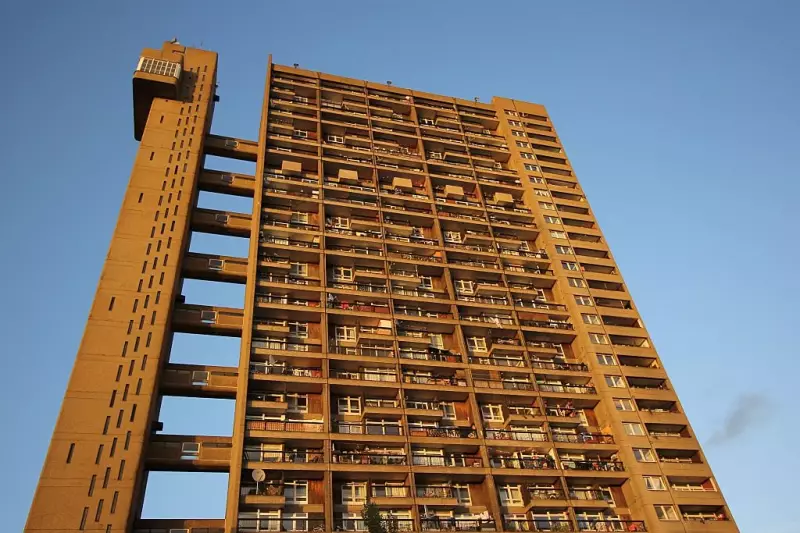
From the striking modernist lines of the Trellick Tower to the historic charm of the Boundary Estate, we embark on a visual exploration of some of London's most renowned council estates. These developments are not merely collections of buildings; they represent pivotal chapters in the city's social and architectural narrative, providing homes for generations of Londoners.
The Origins of Council Housing in the UK
Council housing first emerged in the United Kingdom following the landmark Housing of the Working Classes Act of 1980. Historically, this form of public housing has been rented to households unable to afford private sector rents or purchase their own homes. The term council housing itself derives from the crucial management role played by district and borough councils in administering these properties.
Pioneering Estates: The Early 20th Century
The very first council estate constructed in London was the Boundary Street estate, situated on the border of Shoreditch and Bethnal Green in east London. This pioneering project was developed from a notorious slum area known as the Old Nichol, infamous for its appalling living conditions and severe poverty. The estate was formally opened by the Prince of Wales in the year 1900, marking a significant step in urban improvement.
This was swiftly followed by the completion of the Millbank Estate in Westminster in 1902. Built on the site of the former, infamous Millbank prison, this estate provided affordable rented flats for an impressive 4,430 people, demonstrating the early scale of public housing ambition.
Legislative Catalysts and Expansion
A watershed moment arrived with the Housing and Town Planning Act of 1919. This legislation empowered councils by providing subsidies to construct houses in areas of high demand, fundamentally accelerating the growth of the council housing sector across the nation.
In 1921, work commenced on the colossal Becontree estate in Barking and Dagenham, east London. Developed by the London County Council, it was conceived as the world's largest council housing estate, intended as a reward for the families of soldiers who had served in the First World War.
Architectural Evolution Through the Decades
The post-war period saw significant shifts in design and scale. From the 1950s onwards, there was widespread construction of blocks of flats and three-or-four-storey maisonettes, alongside large developments of terraced housing. The 1960s and, to a lesser extent, the 1970s, witnessed the rise of many high-rise tower blocks, changing London's skyline. Flats and houses were also commonly integrated within mixed estates during this era.
The Modern Era: Right to Buy and Housing Associations
The landscape of social housing transformed dramatically after 1979 with the introduction of the Right to Buy legislation. This policy enabled council housing stock to be sold to private occupiers. Consequently, the development and management of new social housing has since been predominantly undertaken by housing associations, altering the traditional model of council-provided homes.
From the iconic silhouette of the Trellick Tower to the foundational Boundary Estate, this visual journey offers a unique perspective on the structures that have housed London's communities for over a century.
Gallery Highlights: London's Council Estate Icons
- Trellick Tower, North Kensington – A masterpiece of Brutalist architecture, captured by Getty Images.
- Alexandria and Ainsworth Estate, Camden – Another notable development, documented by Getty Images.
- The Boundary Estate, Shoreditch – The historic pioneer, viewable via Google imagery.
- Bevin Court, Finsbury – A further example of post-war design, accessible through Google.
This collection represents just a glimpse into the rich tapestry of London's council housing heritage, a testament to evolving social policy and architectural ambition.