Life Under the A13 Flyover: 21 Photos Exposing London's Homelessness Crisis
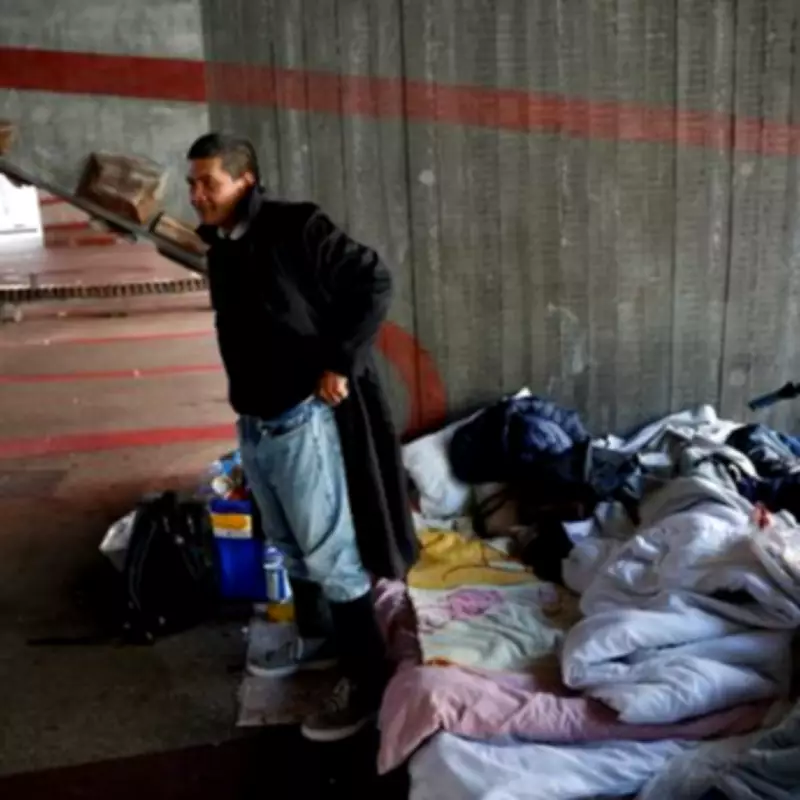
A concealed flyover in Newham has emerged as a powerful representation of London's recent surge in rough sleeping. When there is no available shelter, this is where individuals end up—under a flyover in Canning Town. Here, multitudes of London's rough sleeping community rest side-by-side in tents, on mattresses, and beneath piles of duvets. Rampant homelessness stands as a grim reality in this great city.
Exploring the Area Over a Year
In late 2024, we began investigating the area, visiting intermittently for approximately a year. We entered at various times of day across the months to understand how conditions evolve. Who is present? Who has departed? Some rough sleepers welcomed our presence, speaking openly and guiding us around. However, there was always a tense atmosphere, with the potential for situations to escalate abruptly.
Certain subjects felt too ashamed to reveal their full identities. Occasionally, circumstances became challenging. This is why photographer Facundo Arrizabalaga frequently hesitated with his camera, awaiting consent from interviewees for portraits. Our aim was to document the hardship of their living conditions without sentimentality, yet also to grant individuals their moment when they felt it was appropriate.

A Different Approach to Coverage
Discussions about rough sleeping often revolve around statistics, political statements, charity warnings, and pre-Christmas shelter interviews. While fundraising efforts are crucial—as we witnessed firsthand the essential nature of such funds—our methodology was distinct. We concentrated intensely on the rough sleepers themselves, their predicaments and personalities.
The restrained use of photography uncovered a warmth that can vanish when recording apprehensive and distrustful individuals on video. Existence beneath the flyover is arduous and multifaceted. There appears to be no singular truth; narratives and testimonies frequently conflict. Solutions are not packaged neatly. Self-destructive behaviors can be disheartening, while affection and animosity coexist.
Photographs as a Tool for Understanding
Facundo remarked, "But if we are to genuinely comprehend what something is like, enabling Londoners to contemplate a different world on their doorstep, I believe photos are the optimal solution we possess. I simply hope one day these images will be relics of an ugly history, and not the present reality we confront."
Life under the flyover is depicted through 21 compelling photographs:

- Two men sharing a fried chicken takeaway.
- A man displaying multiple stab wounds sustained while sleeping rough.
- The community gathering closely at night for enhanced safety.
- An improvised bedroom arranged neatly in a more orderly section of the encampment.
- Three friends conversing on a bench near the flyover.
- Dozens of individuals recounting their experiences under one of East London's busiest roads.
- Discarded mattresses, sheets, and duvets lining the footpath's edge.
- Rubbish accumulated in areas distant from sleeping quarters.
- A rough sleeper consuming his evening meal with London's skyline visible afar.
- The silhouette of a man smoking a cigarette on a cool evening.
- A man transporting his possessions in a box and four shopping bags.
- Tents aligned along the elevated section nearest the A13.
- Evidence of dramatically rising rough sleeping figures across London.
- A man residing in the camp's 'more orderly' segment.
- A man settling on a sofa with an artistic painting propped against the wall at his feet.
- Another man exhibiting stab injuries endured while sleeping rough in London.
- A man savoring a morning cigarette under the A13 flyover in Canning Town.
- A man concealing baked beans, butter, and another food container between the bridge's concrete pillars.
- An orange glow at dusk as traffic congestes the road above Canning Town's homeless encampment.
This visual documentation underscores the severe homelessness crisis gripping London, with the A13 flyover in Canning Town serving as a poignant focal point. The photographs not only highlight the dire circumstances but also the resilience and humanity of those affected, urging a deeper societal reflection and action.