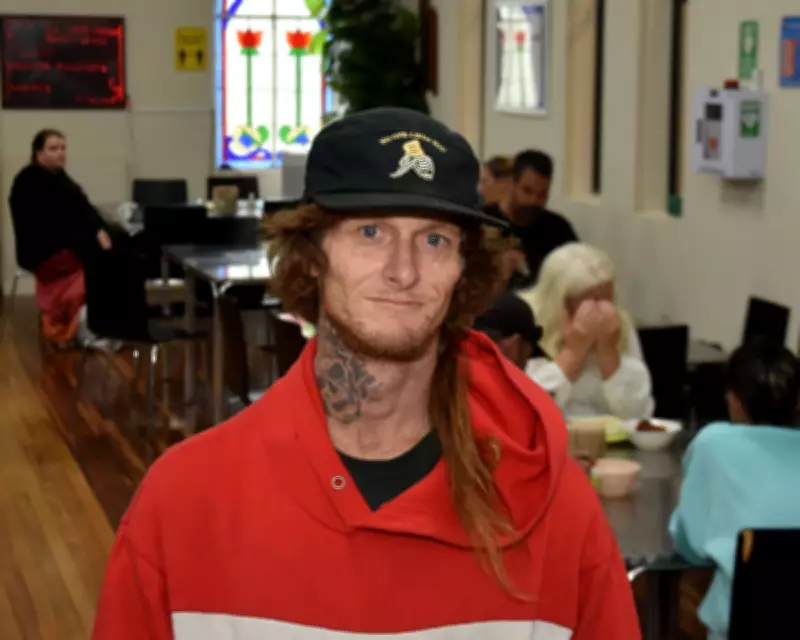
Luke Quinn, 36, dreams of the day he can reunite with his daughter. But first, he needs a stable home. Like many homeless residents on the Gold Coast, Quinn has been repeatedly moved along by local council rangers. He estimates this has happened up to eight times over six years of sleeping rough. To avoid losing his belongings, he now hides out of public view, moving frequently. Rangers often seize entire tents without warning, discarding them at the tip. 'There's no attempt at helping people better their situation. The light at the tunnel's end is not pointed out,' Quinn said.
Expansion of Enforcement-Led Homeless Policy
The Gold Coast, along with Brisbane and Moreton Bay, continues to expand its 'enforcement-led' homelessness policy. Other councils, such as Ipswich and Logan, maintain a welfare-based approach. For 18 months, the state government has refused to endorse a single strategy, but that may soon change. A recent Gold Coast council meeting revealed that the state's transport department approached the council to negotiate an agreement allowing rangers to patrol state-owned land and clear homeless encampments.
Advocates argue this move effectively endorses the hardline approach, depriving homeless individuals of one of their last refuges. Worse, it could trap the most vulnerable in a 'catch-22'—an endless cycle of punishment with no escape. St John's Crisis Centre general manager Dianne Kozik noted that her service often encouraged homeless clients to move to state land, such as the beachfront, to stay near support services without constant harassment. 'Where does the human go?' she asked.
State-Subsidised Compliance Model
Council staff informed councillors they were negotiating a '100% cost recovery model,' meaning the state would fully subsidise the expanded patrols. Matthew Werner, the council's public safety compliance manager, stressed that this was 'strictly a compliance conversation,' not about outreach or housing pathways. A spokesperson for the Department of Transport and Main Roads stated the negotiations followed 'a high volume of complaints relating to anti-social behaviour and illegal camping' and that homeless individuals would be offered support services.
However, homelessness academic Cameron Parsell from the University of Queensland challenged this claim. He said recent eligibility changes mean not every homeless person qualifies for housing assistance. The Liberal National government has tightened requirements, including a controversial three-strikes policy: tenants breached for bad behaviour three times in a year are banned from long-term social housing and state-funded temporary accommodation. By March, 84 public housing tenants had been evicted, 495 warned, and 34 banned for two years.
Systemic Failures and the 'Monstrous Catch-22'
Parsell studied a similar three-strikes policy under former Premier Campbell Newman. He found it led to evictions for the very reasons people needed help—drug use, mental illness, trauma, or chronic homelessness. The government predicted these problems but punished individuals instead of solving them. 'That is a real clear systems failure,' Parsell said.
People made homeless by this policy are now being evicted from parks. In February, 19 individuals were moved from Brisbane's Musgrave Park with the help of bobcats. Only nine were eligible for social housing; the rest were ineligible due to prior evictions, refusal of accommodation, or disengagement from services. Three had been previously evicted from social housing. Parsell described this as a 'paradox or loop,' with no alternative to endless move-on orders. 'They are ineligible to live indoors and banned from living outdoors. It's a monstrous catch-22, and it doesn't exist by accident.'
Kozik called on the government to provide clear alternatives for those moved on but ineligible for assistance. 'There needs to be an alternative, and I'd like to know what it is. They're not just numbers, they're humans, and they have a right to live somewhere.' The housing minister, Sam O'Connor, was contacted for comment. Currently, 58,927 people are on Queensland's social housing waiting list.