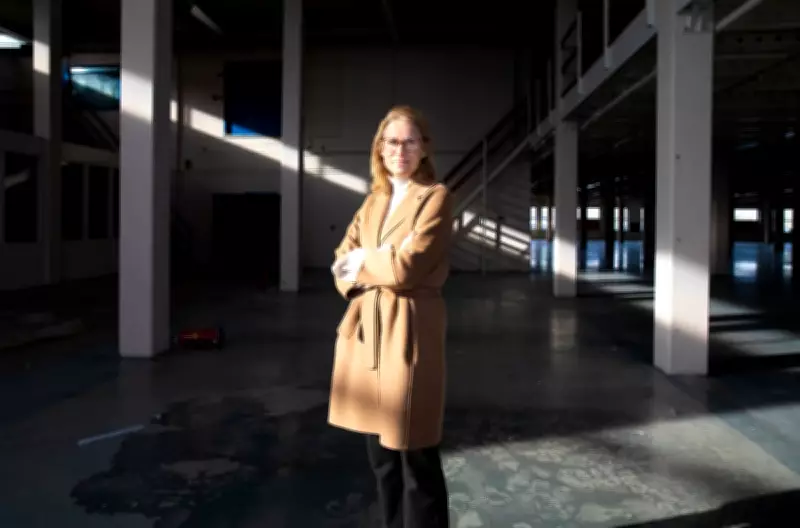
Dutch Housing Minister Adopts Military Tactics to Combat Severe Housing Shortage
Elanor Boekholt-O'Sullivan, the newly appointed housing minister of the Netherlands, is spearheading an ambitious plan to construct 100,000 homes each year. Her mission is to alleviate one of Europe's most critical housing crises, characterized by a staggering shortage of 400,000 homes. With average house prices nearing €500,000 and a growing population, the country faces urgent challenges that demand swift and decisive action.
From Military Leadership to Political Mission
Boekholt-O'Sullivan, a 50-year-old Irish-born former top military officer, brings a unique perspective to her role. Until recently, she served as the Netherlands' highest-ranking female military officer, known for redesigning flak jackets for women and thriving in a male-dominated environment. Now, as a member of the liberal-progressive D66 party leading the coalition government, she applies her defense experience to housing policy. "What I take from working in defence is that you keep your eye on the ball," she stated. "The homes have to be built: that is the primary need right now. Luxury takes time, and we do not have time."
The Scale of the Crisis in the Netherlands
The housing crisis in the Netherlands is particularly acute due to its dense population of 18 million people. Over the past decade, house prices have doubled nationwide, with increases of up to 130% in desirable areas. A new-build home now costs approximately 16 times the average salary, making homeownership increasingly unattainable. The rental market is equally strained, with waiting lists for social housing in major cities like Amsterdam extending up to 10 years. During the election campaign, Prime Minister Rob Jetten criticized other parties for a "lack of courage and ambition" and pledged to build 100,000 houses annually, create 200,000 new homes by splitting larger ones, and establish 10 new cities.

Simplifying Processes and Making Compromises
Boekholt-O'Sullivan emphasizes the need for pragmatism and efficiency in addressing the housing shortage. She advocates for simplifying the housebuilding process by standardizing national building quality requirements and eliminating costly local regulations and objection procedures. The coalition government aims to expedite planning permissions and set a target for two-thirds affordable housing, while still allowing private developers to manage risks. "If you want to achieve 100,000 homes being built every year, that will not work if you also want it to be perfect – so where are we prepared to water down our demands?" she questioned. Drawing from her military background, she added, "In the army, especially during missions and deployments, people are satisfied much more quickly. I make sure I can eat, sleep, shower, work. We need to be simple again."
Community Sacrifices and Environmental Considerations
The minister also calls for community-level compromises to support housing development. Dutch residents currently enjoy more space than the European average, with 2.1 rooms per person compared to 1.7. Boekholt-O'Sullivan suggests that modest reductions in living standards might be necessary. Additionally, she highlights the strain on the electricity grid, proposing that residents adjust habits, such as running appliances at off-peak times. "All of us, at least in the Netherlands, cannot go on living as we do now, under the assumption that everyone can buy new electrical appliances and switch them on all day, whenever they want," she explained. "The electricity grid cannot support that... We need to have an adult conversation, a practical approach."

Addressing Water Management and Future Challenges
Water management poses another significant hurdle, with 60% of the Netherlands at risk of flooding due to rising sea levels and extreme rainfall. Up to 10% of houses require foundation repairs, and land reclamation is being reconsidered. Boekholt-O'Sullivan advocates for adaptive building strategies that work with natural water flow rather than against it. During a visit to Rijnenburg, a future city planned on reclaimed land, she emphasized, "You need to build from a different philosophy. You don't tell the water where it needs to go: you let it go where it goes and you work around it, in an adaptive way."
Political Strategy and Future Outlook
Boekholt-O'Sullivan faces political challenges in implementing her policies, including recent measures to fine owners of empty homes and debates over migration's impact on housing. However, she remains committed to a pragmatic reset. "The sector doesn't know who you are; they need to introduce themselves," she noted. "I will do my best, but they will too, because I'm not impressed. For 20 years we've been stuck in a certain perspective. I come with a blank slate." Her approach aims to break through planning deadlocks and foster collaboration to tackle the housing crisis head-on.