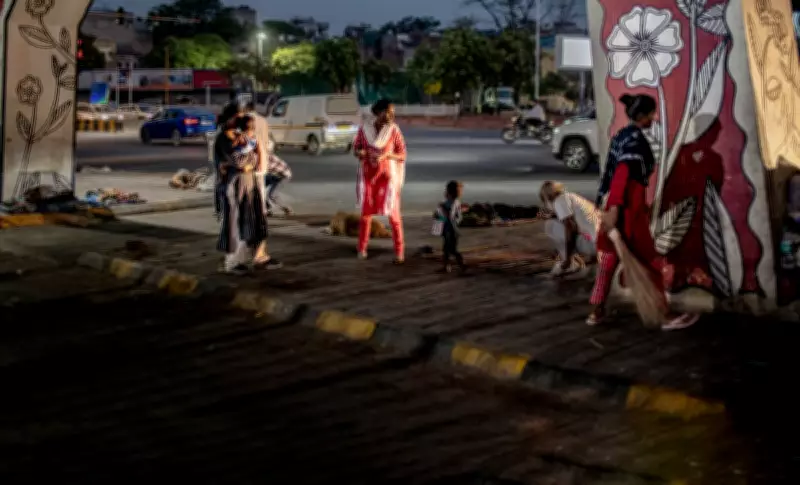
A homeless family in Delhi is enduring extreme heat with temperatures exceeding 45°C, illustrating the severe vulnerability of the urban poor to climate change. The family, living on a pavement, has no access to shade, water, or cooling facilities, making survival a daily battle.
Living Conditions in Scorching Heat
The family consists of parents and three children, all sleeping on a thin cloth under a makeshift tarpaulin. During the day, the heat becomes unbearable, with no nearby public cooling centers or water points. The father, a daily wage laborer, cannot work due to the heat, losing income needed for food and water.
Health Impacts
Children are particularly at risk, suffering from dehydration and heat rashes. The mother describes how they must constantly move to find any sliver of shade. Local health workers warn that prolonged exposure can lead to heatstroke and death, especially for the homeless.
Lack of Government Support
Despite government heat action plans, implementation remains weak. The family has not seen any outreach workers or been offered shelter. Experts argue that cities must prioritize vulnerable populations in climate adaptation strategies.
The story of this family is not unique. Across Delhi, thousands of homeless people face similar risks, underscoring the urgent need for inclusive urban planning and immediate relief measures.