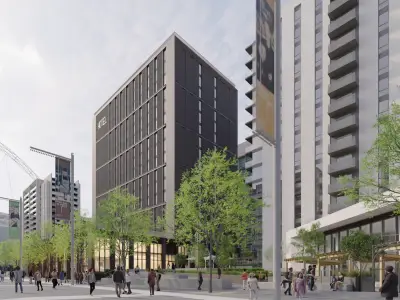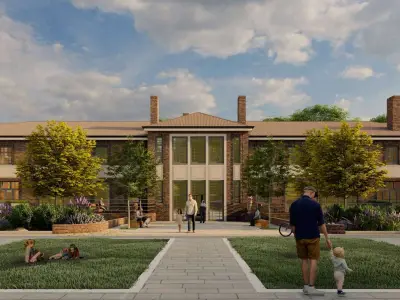
Angela Rayner's approval of a £500 million redevelopment of the Truman Brewery on Brick Lane has sparked anxiety among local traders, who fear the project's data centre will undermine the area's social fabric and economic vitality. The housing secretary's decision, issued via housing minister Matthew Pennycook last month, overrides Tower Hamlets Council's opposition and paves the way for a mixed-use development including a 5,200 square metre data centre, offices, and 44 homes—only 11 of which are designated as affordable.
Community Concerns Over Data Centre Impact
Staff at the renowned Beigel Bake, a bagel shop that has operated on Brick Lane since 1974, expressed concerns that the development could deter visitors from gathering in the neighbourhood. Elias Cohen, 33, who runs the shop with his father Amnon Cohen, 75, noted that the brewery has historically served as a vibrant social hub. "If that's going to take away from people getting together and being able to socialise, and enjoying the wonders of Brick Lane and what it has to offer, it's obviously going to be bad for the general street and the general area," he said.
Cohen added that the area needs "more fun, thrill, and entertainment" and warned that removing such a central gathering place would strip a significant part of East London's identity. "Whether it's a comedy show, whether it's people performing, or if you just talk, it always felt like there was something—there was a buzz going on. If you're going to take away from that, you're taking a big part away from East London," he said.

Historical Context and Gentrification Fears
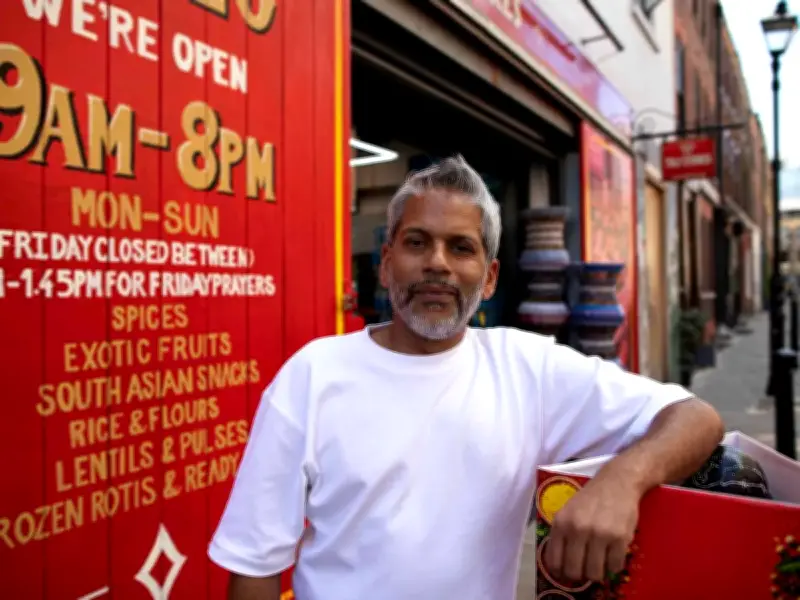
Jamal Khaliquie, 55, owner of Taj Stores, which recently moved from Brick Lane to nearby Princelet Street, has deep roots in the area. He recalls the 1970s and 1980s when Brick Lane was plagued by racist violence, including attacks by skinheads and their dogs. "I remember on Sundays there used to be a market that sold live dogs, they used to march down from Shoreditch, the market, and rampage through Brick Lane, breaking all the shopfronts—glass, windows, whatever they could find," he said. "We stayed here, our elder generation fought for it, against racism, and made it a safer and better place."
Khaliquie believes the data centre symbolises a broader wave of gentrification that threatens the area's unique character. "This data centre is only going to be the benefit for the family at Truman's, in a financial interest for them, nothing to give back to the community at all," he said. He argued that the site could have been used for housing or affordable small business units, which would generate employment and community benefits. "Housing would have been better, small units for local businesses, affordable—where they can open a small unit. That would generate work," he added.
"The future of Brick Lane, for people like us, is dark. For many people in the hierarchy, it's good for them. For the big boys, it works perfectly, for the small people like us and the local businesses in the area? It doesn't do no good for them," Khaliquie said.
Local Business Owners Demand Reconsideration
Mohammed Ali, 51, who runs the Graam Bangla restaurant on Brick Lane, described himself as a Labour supporter but urged Rayner to revisit the approval. "If she came to my restaurant, I'd say to her—'you have to look at what Labour stands for'. The reason Labour is going down the drain at the moment is people don't trust them, they're the same. What will benefit Tower Hamlets? What will be the benefit of that data centre? Will there be jobs?" he said.
Ali emphasised that a data centre would provide minimal local employment. "A data centre is all machines, it could just be one person. It doesn't benefit local people. If it was an office or houses, there would be people coming here, living here, and spending money here, it would generate wealth," he added.
Development Details and Official Justification
The approved plans include a data centre, office space, a cinema, new public spaces, and 44 homes, with only 11 designated as affordable. The data centre is intended to "provide faster internet connections for traders in the nearby City of London," according to Housing Minister Matthew Pennycook. Notably, there are already three existing data centres on Brick Lane near the Truman Brewery site.

Tower Hamlets Council had opposed the application, but Rayner's approval, issued on her behalf by Pennycook, has now cleared the way for construction. The decision has intensified debates about the balance between commercial development and preserving the cultural and social heritage of one of London's most iconic streets.