Australia's Ambitious Housing Target Falls Short on Affordability
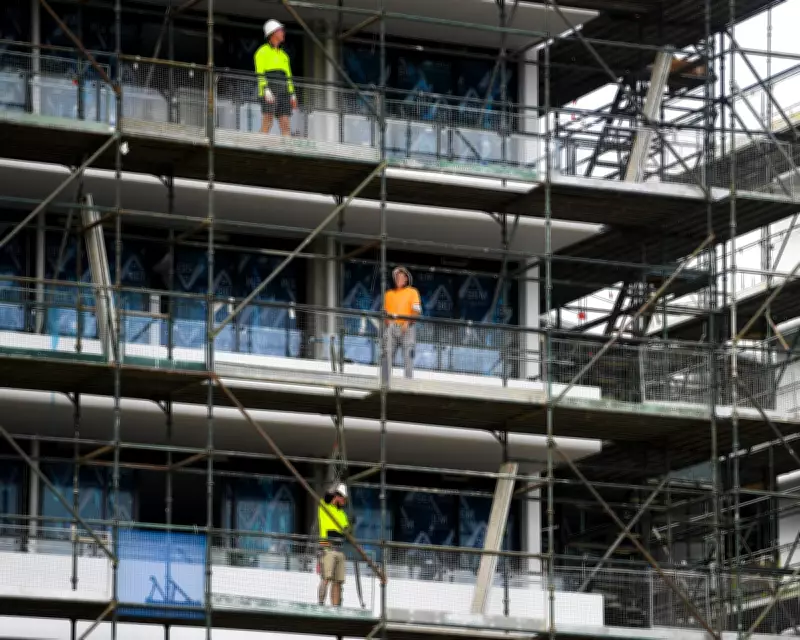
The Albanese government's ambitious plan to deliver 1.2 million homes over five years faces significant challenges, with experts warning that even if achieved, it will barely impact Australia's housing affordability crisis. Despite coordinated efforts at federal and state levels, most analysts believe the target is unrealistic, with current projections suggesting a shortfall of approximately 262,000 homes.
Why More Homes Won't Solve the Crisis
According to Christian Nygaard, a professor of housing economics at UNSW's City Futures Research Centre, building more homes alone cannot address Australia's deep-seated housing affordability problems. His research indicates that even if Australia maintained the 1.2 million home construction pace for two decades, the national house-price-to-income ratio would only decrease from 8.0 to 6.7.
"What I'm trying to show in my paper is that just focusing on building numbers doesn't necessarily achieve the affordability outcomes in the practical ways many people would usually think about them," Nygaard explains. "At the margin it will have an impact. But it won't address housing affordability as a political issue. It won't address housing affordability as a societal challenge."

The Real Factors Driving Housing Unaffordability
Nygaard's analysis reveals several key factors that undermine the effectiveness of supply-focused solutions:
- Rising incomes that increase housing demand
- Tax settings that make property investment particularly attractive
- Fluctuating borrowing costs over the past two decades
- Urban policies influencing where people want to live
"The sum of all of those three additional parts means that the overall efficacy of producing more housing, in terms of affordability, becomes more limited than that 2-3% price impact in isolation suggests," Nygaard states.
The Need for Comprehensive Tax Reform
The expert argues that focusing primarily on construction allows politicians to avoid difficult conversations about tax reform. Nygaard suggests that potential changes to capital gains tax discounts for investors would have both symbolic and practical impacts, but more radical thinking may be necessary.
"The vast majority of the capital gains sits in the owner-occupied sector. And touching that is politically very, very difficult," he acknowledges. "But if you say, 'it's so difficult that we can't touch owner-occupied primary home capital gains taxation,' and so instead focus on something else, then you're partially misdiagnosing why we are in the situation we're in."
Beyond Simple Construction Numbers
Nygaard emphasizes that policymakers need to shift their focus from simply increasing housing numbers to considering who buys these homes and why. He supports boosting supply to accommodate growing populations and changing demographics but insists that distribution matters more than overall quantity.
The housing expert concludes that Australia's current approach risks prescribing the wrong solution to a complex problem. While construction remains important, it cannot substitute for comprehensive policy reform addressing the fundamental drivers of housing unaffordability in Australia.