Wood Green's 'Backwards Gentrification' Sparks Community Division
In a striking twist on London's typical gentrification narrative, the North London neighbourhood of Wood Green is experiencing what locals describe as "gentrification backwards." Comedian Kobi Coker recently quipped to his social media followers: "Wood Green is the only place in London that I have seen get gentrified backwards. The main stretch looks worse than it did 20 years ago - that is the death of the high street." This sentiment highlights a growing divide among residents about the area's trajectory and need for investment.
A Tale of Two Neighbourhoods
Wood Green's situation presents a curious paradox. The area is situated directly adjacent to some of North London's most sought-after neighbourhoods, including Alexandra Park and Hornsey, where homes have sold for an average of £800,000 over the past year. The Piccadilly line provides swift 15-minute journeys to King's Cross, yet Wood Green itself appears to be missing out on the investment transforming nearby communities.
While many London neighbourhoods actively resist gentrification to preserve working-class communities, some Wood Green residents express concern that their area has become "stuck in the 90s" and requires targeted investment to address visible decline.
Long-Term Residents Witness Transformation
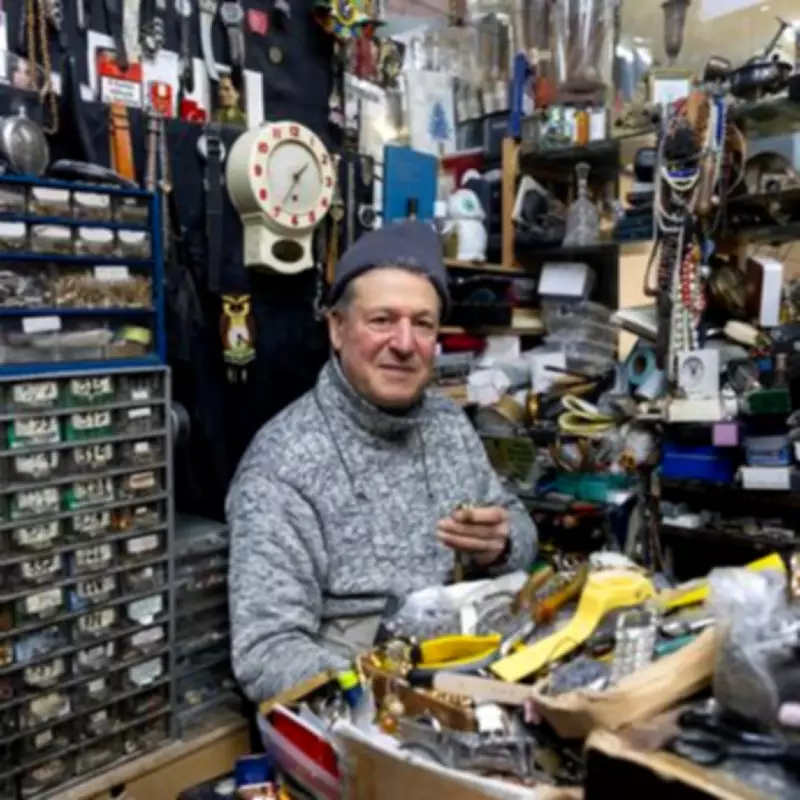
Sabahattin Guvensen, who has operated a watchmaking business in Wood Green's shopping arcade for 38 years, offers a firsthand perspective on the area's evolution. "When I opened the shop it was nice, there were so many nice shops on the high street," he recalls. "There were men's tailors, upmarket handbag shops - it was a place people travelled to. There was also a great atmosphere among the traders. The milkman came by here, as well as the greengrocer and butcher - we all knew each other. But one by one they all disappeared."
Guvensen notes that approximately 95% of his customers now come from outside Wood Green, often seeking specialized services for high-value timepieces. His assistant, who requested anonymity, revealed that traders maintain a low profile and avoid wearing expensive jewellery due to safety concerns, stating: "The only reason we survive is because we've been here for so long."
Property Prices Tell a Complex Story
Average house prices in Wood Green currently stand at £578,000, which remains £76,000 below London's overall average of £654,000. This figure contrasts sharply with neighbouring Alexandra Palace, Hornsey, and Muswell Hill, where property values have soared significantly higher. While still unaffordable for many long-term residents seeking to enter the property market, Wood Green's relatively lower prices present both challenges and opportunities for the area's development.
Contrasting Perspectives on Community Future
Seven-year resident Anya Hadden offers an alternative viewpoint: "The area is at a good point overall, there's still a lot of culture from other countries that won't be eroded easily. It's still a great place to live for residents while the area has an added buzz when gigs and the darts are being held at Ally Pally. Gentrification might only become a problem if house prices go up, but we haven't seen that too acutely."
Near Wood Green station, closer to Alexandra Park, the Blue House Yard development represents one of the area's most significant recent investments. This collective of colourful huts hosting independent traders occupies a former Haringey Council building and car park site scheduled for redevelopment. The space features a converted red bus serving as a pub alongside eleven studios and nine work sheds housing jewellery, candle, and record shops.
Gentrification as Cultural Addition
Sofia Otterbeck, owner of Four Otter Craft Studio where she conducts knitting classes, describes Blue House Yard as "a very warm and welcoming place" while acknowledging uncertainty about its future due to planned redevelopment. When asked whether the development signals gentrification taking hold in Wood Green, she responds: "Everywhere in London near a Tube station, gentrification happens. A city is a living organism, and change is part of it. Wood Green is an amazing place, it represents London with its diversity. I think gentrification is adding to the diversity because it's not narrowing down who's living here, it's opening it up."
Otterbeck points to King's Cross as an example of successful urban transformation: "Before I moved to London eight years ago I was told the area behind it was dangerous, and that I should never go there. Now it's Coal Drops Yard - my husband works there, it's a wonderful place." She emphasizes that gentrification represents an organic urban process rather than a deliberately planned transformation.
The London-Specific Dynamic
Otterbeck highlights what she views as a uniquely London characteristic: "We have a fantastic culture of people of all social classes living nearby. In other places around Europe there's set areas where richer and poorer people live. This is a very 'London' thing. Therefore I don't think gentrification is necessarily bad." This perspective underscores the complex social dynamics at play as Wood Green navigates its relationship with neighbouring affluent areas while maintaining its distinct community identity.
The debate over Wood Green's future continues to divide residents, with some advocating for increased investment to reverse perceived decline while others value the area's current character and cultural diversity. As London's property market evolves and neighbouring areas experience significant transformation, Wood Green stands at a crossroads between preservation and development, between maintaining community identity and embracing urban change.