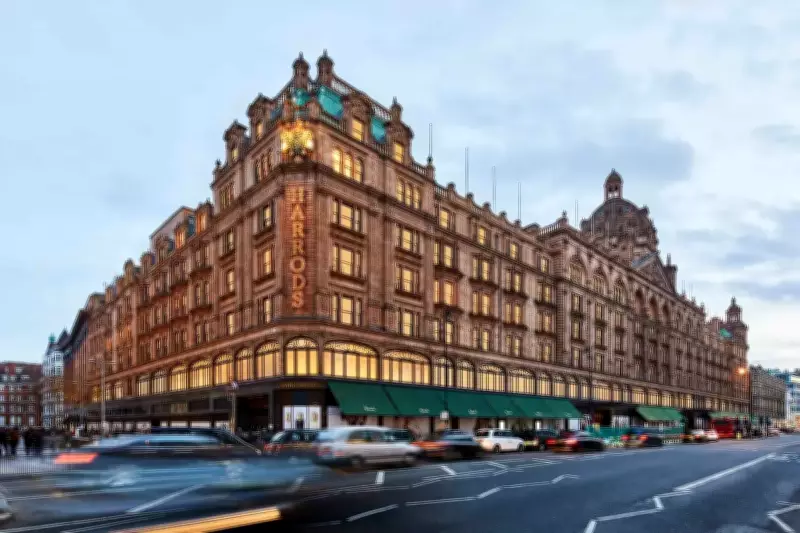
Harrods Estates Closure Blamed on Non-Dom Tax Reforms and Market Shifts
The collapse of Harrods' luxury property division has been largely attributed to the government's abolition of the non-dom tax regime, according to industry experts. Harrods Estates, which first opened on the shop floor of the iconic department store in 1897, has announced the closure of its sole remaining office in Knightsbridge, marking the end of its 129-year property venture.
Non-Dom Reforms Deliver Critical Blow
Roarie Scarisbrick, a director at prime property advisors Property Vision, told City AM that the termination of the non-dom tax regime played a "major part" in Harrods Estates' demise. The non-dom status had previously allowed UK residents whose primary residence was overseas to pay tax only on income generated within the UK.
Chancellor Rachel Reeves replaced this system with a residence-based framework during the 2024 Budget, implementing a four-year "grace period" for the transition. This new regime taxes all long-term residents on their worldwide income, prompting significant concern among wealthy international buyers.
"There is no doubt that prime London transaction volumes have fallen in the last couple of years due to multiple factors, but not least of which would be the non-dom rule changes," Scarisbrick stated. "Inevitably, the most international parts of London have been most affected, including Knightsbridge, where the Harrods flagship was based."
Changing Buyer Demographics and Market Conditions
James Holroyd, another partner at Property Vision, noted that while the removal of non-dom status contributed significantly to the collapse, shifting buyer profiles in London's luxury property market also played a crucial role. "There were a lot of Middle East and Indian client bases and an Eastern European client base, and it's probably not just non-doms," Holroyd explained. "It's probably also due to changes in the profile of people who have been buying in that market over the last little while."
Harrods Estates had previously maintained boutique Russian and Middle Eastern desks offering translation services for international clients. Meanwhile, American buyers have increasingly dominated London's prime property market in recent years, with high-profile figures like Star Wars creator George Lucas purchasing properties in what has been termed the "Trump effect."
London's Luxury Property Market in Decline
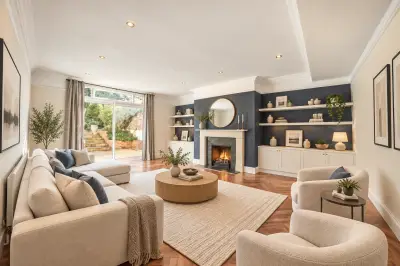
London estate agents report that the capital's prime residential market is experiencing a prolonged downturn. According to property data firm LonRes, sales of prime properties—those in the top five percent of the market—declined by 31 percent this February compared to the previous year.
Industry professionals have also pointed to the 2014 stamp duty reforms, which tied the tax to purchase price, as another factor weakening London's high-value property sector. Additionally, Rosy Khalatschy, a director at luxury estate agency Beauchamp Estates, suggested that sexual abuse allegations against Harrods' former owner, Mohamed Al Fayed, may have negatively impacted the property business.
Knightsbridge, the location of Harrods Estates' final office, has reportedly lost popularity in recent years compared to neighboring areas like Mayfair and Belgravia.
Harrods Focuses on Core Retail Operations
Residential director Shaun Drummond stated that closing Harrods Estates' last outpost would allow the department store to concentrate on its "core proposition" of luxury retail. "Earlier this year, Harrods Estates made the very difficult decision to close its operations," Drummond told PrimeResi magazine. "This decision has been made in line with the wider Harrods Group strategy to focus on its core proposition of luxury retail, catering for clients and customers within the Knightsbridge store and online."
A Harrods spokesperson confirmed to the Times: "Harrods Estates made the decision to wind down its operations, in line with the end of its lease. The office closed as planned following the end of the lease at the end of March, and plans have been put in place to ensure there will be no impact on Harrods Estates current clients."
The luxury estate agency previously operated additional offices in Mayfair, Chelsea, and Kensington before consolidating to its Knightsbridge location. The closure represents a significant shift in London's luxury property landscape, highlighting broader challenges facing high-end real estate in the capital.