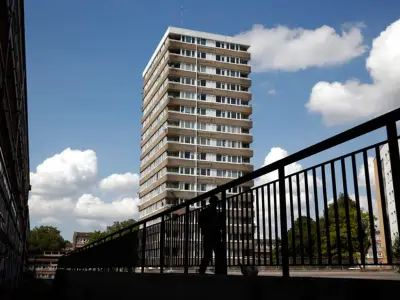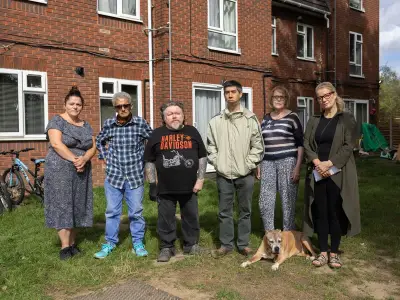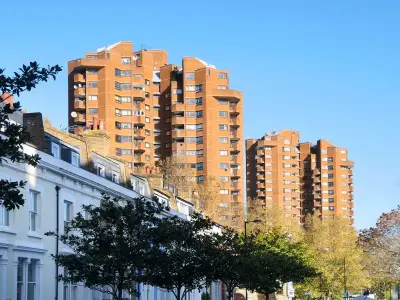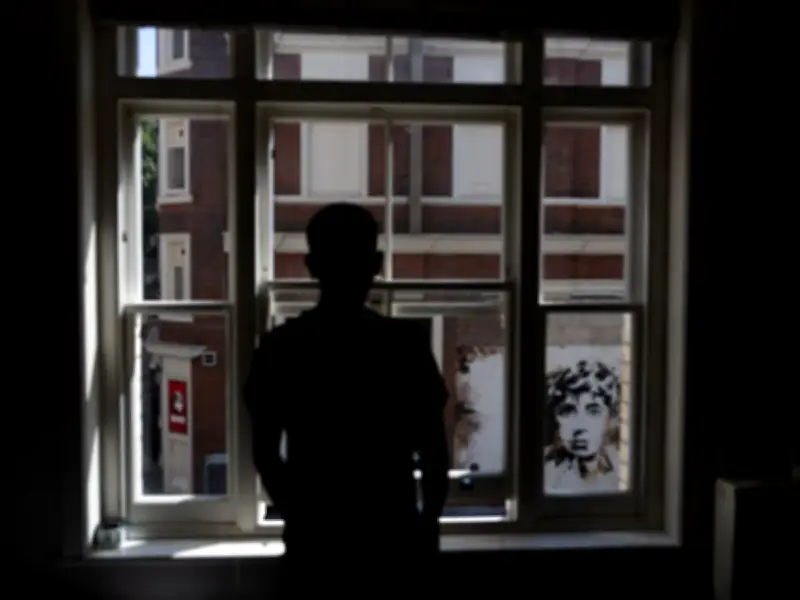
A Soho resident says his block of flats feels like a hostel because of a short-term let operating above him, leading to unbearable noise and a disrupted sense of community.
Yusuf, 32, who has lived in the private rented building since 2017, told the Local Democracy Reporting Service (LDRS) that he now sometimes roams the streets of Westminster at night to escape the noise from the flat above. He said: “It is unbearable. I hate it. Like, I have to go out of the house most of the time. So, at night I'm out of the house because at night is the main time [guests] make the noise.”
The LDRS has seen Yusuf's detailed personal log of disturbances from the flat above, dating back to November last year. These include incidents of loud music in the early hours of the morning. He said he has tried to ask guests to be quiet but does not think they realise how much noise they are making.
Thin ceilings and constant turnover
Yusuf described the building's thin ceilings, saying: “Very thin. So I can hear them coughing. When I'm in my bedroom I can hear them snoring when someone is snoring. That's how much I can hear.” He acknowledged that some noise is due to the building's structure but added: “Obviously as opposed to daily living I know that there's going to be noise, but when there's parties, music, people slamming doors, it gets tiring and it gets unbearable to live [with].”
He said the constant turnover of guests prevents any consistent dialogue with neighbours: “I guess if it was, you know, thin walls, but you have someone consistent there, you can have a dialogue and you can say, you know, when you do this, it's quite loud, when you do that, it's quite loud. And you kind of learn how to live with each other. But because it's new people every time, you feel like you never really get to that point.”
Impact on community and housing
Yusuf said the cycle of short-term stays disrupts the building's community. “One more flat that's a short-term let means there's one less home for a resident and one less person for a community, someone that builds Soho,” he said. He also noted that new landlords took over the building at the end of 2023. There are 11 flats in the block, four of which are long-term tenants.
After the LDRS contacted the landlord, the property appeared to become unavailable on Booking.com.
Landlord response and regulations
The landlords told the LDRS that the flat was used by a small number of responsible guests in compliance with applicable regulations. They added that the building is old and noise travels naturally, and they have tried to mitigate this. One said: “With respect to noise, the building is an older structure where sound naturally travels. We have always been willing to implement reasonable mitigation measures, and we have offered these to the downstairs neighbour. However, mitigation is only effective where all parties are willing to cooperate, and unfortunately this has not been the case.” They also mentioned a difficult relationship with the downstairs neighbour.
Yusuf said he has tried to communicate with the landlords, but while initially responsive, communications have now broken down. He described an incident where the landlord brought guests who made “a lot of noise upstairs,” leading to a tense conversation after he complained.
In Westminster, properties can be let out for 90 days per calendar year without planning permission. According to Westminster City Council, short-term lets must meet certain standards and cannot cause excessive disruption to neighbours. The responsibility for ensuring this lies with the person short-letting, not the guests, as stated in the council's short-term let guidance. The LDRS understands that no Enforcement Notice has been served on this property, but an investigation into short-term letting at this address is currently taking place, with no finding of fault at this stage. The council has confirmed it is the investigating body.