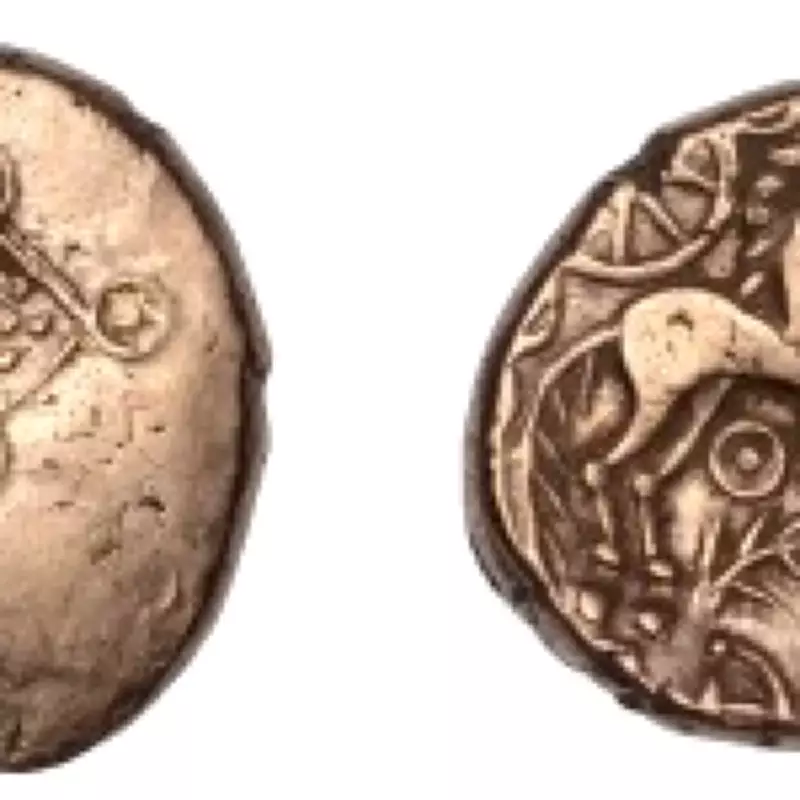
Iron Age Gold Coin Hoard Sold to US Collectors for £33,200
Experts have voiced significant dismay following the sale of a historically important hoard of Iron Age gold coins to anonymous collectors in the United States. The Bury St Edmunds hoard achieved a total price of £33,200 during an auction held at Noonans Mayfair on March 4, 2026. This collection represents the largest known deposit of Iron Age gold coins from the reign of King Dubnovellaunos, who ruled the Celtic Trinovantes tribe between 25 BC and 10 AD.
Details of the Discovery and Sale
The coins, known as staters, feature distinctive horse designs and natural imagery. They were discovered in two separate parcels by Tom Licence, a professor of medieval history and literature at the University of East Anglia, in a field near Bury, Suffolk. In autumn 2024, Professor Licence initially found 16 full gold Iron Age staters and one quarter-stater, which were promptly reported to the Finds Liaison Officer and declared treasure. Several months later, the 46-year-old academic returned to the site and uncovered one additional stater.
Academic Criticism and Defense
The sale has sparked strong criticism from scholars. Gareth Thomas, an Emeritus Professor at the University of East Anglia’s Law School, expressed his disappointment on BlueSky, stating, “So, these historically significant coins, which should be in a museum in the UK, are now lost to the nation forever. A sad outcome that reflects poorly on all concerned.” Similarly, medieval studies professor Leonie V. Hicks previously criticized the auction on the same platform, noting, “Much that is troubling here. We lose precious context, the hoard is split up and passes into private hands.”
In contrast, Professor Licence defended the decision, arguing that the sale generates crucial funding for future archaeological projects. He explained, “It was an honour to see expert collectors taking these coins into their care. So much of the research on ancient coins is done by the collecting community, all around the world. Without their contribution, we would know very little. With the share which the landowner is generously granting me, I will be supporting archaeological work in Suffolk.”
Highlights from the Auction
The auction featured several notable lots that exceeded their estimated values:
- An Addedomaros wheel stater sold for £4,600, surpassing its estimate of £3,000-3,600.
- A gold stater from Dubnovellaunos (circa 5 BC to AD 10) realized a hammer price of £3,400, against an estimate of £1,500-2,000.
- Another Addedomaros gold stater (circa 45 to 25 BC) was purchased for £3,400, well above its expected range of £1,000-1,500.
Both the Addedomaros and Dubnovellaunos coins were acquired by the same collector in the USA, while a collector in Switzerland secured the additional Addedomaros stater.
Bro Implications for Heritage Preservation
This sale underscores ongoing tensions between private collecting and public heritage preservation. While the transaction provides financial support for archaeological endeavors, it raises concerns about the permanent loss of culturally significant artifacts from public view. The debate highlights the delicate balance between funding historical research and maintaining national collections accessible to all.