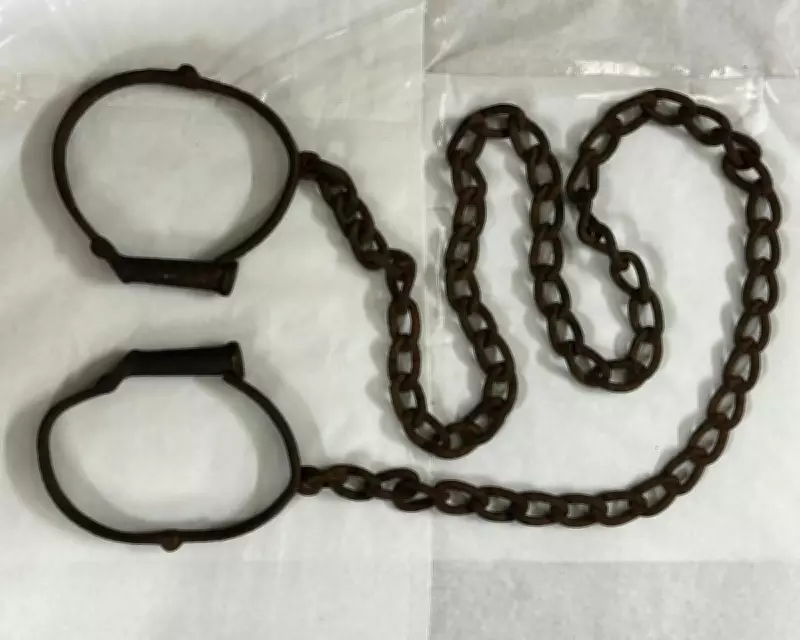
Antiques Auction Selling Slave Shackles Sparks Outrage Over Profiting from Slavery
An antiques auction in Scotland featuring neck shackles connected to the enslavement of African people in Zanzibar has ignited fierce controversy, with critics accusing the event of "profiting from slavery." The chains, dated to 1780 and valued at approximately £1,000, are part of a sale titled "Challenging History" organized by Cheeky Auctions in Tain, Ross-shire.
Historical Context and Auction Details
The neck irons trace back to the Omani-Arab dominated slave trade in east Africa, which persisted until African resistance and British intervention ended it in the late 19th century. Auctioneer Marcus Salter, who is handling the sale, stated he aims to confront history through this "sensitive artefact" without causing offense. He emphasized that the platform hosting the auction has approved the sale, classifying the shackles as historical artifacts.
Salter explained that he is selling the chains on behalf of a dealer whose father owned them for five decades. He argued that if donated to a museum, the item might be relegated to storage and forgotten. Additionally, he pointed out that other slavery-linked materials, such as mahogany, are commonly traded without similar scrutiny.
Political and Public Backlash
Labour MP Bell Ribeiro-Addy, chair of the all-party parliamentary group for Afrikan reparations, condemned the auction, asserting that trading such objects perpetuates profit from the slave trade. She compared the sale to treating human remains as collector's items, stating it should be viewed with horror rather than fascination.
"Why are you selling it for profit? Unless you're trying to re-enact the history of enslavement by profiting from something used to inflict pain and oppression," Ribeiro-Addy said. "We've got people trying to give valid reasons for continuing to profit from the slave trade – that's all it sounds like to me."
Public Reactions and Ethical Concerns
Nigel Murray, a retired lawyer from the Scottish Highlands, expressed outrage after seeing the chains promoted on Facebook, vowing never to purchase from Cheeky Auctions again. He described the auction as "vile," noting the irony of selling shackles through an auction format historically used to sell enslaved people.
Caecilia Dance, an associate at London law firm Wedlake Bell with expertise in Nazi-looted art restitution, highlighted that while no specific laws prohibit trading slavery-linked objects, ethical standards are evolving. She suggested that "public interest stewardship," such as donation or loan to museums with community ties, would be the ideal approach for such items.
Dance noted that public opinion is shifting toward restitution, similar to trends in the art world regarding Nazi-looted items, where ethical concerns now deter sales. "It's probably only a matter of time that that ethical framework extends to objects associated with enslavement because you risk commodifying trauma, even if the sale is completely lawful," she said.
Auctioneer's Defense and Broader Implications
Salter defended the sale, stating, "I think it's important not to upset and offend, but shock people into learning the whole truth." He reported mixed reactions, including boycotts and educational exchanges with critics. This incident follows a 2024 case where Antiques Roadshow expert Ronnie Archer-Morgan refused to value an ivory bangle linked to enslavement, underscoring growing sensitivity around such artifacts.
The controversy raises broader questions about the ethics of trading historical items tied to trauma, balancing preservation against exploitation. As debates over restitution and colonial legacies intensify, this auction highlights the ongoing tensions between commerce, memory, and morality in the antiques market.