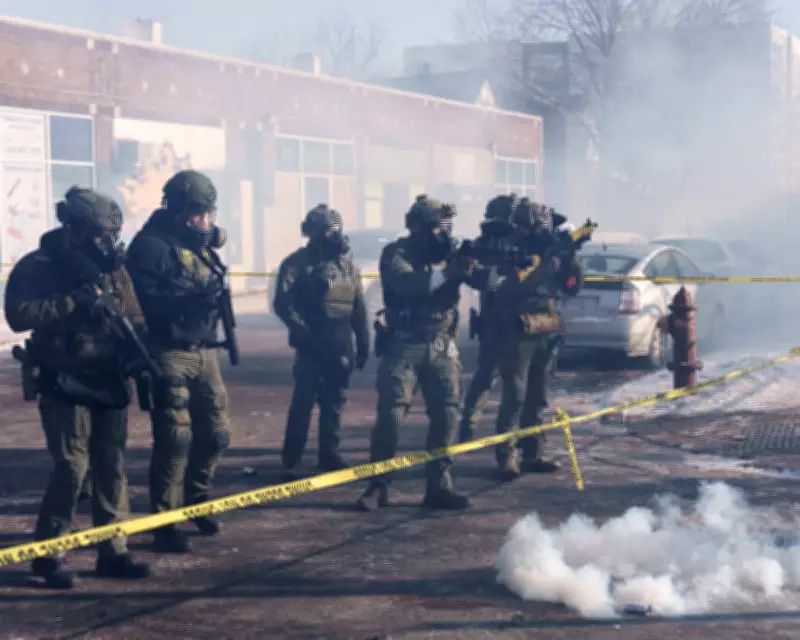
In a stark juxtaposition that has ignited widespread condemnation, the Trump administration's actions have come under intense scrutiny following a tragic incident in Minneapolis. On the evening of Saturday, 24 January, as the body of Alex Pretti lay in a morgue after being fatally shot by ICE agents, a lavish gala event unfolded at the White House. This private premiere of a documentary featuring Melania Trump served as a grim backdrop to the day's events, symbolising what critics describe as a deepening spiral of insensitivity and brutality.
A Day of Violence and a Night of Indifference
The day began with harrowing videos circulating across television news channels and online platforms, capturing the killing of Alex Pretti on a cold Minneapolis street. Pretti, an ICU nurse at the Veterans Administration hospital, was depicted in the footage as a Good Samaritan approaching ICE agents who had pepper-sprayed a woman. With his hands raised and phone in hand, he was suddenly attacked, with agents appearing to shoot him multiple times in a matter of seconds. Eyewitness accounts, including a sworn affidavit from a physician, corroborate that Pretti did not brandish a weapon or pose a threat, yet the response was lethally disproportionate.
Administration's False Narratives and Cover-Ups
In the aftermath, Trump administration officials swiftly propagated falsehoods to justify the shooting. Senior figures such as Stephen Miller labelled Pretti a "domestic terrorist", while senior border patrol officer Gregory Bovino claimed he intended to "massacre law enforcement". These assertions were starkly contradicted by video evidence and witness testimonies, echoing similar mischaracterisations used in previous incidents, such as the killing of Renee Nicole Good earlier in January.

To investigate the Pretti incident, Trump dispatched Tom Homan, his so-called "border czar", despite Homan's controversial past involving an FBI probe into alleged corruption. This move has been criticised as an attempt to obscure the truth rather than uncover it, with Homan's credibility widely questioned.
The Role of Gregory Bovino and ICE Tactics
Gregory Bovino, known for his flamboyant and aggressive style, has been a central figure in ICE operations across cities like Chicago and New Orleans. Dubbed "Gestapo Greg" by critics, he cultivates a paramilitary image, often seen in tactical gear and using teargas against protesters. His operations, such as "Operation Midway Blitz" and "Operation Metro Surge", have yielded minimal results in terms of criminal arrests, with data showing that most detainees lack violent convictions.
Bovino's methods, described by former agent Jenn Budd as "the Liberace of the Border Patrol", focus on creating a spectacle of force rather than effective law enforcement. His involvement in the Pretti shooting has further highlighted concerns about ICE's use of excessive violence and lack of accountability.
White House Glamour Amidst Tragedy
As Pretti's family grieved, the White House hosted a private screening of "Melania", a documentary produced with significant funding from Jeff Bezos of Amazon. The event, attended by celebrities and corporate executives, featured no mention of the day's killing, embodying what critics call a culture of indifference. Melania Trump's past slogan, "I really don't care, do u?", worn during a visit to a detention centre, seemed to resonate with the evening's tone.
Broader Implications and Political Fallout
The incident has sparked broader debates about fascism and opposition in America, with figures like Governor Gavin Newsom condemning Bovino's tactics. Attorney General Pam Bondi's subsequent demands to Minnesota officials, including handing over voter rolls, suggest a political manoeuvre to influence upcoming elections, rooted in Trump's false claims of voter fraud.
This tale of two films—one depicting real-life violence and the other showcasing curated glamour—underscores a critical moment in the Trump administration. It raises urgent questions about justice, transparency, and the moral direction of leadership, as the nation grapples with escalating tensions and a widening divide between power and the people.