Communities in the occupied West Bank are reeling from a fresh wave of violence after dozens of masked Israeli settlers launched coordinated attacks on Palestinian villages this week. The incident has drawn rare condemnation from Israeli officials amid growing international concern about escalating settler violence.
Widespread Destruction in Beit Lid and Deir Sharaf
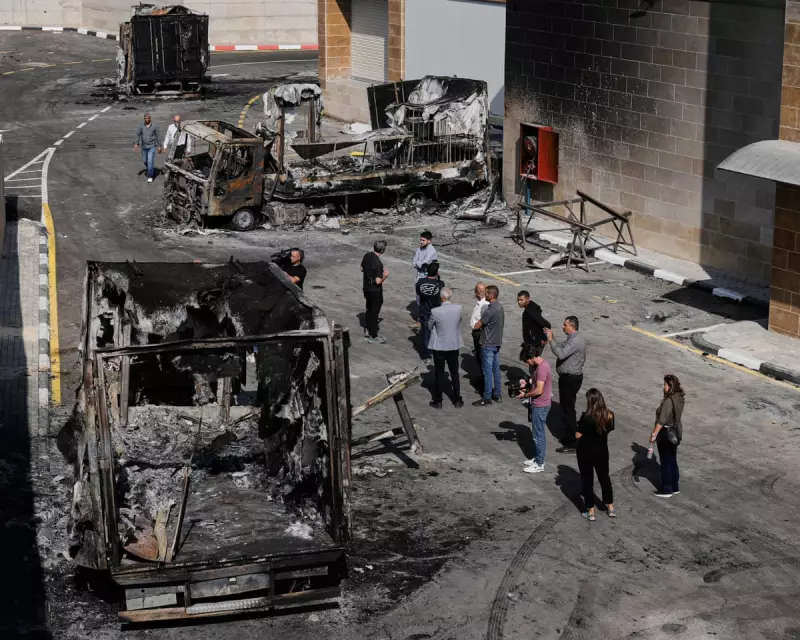
On Tuesday, settlers targeted the villages of Beit Lid and Deir Sharaf, setting vehicles ablaze and damaging property belonging to a Bedouin community. The charred remains of cars still smouldered the following day as residents surveyed the damage.
The violence also struck the al-Juneidi dairy factory, a major local employer, where attackers set fire to four trucks loaded with products. The destruction has dealt a significant blow to the area's economy and left workers facing an uncertain future.
Four Palestinians sustained injuries during the attacks, adding to the growing casualty count in the region. According to human rights organisations, at least 1,001 Palestinians have been killed in the West Bank and East Jerusalem by settlers and Israeli soldiers since the Gaza war began two years ago.
International Concern and Rare Official Condemnation
The United Nations has documented an alarming spike in settler violence, reporting 260 attacks in October alone - the deadliest month since records began in 2006. UN human rights officials warn that this violence occurs in a "permissive environment" with backing from key Israeli ministers.
In an unusual move, Israeli President Isaac Herzog condemned Tuesday's attacks, describing them as "shocking and serious." He called for authorities to "act decisively to eradicate the phenomenon" and support security forces.
His comments were echoed by Major General Avi Bluth, the top Israeli military official in the West Bank, who called the violence "unacceptable." However, human rights groups note these statements contrast with the general silence from Israeli officials over the past two years as settler violence has intensified.
The Israeli army reported that soldiers responded to the attacks, causing settlers to flee to a nearby industrial zone where they subsequently attacked soldiers and damaged a military vehicle.
Pattern of Impunity and Political Backing
Israeli police confirmed the arrest of four settlers involved in Tuesday's violence - a rare occurrence in what human rights bodies describe as a system of impunity. Typically, settlers face little consequence for attacks against Palestinians.
Evidence of this impunity emerged in July when Yinon Levi, a settler previously under US sanctions, was filmed shooting dead Palestinian activist Awdah Hathaleen. Levi was briefly detained before Israeli authorities released him.
Human rights organisations point to the far-right composition of Israel's current government, including Finance Minister Bezalel Smotrich and National Security Minister Itamar Ben-Gvir, both prominent settler movement leaders. Ben-Gvir has actively loosened gun regulations and established "civilian guard units" that activists fear could worsen the violence.
The UN human rights office accuses Israeli authorities of investigating violence against Palestinians in "extremely rare cases," maintaining what they call "almost complete impunity" for unlawful killings.
In Beit Lid, where Tuesday's attacks occurred, government statements provided little comfort to residents living in constant fear. "This can't go on," said Mahmoud Edeis, a village resident. "It can't be that we keep living our whole lives in a state of fear and danger."