Virginia Court Puts Temporary Hold on Voter-Passed Congressional Maps That Would Benefit Democrats
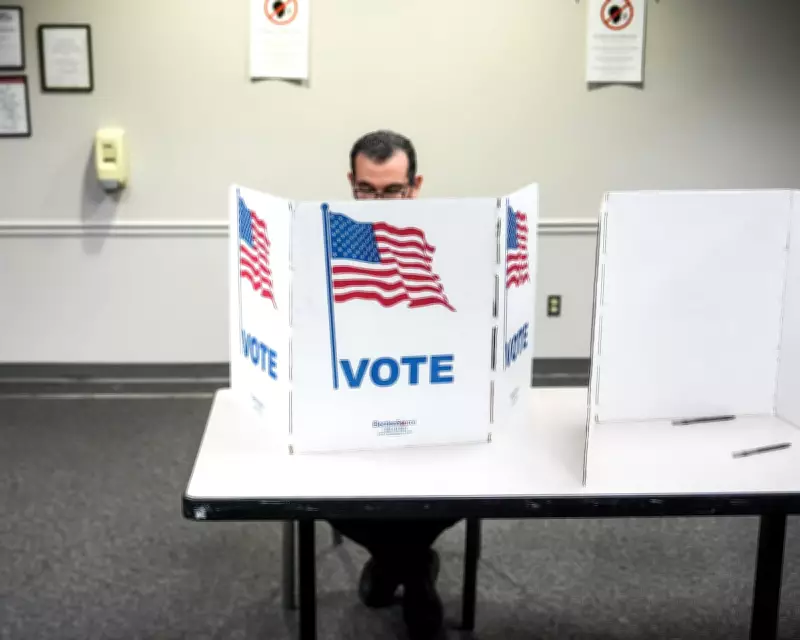
A Virginia circuit court judge has issued a temporary block on newly approved congressional maps that voters passed just one day earlier, creating immediate political turmoil and setting up a legal battle over redistricting in the key battleground state.
Voter Approval Overturned by Judicial Intervention
Virginia voters approved the congressional map changes by approximately three percentage points, with 51.5% supporting the measure versus 48.5% opposing, according to official results from the Virginia Department of Elections. The proposal sought to modify the state constitution to temporarily set aside the nonpartisan redistricting process that voters had authorized six years ago, extending this change through 2030.
The newly approved maps were specifically designed to make it significantly easier for Democrats to potentially flip four Republican-held House seats in the upcoming midterm elections, representing a substantial shift in the state's political landscape.

Legal Challenge and Immediate Response
Judge Jack Hurley Jr. of the Tazewell County Circuit Court issued the ruling on Wednesday, blocking the state from taking any action to implement the new congressional districts. This decision came in response to a lawsuit filed by the Republican National Committee, which argued that both the timing and specific phrasing of the ballot measure violated legal standards.
Virginia Attorney General Jay Jones immediately announced his office would appeal the ruling, stating emphatically: "As I said last night, Virginia voters have spoken, and an activist judge should not have veto power over the People's vote. We look forward to defending the outcome of last night's election in court."
Partisan Reactions and Accusations
The Republican National Committee celebrated the court's decision as a "major victory" for Virginians, with RNC Chair Joe Gruters issuing a statement alleging that Democrats "lied and deceived" voters to advance the referendum. "Democrats attempted to force an unconstitutional scheme to tilt congressional maps in their favor, but the court recognized it for what it is – a blatant power grab," Gruters declared.
Democratic officials and supporters sharply criticized both the ruling and the Republican legal strategy. Aaron Fritschner, an aide to Democratic U.S. Representative Don Beyer, characterized the Republican approach as deliberately seeking favorable venues: "Republicans have repeatedly taken challenges to the Virginia referendum to a local judge in the most conservative part of the state to get silly rulings that are immediately overturned on appeal, mainly so they can add the word 'illegal' to their talking points about it."
Fritschner added: "The Virginia Supreme Court will have the last say on the referendum but this rando judge in Tazewell is just giving them free in-kind messaging contributions, which is the whole point."
Broader National Redistricting Context
This Virginia redistricting battle emerges within a larger national context of partisan map manipulation. The controversy follows former President Donald Trump's efforts to utilize mid-decade redistricting to maintain Republican control of Congress. Under presidential direction, Texas lawmakers last year redrew that state's congressional maps in an attempt to potentially oust up to five Democratic representatives during the midterms.
California voters responded months later by approving a proposition to redraw their state's voting maps to favor Democrats, potentially flipping five Republican-held seats. Virginia's newly inaugurated Democratic Governor Abigail Spanberger has actively supported the effort to redraw her state's congressional maps since taking office in January, positioning Virginia as another front in the nationwide redistricting wars.
The legal and political confrontation over Virginia's congressional boundaries now moves to the appellate courts, where the fate of the voter-approved maps will ultimately be determined, with significant implications for both state and national political power balances.