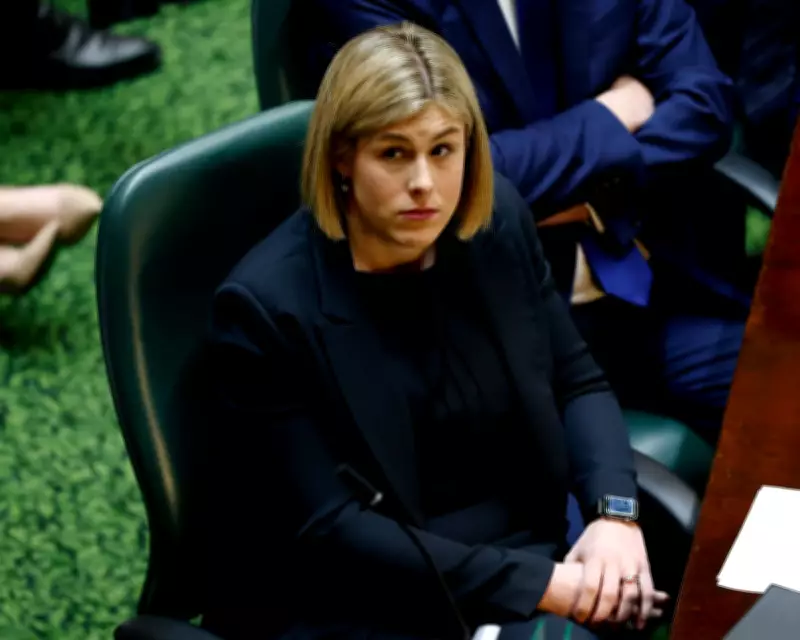
In a significant political development, Victorian Opposition Leader Jess Wilson has withdrawn from a regional conference that Premier Jacinta Allan has controversially labelled a "misinformation convention." The decision comes after sustained pressure regarding Wilson's planned appearance alongside Barnaby Joyce, the former Nationals MP who recently defected to join One Nation.
Political Pressure Leads to Withdrawal
A spokesperson for the Victorian opposition confirmed on Monday that Wilson would no longer be speaking at the Across Victoria Alliance conference scheduled for 9 February in Horsham. The official reason cited was an "unavoidable scheduling conflict," though the announcement follows weeks of political scrutiny.
The spokesperson emphasised that "our team will always take the opportunity to listen to and engage with regional Victorians, including CFA volunteers and primary producers." In Wilson's absence, the event will be attended by Nationals leader Danny O'Brien and Liberal leader in the upper house Bev McArthur.

Premier's Strong Criticism
In her first speech to colleagues at the Labor caucus conference ahead of parliament's return, Premier Jacinta Allan delivered scathing criticism of both the event and Wilson's planned participation. Allan characterised the Horsham gathering as a "misinformation convention" and suggested Wilson's attendance represented an attempt to shore up party unity within the Liberals, who have experienced six leadership changes in seven years.
"To avoid the next cut, their current leader is spending this weekend cosying up with One Nation," Allan stated on Monday. "She's appearing at the misinformation convention right alongside Barnaby Joyce, to oppose cheaper renewable energy that keeps power bills down."
The Premier further warned that "the Liberal National One Nation circus will push her further away from families and further towards the extremes," framing the issue as one of political alignment and policy direction.
Event Background and Controversy
The Across Victoria Alliance was established in response to the Victorian government's new emergency services levy and has since expanded its focus to include opposition to renewable energy project regulations and expanded powers for VicGrid to access private land. More recently, the group has turned its attention to the government's bushfire response policies.
The controversy surrounding Wilson's participation intensified in January when Joyce's appearance was announced, coming just weeks after his high-profile defection from the Nationals to One Nation. Adding to the political sensitivity, Alliance founder Andrew Weideman revealed that several group members were considering standing as One Nation candidates in the November state election.
Reactions and Defence
Nationals leader Danny O'Brien disputed Premier Allan's characterisation of the event, stating that the alliance was "highlighting the concerns that regional Victorians have" about government policies. "It's not unusual that we would be attending a conference with people about concerns of what's happening in regional Victoria under this Labor government," O'Brien commented.
Barnaby Joyce, who remains scheduled to speak at the conference's opening dinner on Sunday night, expressed disappointment at Wilson's withdrawal. "I'm really disappointed that it sounds like she's been bullied out of it," Joyce said. "It's One Nation, not some sort of neo-Nazi rally for God's sake."
Joyce suggested the withdrawal demonstrated political hypocrisy, noting that "this shows the conceit of politics that they say, 'We're broad minded people'. But you're just not allowed to talk to certain people." He pointed to One Nation's recent polling surge as evidence that "the dynamics had changed" and politicians needed to "accept where the Australian people are."
The political fallout from this withdrawal highlights ongoing tensions in Victorian politics regarding party alignments, regional representation, and the boundaries of political engagement. As the November state election approaches, such decisions and their characterisation are likely to feature prominently in political discourse and strategic positioning.