
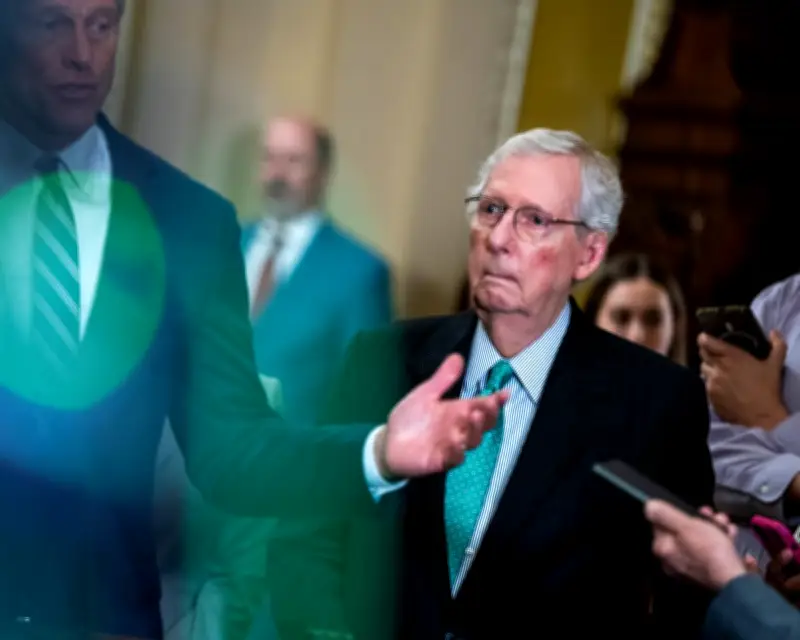
Questions surrounding Mitch McConnell's health persist even after his office released two 'proof of life' photos, as the 84-year-old senator has not directly addressed the public since his hospitalization on June 14. The first photo, released on July 12, showed McConnell in a pink shirt holding a newspaper, but it sparked AI speculation. The second photo, dated July 26, depicted him in a blue shirt, yet his office stated he is undergoing 'intense physical therapy' and cannot travel, missing 38 Senate votes.
Transparency Demands Grow
Kentucky Governor Andy Beshear has repeatedly called for McConnell to verbally confirm his capacity to serve or resign. In a letter, Beshear wrote, 'I am calling on you to directly and verbally address the people of Kentucky and provide proof of your capacity to serve, or resign.' He threatened to ask Senate leadership to investigate if McConnell fails to comply.
McConnell's absence is not an isolated incident. Since 2013, four US senators have died in office, and six members of Congress have died during the 119th Congress. Earlier this month, Senator Lindsey Graham died, replaced by his sister Darline. In 2024, Republican congresswoman Kay Granger was found to have dementia at a senior facility after months of missed votes, while Representative Tom Kean Jr. missed over 100 votes due to depression treatment without public disclosure.
Broader Implications for Democracy
Columnist Arwa Mahdawi notes, 'US lawmakers seem determined to cling to power until they die at their desks.' She argues that while millions of Americans cannot afford to retire, lawmakers enjoy excellent salaries and benefits but often refuse to step aside. This lack of transparency erodes public trust and raises concerns about the capacity of aging politicians to govern effectively.
The situation underscores a systemic issue where lawmakers avoid accountability, leaving constituents in the dark. As Mahdawi writes, 'Demanding more transparency from a public servant who is collecting a taxpayer-funded salary to represent his constituents is not unreasonable.'




