
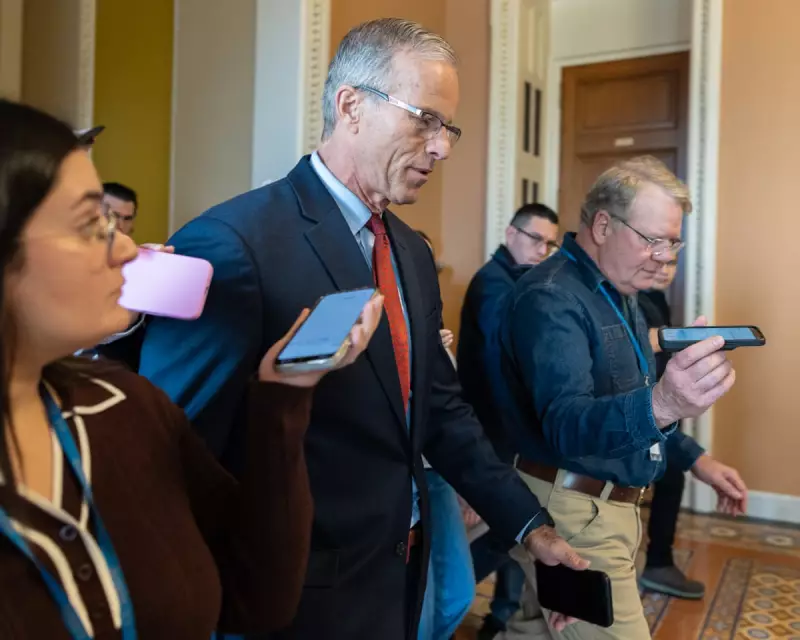
Senate Takes Crucial Step to Reopen Government
In an unusual Sunday session, the US Senate has moved decisively towards concluding the longest federal government shutdown in the nation's history. Lawmakers narrowly advanced a compromise funding bill, marking a significant breakthrough after 40 days of political stalemate that had left hundreds of thousands of federal employees without pay.
Compromise Bill Faces House Hurdle
The legislation, resulting from intense negotiations between Democratic and Republican senators, successfully cleared a critical procedural vote, surpassing the required 60-vote threshold. John Thune, the Republican Senate Majority Leader, expressed optimism, stating, "After 40 long days, I'm hopeful we can bring this shutdown to an end."
The proposed bill authorises government funding through 30 January 2026 and reverses the furloughs of federal workers initiated when the shutdown began on 1 October. It guarantees retroactive pay for all affected staff and prevents further layoffs until the end of January.
However, the compromise package notably excludes the extension of tax credits for Affordable Care Act health plans, a key Democratic demand. This omission has already sparked significant opposition in the House of Representatives, where Democratic leader Hakeem Jeffries has announced his party will fight the bill.
What Happens Next?
Despite the Senate's progress, the path to fully reopening the government remains uncertain. The bill must now be approved by the House of Representatives and then sent to the president for his signature. This process could potentially take several more days, prolonging the uncertainty for federal workers and the services they provide.
Republican leaders have promised a separate vote on the healthcare subsidies once government funding is restored, though it remains unclear if such a measure would pass. The political divide highlights the ongoing challenges in reaching a comprehensive, long-term solution to the budget impasse.




