US Political Theatre: Minneapolis Shooting and White House Premiere Spark Global Criticism
The United States finds itself under intense international scrutiny following two starkly contrasting events that unfolded on a single Saturday in January 2026. These incidents have painted a troubling picture of American political culture that resonates far beyond its borders, prompting uncomfortable questions about leadership, accountability, and national identity.
The Minneapolis Incident: A Protest Turns Deadly
In Minneapolis, federal Immigration and Customs Enforcement agents shot and killed Alex Pretti, a protesting nurse who posed no immediate threat according to multiple eyewitness accounts. Pretti was legally carrying a licensed firearm that was subsequently removed from his possession before the fatal encounter. The official response from the Trump administration involved what observers have described as provable falsehoods disseminated at the highest levels of government.
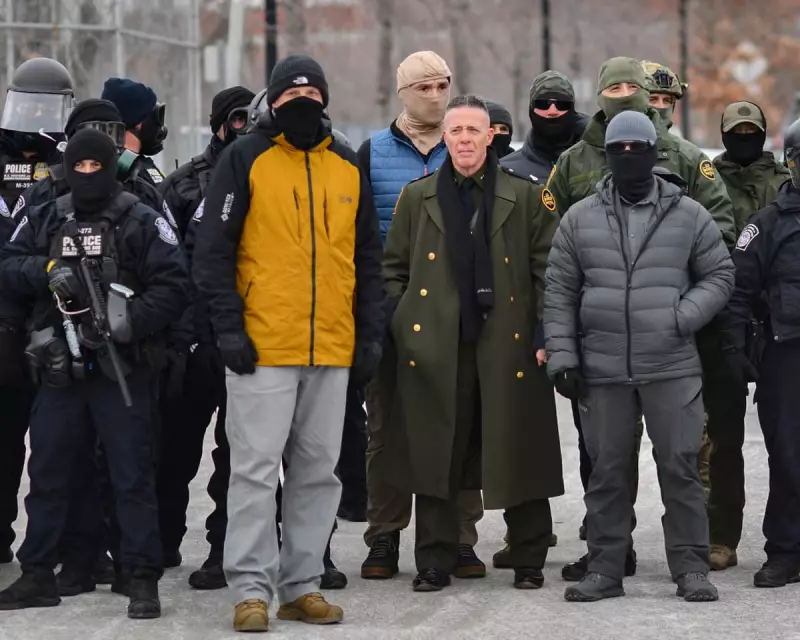
The aftermath saw border patrol commander Gregory Bovino flanked by federal agents in Minneapolis before being removed from his position, potentially locked out of his social media accounts, and facing what appears to be a forced retirement. This development suggests Bovino may be positioned as a fall guy for more senior administration figures, including Homeland Security advisor Stephen Miller.

Contrasting Visuals: Uniforms and Civilian Attire
Observers have noted the disturbing visual contrast between federal officers frequently appearing masked and in civilian clothing during operations, while images from protests across America show resisting civilians increasingly adopting military-style attire. This inversion of traditional visual cues has created confusion and raised questions about the professional standards within federal law enforcement agencies under the current administration.
The White House Premiere: Oligarchs and Propaganda
That same evening in Washington, administration officials and supporters gathered for the White House premiere of "Melania," a documentary about the president's wife who served as executive producer on the project. The film was purchased by Jeff Bezos's Amazon for an astonishing $40 million, with an additional $35 million allocated for marketing—figures wildly disproportionate to standard documentary budgets.
Among the attendees was Apple CEO Tim Cook, who had recently posted about Martin Luther King's commitment to justice on social media platforms owned by fellow tech oligarchs, even as videos of Pretti's execution circulated on those same platforms. Cook's presence at the event highlighted what critics describe as the uncomfortable relationship between corporate America and the current administration.
Political Reactions and Cultural Shifts
The National Rifle Association issued a statement calling for a full investigation into Pretti's killing, noting that carrying a licensed firearm is constitutionally protected—a position that placed them at odds with some supporters of the administration who defended the shooting. This development suggests potential fractures within traditionally aligned political factions, with some observers questioning whether certain segments of the president's base have moved beyond even the NRA's positions on gun rights.
International Perceptions and Tourism Impact
These events have contributed to declining tourism from previously enthusiastic international markets, with potential visitors expressing reservations about current conditions in the United States. The administration's approach to international alliances, particularly regarding NATO, has further complicated America's global standing, despite the alliance having activated its collective defense clause only once in its history—at America's request following the September 11 attacks.

A Nation at a Crossroads
The juxtaposition of these events—a fatal shooting followed by official misinformation, contrasted with an extravagant White House premiere funded by oligarchs—presents what international observers describe as a nation struggling with its identity and values. The willingness of ordinary citizens to defend the shooting of an unthreatening civilian, combined with the spectacle of corporate leaders celebrating with administration officials while serious human rights concerns go unaddressed, creates a portrait that many outside America find deeply concerning.
As the United States continues to navigate these complex political waters, the rest of the world watches with a mixture of concern and confusion, wondering how a nation with such profound democratic traditions has arrived at this particular moment in its history.