
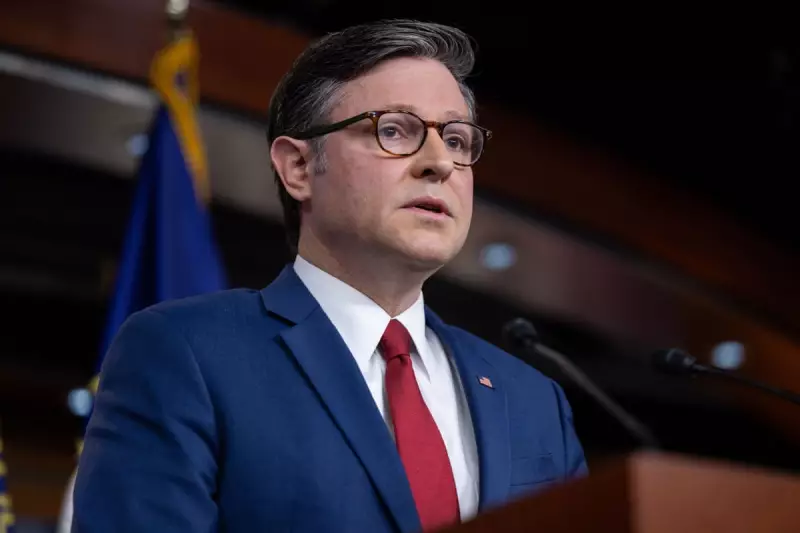
The United States has reached the end of its longest-ever government shutdown after the House of Representatives narrowly approved legislation to restart federal operations following more than 42 days of political deadlock.
Political Standoff Reaches Resolution
After weeks of unprecedented disruption to government services, the shutdown is set to conclude on Wednesday following the House's passage of a bill negotiated by Republicans and a breakaway group of Democrat-aligned senators. The legislation passed by a tight margin of 222 votes in favour to 209 against, just clearing the necessary threshold.
The compromise, which had already received Senate approval on Monday, will see government funding restored through January. However, the deal notably excludes healthcare funding that Democrats had insisted upon as a condition for ending the shutdown.
The White House confirmed that President Donald Trump will sign the bill into law on Wednesday evening, bringing to a close a political battle that has seen hundreds of thousands of federal workers go without pay since the shutdown began on 1 October.
Healthcare Battle Remains Unresolved
The core disagreement centred on expiring tax credits for Affordable Care Act health plans, commonly known as Obamacare. Most Democrats had demanded their extension as part of any deal to reopen the government, but the final compromise leaves this issue unresolved.
Democratic minority leader Hakeem Jeffries made his party's position clear in remarks shortly before the House vote. "This fight is not over. We're just getting started," he declared from the House floor. "Either Republicans finally decide to extend the Affordable Care Act tax credits this year, or the American people will throw Republicans out of their jobs next year."
The Obamacare tax credits, created during Joe Biden's presidency, had significantly lowered premiums for health plan enrollees. Their expiration has already resulted in premium increase notices being sent to participants in November, with one study predicting average rises of 26%.
Widespread Impact on Services and Workers
The 42-day shutdown caused severe disruptions across multiple government services. The Trump administration ordered cuts to commercial air travel nationwide, while the largest federal food aid program experienced its first-ever halt.
Approximately 700,000 federal workers were furloughed, with hundreds of thousands more - including active military personnel, law enforcement officers, and airport security screeners - required to work without pay.
Russell Vought, the White House budget director, used the funding lapse to order further government employee layoffs and cut infrastructure funding in states that had voted for Kamala Harris in the previous election.
The situation became particularly dire when the White House halted payments under the Supplemental Nutrition Assistance Program (food stamps), citing the government funding lapse. Food banks reported dramatically increased demand as the shutdown continued.
Last week, Transportation Secretary Sean Duffy ordered flight reductions at US airports, citing unprecedented strain on air traffic controllers working without pay. This led to widespread flight cancellations in subsequent days.
Political Fallout and Future Battles
The spending battle represented the most significant confrontation between congressional Democrats and Republicans since Trump returned to the White House earlier this year. Democratic leaders argued that their party's strong performance in early November off-year elections - including significant gubernatorial wins in Virginia and New Jersey - vindicated their shutdown strategy.
President Trump himself acknowledged that "the shutdown is a big factor" in Republican electoral setbacks, and began pressing GOP senators to eliminate the filibuster that requires 60 votes for spending legislation to pass.
The compromise that ultimately ended the shutdown was negotiated by a small group of moderate Senate Democrats. While it funds the government through January and reverses layoffs ordered by the Trump administration, it contains no additional funding for Affordable Care Act tax credits.
Instead, Senate Majority Leader John Thune agreed to allow a vote on the healthcare subsidies by mid-December. However, Republican House Speaker Mike Johnson has not committed to bringing any such legislation to a vote in the lower chamber.
With government funding set to expire again at the end of January, Democrats may use the next deadline to renew their demands for healthcare subsidy extensions, ensuring this political battle is likely to continue into the new year.




