The Longest Shutdown in US History Concludes
After a gruelling 42-day standoff that paralysed Washington, the United States federal government has finally reopened its doors. The resolution came on Wednesday evening when Congress passed a funding bill, bringing to an end what has become the longest government shutdown in American history.
The dramatic conclusion saw Democratic resistance finally breached by a combination of Republican majorities in Congress and a splinter group of Democratic senators who provided the crucial votes needed to overcome the chamber's filibuster rules.
Democratic Strategy and Ultimate Concessions
More than six weeks ago, congressional Democrats employed an unusual tactic for their party - refusing to authorise government funding unless their demands were met. Their central condition involved extending tax credits that reduce costs for Affordable Care Act health insurance plans, a key healthcare initiative originally established under President Joe Biden.
This represented a significant strategic shift for Democrats, who had spent months watching their priorities dismantled by the ascendant Republican government, bolstered by a conservative-dominated Supreme Court. During this period, the country's main foreign aid agency was closed, numerous federal workers were dismissed or encouraged to resign, and Medicaid programmes for poor and disabled Americans faced substantial cuts.
Despite their strong stance, Democrats ultimately secured no concrete concessions from the ruling party. The final deal that reopened government included only a promise from Senate Majority Leader John Thune to hold a vote on legislation to reauthorise the healthcare credits. Crucially, there remains no guarantee that sufficient Republican support exists to pass the measure through the Senate, nor that House Republican leaders would permit such a vote, or that President Trump would sign it into law.
Political Fallout and Future Battles
Remarkably, many Democrats are framing the outcome as a victory despite their failure to achieve their primary objective. They argue the shutdown provided an opportunity to demonstrate to voters that they remain capable of mounting effective opposition in Donald Trump's Washington.
Pennsylvania Congresswoman Summer Lee articulated this perspective, stating: "I hope that people in America will see those of us who are willing to stand, and hold the line for them."
The political landscape appears to support this interpretation. Multiple polls consistently showed voters placing greater blame for the shutdown on Republicans than Democrats. Furthermore, the party recently achieved success in off-year elections across several states, flipping some voters who had supported Trump in the previous election.
However, the Democratic strategy generated internal discord as the shutdown dragged on. President Trump moved to halt payments from the government's largest food aid programme, while federal workers missed paychecks, creating significant hardship.
North Carolina Congressman Don Davis, one of six Democrats who voted for the funding bill in the House of Representatives, explained that constituent suffering influenced his decision: "I had a person, a constituent, talking to me, literally in tears. That's not what I want."
The resolution may prove temporary, as the funding bill only maintains government operations through January. This sets the stage for potential renewed confrontations, with Democrats possibly issuing fresh demands for their support when the next funding deadline approaches.
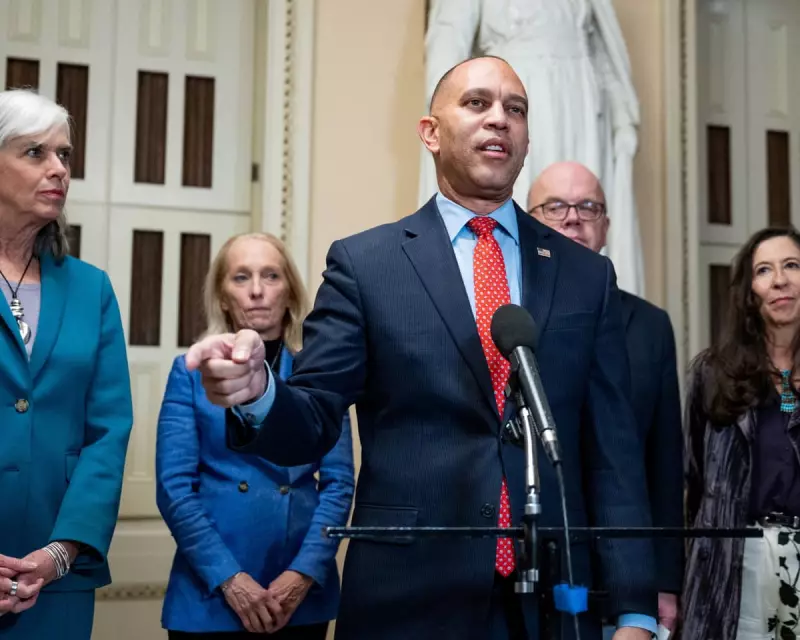
Democratic Minority Leader Hakeem Jeffries made the party's ongoing commitment clear just before the House voted to restore funding: "We will stay on this issue until we get this issue resolved for everyday Americans."
The battle over healthcare in the United States appears far from concluded, with this shutdown likely representing merely the opening salvo in a prolonged political war that will continue to shape the American landscape in the coming months.