Police Inquiry Exposes Praise for Undercover Officer's Court Deception
Secret documents unveiled at the ongoing spycops public inquiry have exposed that senior police officers commended an undercover officer who deliberately lied to a court about his real identity. This revelation centers on Jim Boyling, an undercover officer who infiltrated environmental and animal rights activist groups from 1995 to 2000, and highlights a broader pattern of institutional misconduct within covert policing units.
Deception in Legal Proceedings
Jim Boyling, operating under a fabricated identity, was arrested in 1996 during an environmental demonstration at Transport for London offices. He was subsequently prosecuted alongside six activists for public order offences. Throughout the legal proceedings, senior officers from the Special Demonstration Squad (SDS), a covert Metropolitan police unit, authorized Boyling to maintain his false persona, withholding his true status as a police spy from the court.
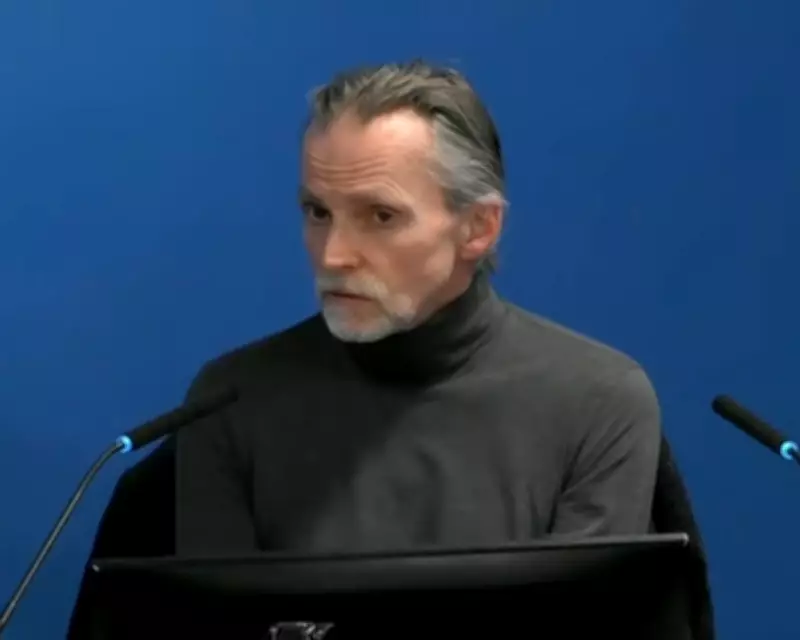
In 1997, Boyling gave evidence under his fake identity over three days at a magistrates court, where the magistrate remained unaware of his undercover role. When questioned by the inquiry's chief barrister, David Barr, about whether the court's ignorance was considered, Boyling admitted there was no such consideration. Despite this deception, Boyling and the activists were acquitted.

Internal Praise and Policy Implications
Following the trial, senior officers openly praised Boyling's actions. DCI Keith Edmondson, head of the SDS, wrote in a memo that Boyling's operation was strengthened by the court involvement, noting he "should be praised for the way in which he dealt with each of the court appearances." Supt Eric Docker, a higher-ranking officer overseeing the SDS, described the outcome as a "most satisfactory conclusion" that highlighted the "professionalism and dedication" of SDS officers.
The inquiry has revealed that this case was not isolated. Over decades, senior officers implemented a deliberate policy of not disclosing undercover officers' true identities in court, prioritizing operational security over legal integrity. An internal police review in 2009 condemned this tactic as "grossly unprofessional" and "completely 'off piste' from accepted practice," acknowledging it prejudiced activists' rights to fair trials.
Broader Impact and Ongoing Scrutiny
The spycops scandal involves 139 undercover officers who spied on tens of thousands of predominantly leftwing campaigners from 1968 to at least 2010. Evidence presented to the inquiry, led by retired judge Sir John Mitting, indicates that between 1970 and 1998, undercover officers concealed their identities in at least 13 trials of activists supporting causes like anti-fascism, anti-apartheid, and animal rights.
David Barr emphasized that the SDS appeared to place operational security above its duty to the court and the rule of law. Senior officers believed disclosure would end deployments and spark public controversy, jeopardizing the unit's existence. They also viewed prosecutions as enhancing spies' credibility among infiltrated groups.
In the aftermath, when Boyling was unmasked in 2011, two activists convicted in related offences had their convictions overturned, underscoring the legal repercussions of this deception. The inquiry continues to examine how many activists may have been wrongly convicted due to these practices, raising profound questions about police accountability and justice in the UK.