
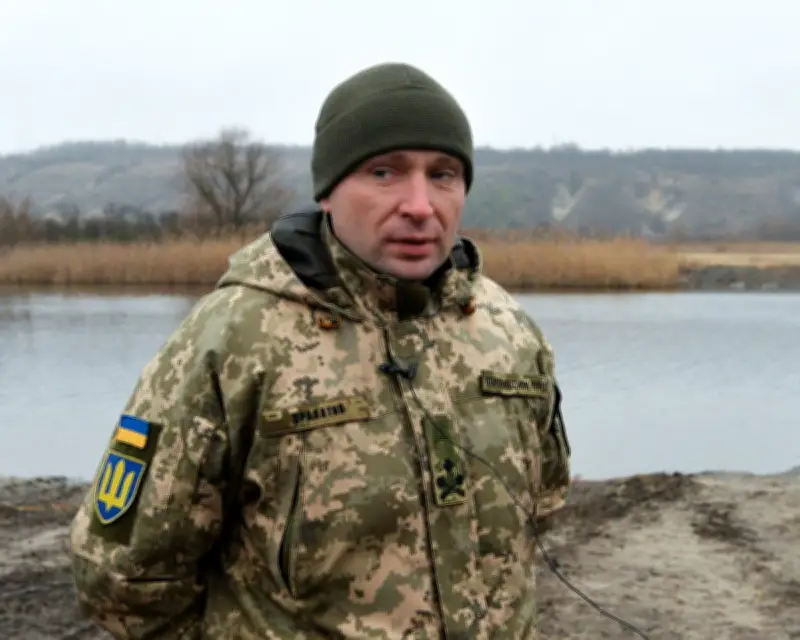
Mykhailo Drapatyi, a 43-year-old major general, has been appointed commander-in-chief of Ukraine's armed forces, a move that has garnered near-universal support across the country's political, military, and civil society circles. The appointment, announced by President Volodymyr Zelenskyy on Tuesday night, comes as Kyiv seeks to shift the momentum of the war against Russia.
Drapatyi's rise to prominence
Drapatyi first gained recognition in May 2014, when he drove an armoured vehicle through a barricade in Mariupol during Russia's initial attempt to seize eastern Ukraine. The footage became emblematic of Ukrainian resistance and established him as one of the country's earliest military heroes. Over the following decade, he built a reputation as a moderniser, advocating for drone warfare, decentralised command, and accountability among officers.
His appointment followed days of political turmoil in Kyiv, after the dismissal of Defence Minister Mykhailo Fedorov, who had clashed with the previous commander-in-chief, General Oleksandr Syrskyi. Thousands of protesters took to the streets in support of Fedorov, and Drapatyi's public backing of Fedorov during the dispute likely contributed to his widespread acceptance.
Breaking with Soviet-style command culture
For many Ukrainians, Drapatyi represents a departure from the Soviet-style command culture associated with Syrskyi, who was criticised for costly frontal assaults and a perceived disregard for soldiers' lives. Rob Lee, a senior fellow at the Foreign Policy Research Institute, noted that Drapatyi "is a critic of Soviet-style thinking and micromanagement, and he recognises the problems with lying inside the military."
Mykola Bielieskov, a research fellow at Ukraine's National Institute for Strategic Studies, described Drapatyi as "humane and open to dialogue," qualities that are unusual among senior military leaders. "He commands respect among both career officers and those who joined after 2022 because he rose through the ranks on merit and understands battlefield realities," Bielieskov said.
Key battlefield roles and reforms
After Russia's full-scale invasion in 2022, Drapatyi helped halt the Russian advance towards Kryvyi Rih and played a crucial role in the liberation of Kherson. As Moscow regained the initiative, he was repeatedly deployed to the most difficult sectors, stabilising the front near Pokrovsk before becoming commander of the joint forces.
Drapatyi has been outspoken about the need to reform the army's internal culture. In a social media post last year, he criticised "an atmosphere of fear, lack of initiative, [and] imperviousness to feedback," arguing that these attitudes undermine military effectiveness. After a Russian missile strike killed dozens of soldiers under his command, he publicly accepted responsibility and offered his resignation, a gesture that earned widespread admiration and reinforced his reputation as an accountable leader.
Challenges ahead
Analysts warn that while Drapatyi is expected to improve battlefield management and day-to-day military functioning, many of Ukraine's most pressing wartime challenges lie beyond his authority. Bielieskov highlighted unresolved tensions between the defence ministry and the general staff, as well as the politically fraught issue of mobilisation reform.
"There is a risk that in six months he will be blamed for problems he cannot fully control," Bielieskov said. "Many of the biggest challenges facing Ukraine lie outside his mandate."
Ukrainian military analyst Tatarigami expressed cautious optimism: "President Zelenskyy made the best possible choice. It will take time for changes to take effect. But I know many soldiers have renewed hope for change, and that is very important for morale."




