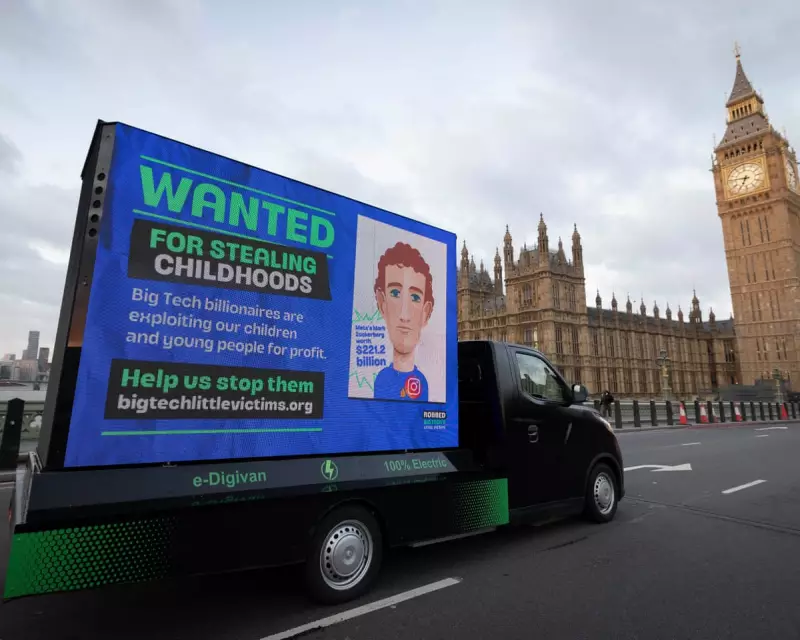
UK Government Accepts $1m Meta Funding While Consulting on Under-16 Social Media Ban
The UK government has accepted a substantial $1 million donation from Meta, the parent company of Instagram and Facebook, to develop artificial intelligence systems for critical public services. This financial arrangement has emerged simultaneously with a government consultation proposing a ban on social media access for children under the age of 16, a policy that would significantly impact Meta's platforms, particularly Instagram.
Funding Details and AI Development Plans
The Department for Science, Innovation and Technology announced that the funding from Mark Zuckerberg's company will be allocated to employ four British AI specialists. These experts, coordinated through the government-funded Alan Turing Institute, will focus on creating advanced AI solutions for defence, national security, and transportation systems. According to Ian Murray, the minister for data and digital government, these specialists will play a crucial role in modernising healthcare, policing, and transport infrastructure across the nation.
The government stated that this initiative aims to deliver faster, safer, and more reliable public services through technological innovation. Specifically, the Meta-funded team will develop AI models capable of analysing images and videos to help local authorities prioritise transport repairs more efficiently. Additionally, they will create secure AI solutions that can operate offline or within protected networks to support national security decision-making while protecting sensitive data.

Simultaneous Social Media Policy Consultation
This financial arrangement coincides with a government consultation launched last week regarding potential restrictions on social media access for children under 16. Such a ban would have substantial implications for Meta's Instagram platform, which is particularly popular among younger demographics. The timing has raised questions about potential conflicts of interest and the influence of technology companies on policy decisions affecting their operations.
Criticism and Concerns About Tech Influence
Campaign groups have expressed significant concerns about the government's relationship with major technology firms. Donald Campbell, advocacy director at the tech justice organisation Foxglove, described the situation as evidence of an alarmingly close relationship with Trump-supporting US tech giants. The group questioned what Meta might expect in return for its substantial contribution, suggesting that when it comes to big tech, there's no such thing as a free lunch.
Daisy Greenwell, co-founder of the Smartphone Free Childhood campaign, highlighted how tech companies allocate considerable resources to gain access and influence within policymaking circles. She emphasised the importance of ensuring that decisions regarding children's online safety are guided by independent evidence and public interest rather than corporate interests.
Additional Partnerships and Broader Context
Alongside the Meta agreement, the government has established a new partnership with San Francisco-based AI company Anthropic. This collaboration will involve developing a dedicated assistant tool for public services on the government website, beginning with a model designed to provide career advice to job seekers. Anthropic has described this implementation work as pro bono, though the company has existing connections to UK political figures, including former Prime Minister Rishi Sunak in an advisory capacity.
These developments occur as ministers grapple with policy decisions directly affecting both Meta and Anthropic. Beyond the social media consultation, the government is preparing reforms regarding how copyrighted creative works are protected from being used to train AI models, such as those developed by Anthropic.
Cross-bench peer Beeban Kidron, who campaigns on child protection and copyright issues, criticised the government's approach, suggesting it is creating dependence on Silicon Valley while potentially undermining opportunities to build a domestic AI sector. She expressed concern about valuable datasets being made available to technology companies that could afford to pay for access.

Background of Government-Tech Relations
A Guardian investigation revealed that Meta executives have had approximately 50 meetings with ministers over the past two years, representing one of the highest levels of direct access among technology companies. This history of engagement adds context to current concerns about corporate influence on government policy and decision-making processes.