Turning Point Australia's Political Ambition: From Social Media to Election Influence
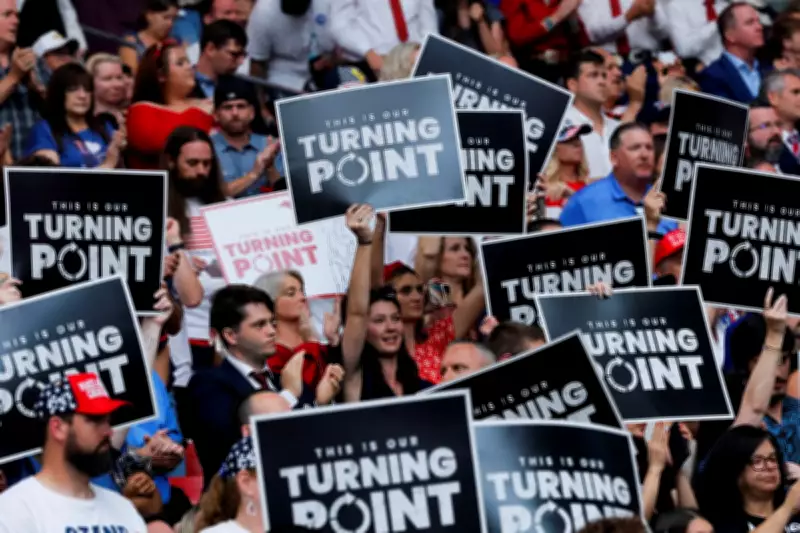
Inspired by major successes in the United States and the United Kingdom, the conservative Christian organisation Turning Point has set its sights on reshaping Australia's political landscape. The group's Australian branch, led by national director Joel Jammal, is embarking on an ambitious expansion plan that targets educational institutions and electoral outcomes.
From Instagram Aesthetics to Political Activism
George Mamalis, a key figure in Turning Point Australia, began his social media journey a decade ago with an Instagram account filled with picturesque beaches, sunsets, and adorable dogs. Today, his platform has transformed into a vehicle for culture war content, positioning him as a significant player in Australia's right-wing ecosystem. Mamalis's evolution from sharing restaurant recommendations to questioning vaccine safety during the COVID-19 pandemic illustrates the shifting focus of his online presence.
According to Jammal, Turning Point Australia was established with the blessing of American conservative firebrand Charlie Kirk and on the recommendation of Reform UK leader Nigel Farage. The organisation now declares its mission to "breathe our values into politics" and unite minor right-wing parties to restore conservative leadership in Australian parliaments.

Educational Outreach and Electoral Strategy
Turning Point Australia has outlined comprehensive plans to establish chapters across the country, including within high schools and universities. Jammal describes the group as "ambassadors" for freedom, free speech, family values, and business, expressing a desire for politicians to view them as "the biggest threat in keeping voters informed."
The organisation is developing a multi-pronged strategy to influence elections, beginning with South Australia's March election. Jammal explains that tactics honed during this campaign will serve as a blueprint for future state and federal elections. These strategies include distributing how-to-vote cards that favour minor right-wing parties and leveraging preference flows to benefit conservative candidates.
Internal Dynamics and Political Alliances
Mamalis refers to Liberal senator Alex Antic as "the King" and "the real leader of the Liberal party," endorsing Antic's vision of eradicating moderates to create an "ultra-conservative Christian" party. However, Mamalis criticises the slow pace of this strategy, suggesting that "you need 10 Antics to do what he wanted to do."
Turning Point Australia maintains connections with various right-wing figures, including controversial anti-abortion activist Joanna Howe, who has collaborated with Antic, independent MLC Sarah Game, and Pauline Hanson. These alliances demonstrate the organisation's efforts to build a cohesive conservative network across different political spheres.
Confronting Extremism and Mainstreaming Ideas
Mamalis has engaged with Australia's neo-Nazi movement, criticising their accelerationist tactics while warning them that their ideology has no place in mainstream Australia. He argues that extremists "don't disappear when you ignore them" and advocates for confronting and challenging fringe groups to bring them "back into the light."
Experts note an increasing transnational cooperation between right-wing groups united against perceived "enemies of Western civilisation." Dr Kurt Sengul, a Macquarie University research fellow, observes that "there's an exchange of strategies and tactics, people see what works in one context and try to replicate that."
Challenges and Societal Impact
Lucy Hamilton, a doctoral researcher at the University of Technology Sydney, expresses concern about a growing conservative voting bloc that incorporates diverse groups under its umbrella. While Australia's electoral system provides some protection against fringe movements, Hamilton warns about "very fragile party branches and structures" that may be susceptible to groups with undisclosed motives.
Sengul suggests that Turning Point Australia may struggle to rebrand conservative Christian values for younger Australians, noting that religious dynamics are not as strong in Australia as overseas. The organisation faces the challenge of appealing to youth voters while maintaining its core ideological foundations.

As Turning Point Australia expands its reach, the organisation represents a significant development in Australia's political landscape, blending social media influence with traditional political activism to promote conservative Christian values in education and electoral politics.