Trump's Marathon State of the Union Address Sets Record but Lacks Impact
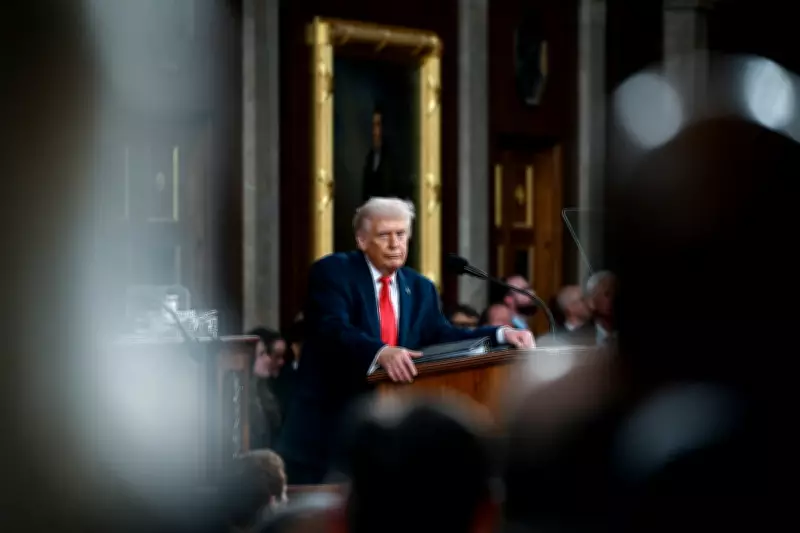
In a historic yet underwhelming display, Donald Trump fulfilled his constitutional duty by delivering the longest State of the Union address ever recorded, clocking in at one hour and 47 minutes. The speech, mandated by Article II of the US Constitution, was intended to inform Congress on the nation's status, but it often devolved into a meandering monologue that left many viewers fatigued.
A Performance Marked by Fatigue and Repetition
Throughout the address, Trump frequently read from the teleprompter in a robotic manner, appearing weary from the ordeal of appearing before Congress. His delivery, which he has previously described as "the weave," involved zigzagging between taunts directed at Democrats—such as labeling Zohran Mamdani a "communist"—and occasional claims of unity. At times, he engaged the audience like a seasoned comedian, calling out allies and targeting opponents, but these moments were overshadowed by long, lackluster segments.
The speech came at a critical juncture, just over six months before the midterm elections, as Trump's approval ratings have plummeted due to controversies over federal immigration agent killings and a confusing foreign policy that has alienated both his Maga base and traditional allies. Despite promises to avoid foreign entanglements, his administration is now deeply involved in conflicts with Iran and the Caribbean, while his "Board of Peace" has failed to garner international support, threatening global stability.

Economic and Social Issues Ignored Amidst Cultural Attacks
Trump attempted to distract from these pressing problems with cultural references and heroic anecdotes, including praising the US men's hockey team and invoking American history like the 250th anniversary celebrations. However, the address often felt like a "Bataan death march," lacking a coherent point and ignoring urgent topics such as potential war with Iran or the fourth anniversary of Putin's invasion of Ukraine.
Key domestic issues were also overlooked. Trump claimed the US was the "hottest" country, yet he ignored steep declines in favorability ratings and failed to address the killings of Renee Good and Alex Pretti by federal immigration agents in Minneapolis. Economically, his policies have faced backlash, with a "Trump slump" emerging as manufacturing jobs have declined by 108,000 over the past year, contrary to his tariff promises. Additionally, rising costs—such as hamburger prices up 17.2% and coffee up 18.3%—along with unaffordable housing for 65% of Americans, highlight ongoing struggles, exacerbated by healthcare subsidy expirations and tax cuts favoring the wealthy.
The Decline of the State of the Union as a Spectacle
This address further accelerated the decades-long decline of the State of the Union as a televised event. Trump's focus on personal obsessions over relevant issues, combined with a delivery that seemed out of steam, made it forgettable. Historians note parallels to Edward Gibbon's "History of the Decline and Fall of the Roman Empire," where civic institutions withered as people blamed foreigners and neglected cultural heritage. Similarly, Trump's speech reflected a disconnect from the needs of everyday Americans, raising questions about leadership and accountability in a polarized political landscape.