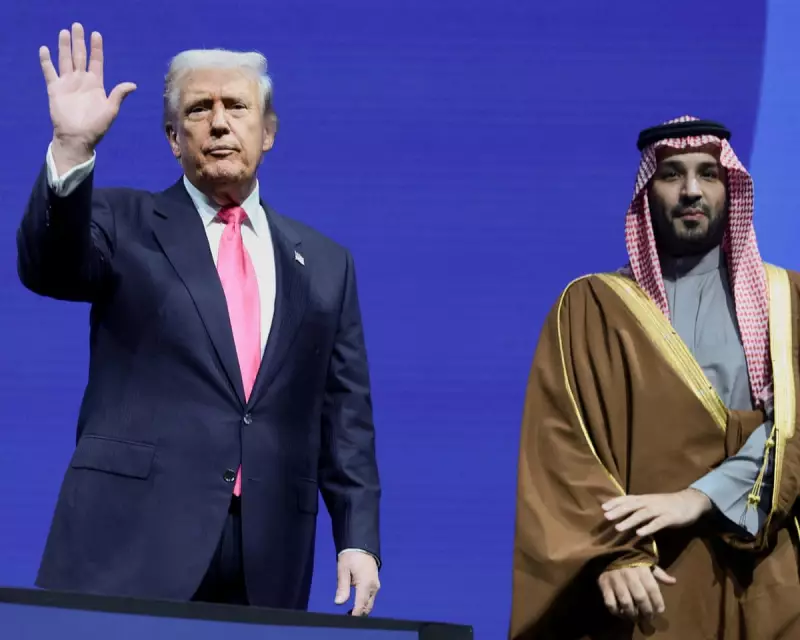
In a display of unwavering alliance, former President Donald Trump has lavished Saudi Crown Prince Mohammed bin Salman with an extravagant welcome during his US visit, underscoring a relationship that has weathered international condemnation and flourished through mutual business interests.
A Strategic Partnership Forged in Controversy
The appearance together at a US-Saudi investment summit at Washington's Kennedy Center forms part of what observers describe as a rehabilitation tour for Prince Mohammed. This comes years after US intelligence agencies concluded he had ordered the assassination of Jamal Khashoggi, the Washington Post columnist and Saudi dissident.
In October 2018, Khashoggi was ambushed inside the Saudi consulate in Istanbul by a 15-member hit team who dismembered his body with a bone saw. The brutal killing temporarily turned Prince Mohammed into an international pariah, but Trump never wavered in his support, protecting the prince from US sanctions and congressional pressure throughout his first term.
Business Deals and Mutual Backscratching
The crown prince later returned the favour during Trump's most vulnerable moment. Following the January 2021 Capitol riot, several US banks and businesses severed ties with the Trump Organization, which was already struggling with pandemic-related losses. Saudi Arabia emerged as a crucial lifeline, expanding real estate deals and golf partnerships that provided essential revenue.
During Trump's years out of power, the kingdom became one of the most significant sources of new deals for the Trump brand, which many American businesses considered toxic after the insurrection. Trump has now rewarded this loyalty with what amounts to a victory tour, complete with new American security guarantees and a planned sale of billions of dollars in advanced F-35 stealth fighter jets.
At the White House, Trump offered effusive praise before reporters and cabinet members. "I just want to thank you," Trump told the prince. "We've been really good friends for a long period of time. We've always been on the same side of every issue."
The Khashoggi Question and Defence Agreements
When questioned about Khashoggi's murder, Trump offered a startling defence. "Things happen," he said of the assassination, insisting Prince Mohammed "knew nothing about it" despite US intelligence concluding otherwise during his administration.
For Prince Mohammed, the visit's primary objective involved securing a defence cooperation agreement with the United States. While falling short of the formal treaty Saudi Arabia has long sought—which would require congressional approval—the agreement extends US defence guarantees, boosts weapons sales, and enhances intelligence sharing.
The proposed F-35 fighter jet sale raises concerns among Pentagon officials who fear China might acquire the aircraft's advanced technology through espionage or the kingdom's security partnership.
Trump also attempted to persuade the Saudi leader to normalise relations with Israel, hoping to secure a Nobel peace prize through such an agreement. However, Prince Mohammed has vowed not to sign any deal until Israel commits to establishing a Palestinian state.
The relationship's foundation extends deeply into Trump's business interests. After the PGA of America cancelled its 2022 championship at Trump's Bedminster golf club following the Capitol attack, the Saudi-funded LIV Golf league stepped in to host tournaments at Trump properties. These events brought Trump's courses back into professional golf and provided millions in revenue through site rental fees and associated services.
Governance watchdog groups argue these payments violate the constitution's foreign emoluments clause, which prohibits presidents from receiving gifts from foreign powers.
The Trump-Mohammed bond was cultivated during Trump's first term by his son-in-law Jared Kushner, who developed close ties with the crown prince as he consolidated power. Following Khashoggi's killing, the prince grew more dependent on Trump and Kushner, who shielded him from congressional demands for sanctions.
Trump's approach to the alliance strips away any pretence of concern for human rights, reducing the relationship to its transactional core: Washington protects the House of Saud in exchange for stable oil prices and consistent weapons purchases. As Trump expands this governing method in his second term, autocrats like Prince Mohammed stand ready to benefit from his brazen use of the presidency to enrich himself and his family.