Trump's Iran Strikes Ignite Long-Simmering US-Iran Hostilities
For millions of younger Americans, Iran's sudden prominence in national politics might seem unexpected. However, for those with historical awareness, Donald Trump's announcement of strikes against Iran represents the culmination of a conflict brewing for nearly half a century. The military operation, code-named Epic Fury, underscores the epic mutual resentments that have fueled tensions between the United States and Iran, finally erupting into open warfare.
The 1979 Revolution and Hostage Crisis: A Deepening Trauma
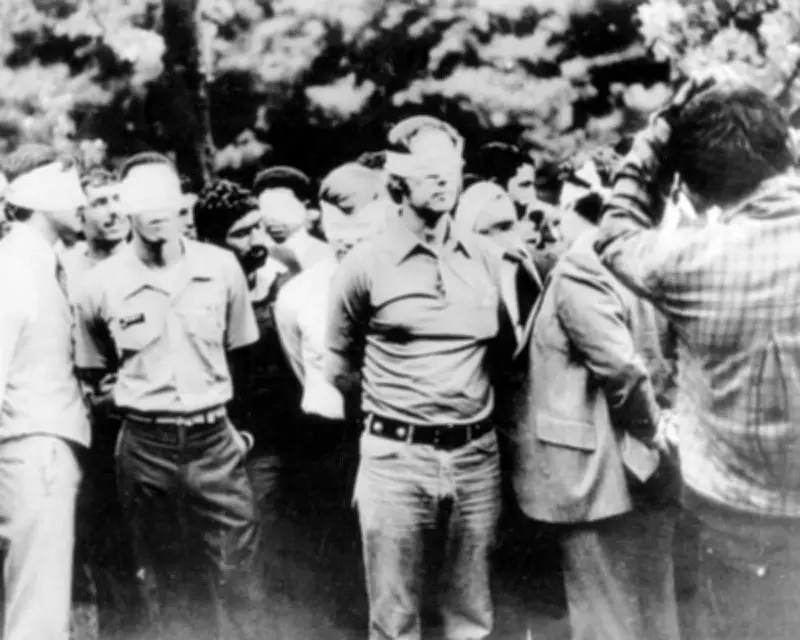
Iran has held a profound place in the American psyche since the Islamic revolution of 1979, a pivotal event that toppled the pro-western monarchy of Shah Mohammad Reza Pahlavi. This revolution inspired radical political Islamism, but it also delivered an immediate trauma to America. In November 1979, Islamist revolutionaries seized the US embassy in Tehran, humiliating the nation on a global scale. The 52 American hostages were held for 444 days, frequently paraded in public with blindfolds and subjected to mistreatment, including mock executions.
This crisis belittled American power and contributed to the downfall of President Jimmy Carter's administration. Carter's failed rescue attempt in the Iranian desert, which resulted in eight servicemen's deaths, intensified the national sense of disgrace. The enigmatic figure of Ayatollah Ruhollah Khomeini, the revolution's spiritual leader, further alienated many Americans as Iran adopted a strict sharia rule.
Carter lost the 1980 election to Ronald Reagan, but the hostages were not freed until moments after Reagan's inauguration, a move orchestrated by Khomeini to maximize American humiliation. While this ended the embassy drama, Iran's role in US foreign policy was firmly established, leading to further conflicts in the 1980s.
Historical Grievances and the Iran-Contra Affair
In the 1980s, Hezbollah, Iran's Lebanese proxy, began kidnapping Americans in Beirut. With diplomatic ties severed, Reagan initiated a clandestine mission to Iran, resulting in the Iran-Contra scandal. This involved secretly supplying weapons to Iran in exchange for hostages, with profits funneled to Nicaraguan rebels, violating congressional acts. The scandal nearly ended Reagan's presidency and deepened the psychic wound between the two nations.
The human drama of this era, marked by extensive media coverage and public symbols like yellow ribbons, may be forgotten by younger generations. However, it remains vivid for Donald Trump, who at nearly 80 has frequently criticized Carter as America's worst president. Trump now openly calls for regime change in Iran, aiming to topple the Islamic republic, a system despised by many Iranians too young to recall the revolution.
Iran's Historical Resentments and the 1953 Coup
While some younger Iranians view America and Trump as symbols of hope, Iran harbors deep historical grievances with the US, predating the revolution. These resentments fuel the regime's ideology, exemplified by chants of "death to America." A key event is Operation Ajax, the 1953 US-British coup that overthrew Prime Minister Mohammad Mosaddegh after he nationalized Iran's oil assets.
This coup, often seen as the CIA's first successful intervention, strengthened Shah Pahlavi's power, with US support perceived as puppet-mastery over Iran. Khomeini and others viewed the US as a patron of the shah's repressive regime, leading to widespread anti-American sentiment. By the 1970s, an estimated 50,000 Americans were in Iran, many military personnel, but cultural misunderstandings and incidents, such as westerners disrespecting mosques, exacerbated tensions.
When protests erupted in 1978, a key demand was to expel foreign, particularly US, interference from Iranian politics. Now, in a reversal, Trump's strikes and calls for regime change reintroduce US involvement into a nation historically resistant to foreign influence. Reza Pahlavi, the shah's son, has endorsed Trump's actions as humanitarian, while demonstrators chant slogans supporting the monarchy, contrasting sharply with past anti-shah sentiments.
Current Dynamics and the Illusion of Regime Change
The Islamic regime has shown ruthless determination to retain power, killing protesters in recent demonstrations. Despite widespread desire for change, regime transformation may prove elusive. As Trump and Pahlavi's supporters look to history, their vision is clouded by ongoing conflict and smoke from current strikes. This complex interplay of historical grievances and modern politics continues to shape the volatile relationship between the US and Iran, with no clear resolution in sight.