Trump's Fleeting Greenland Fixation Leaves World Leaders Exposed
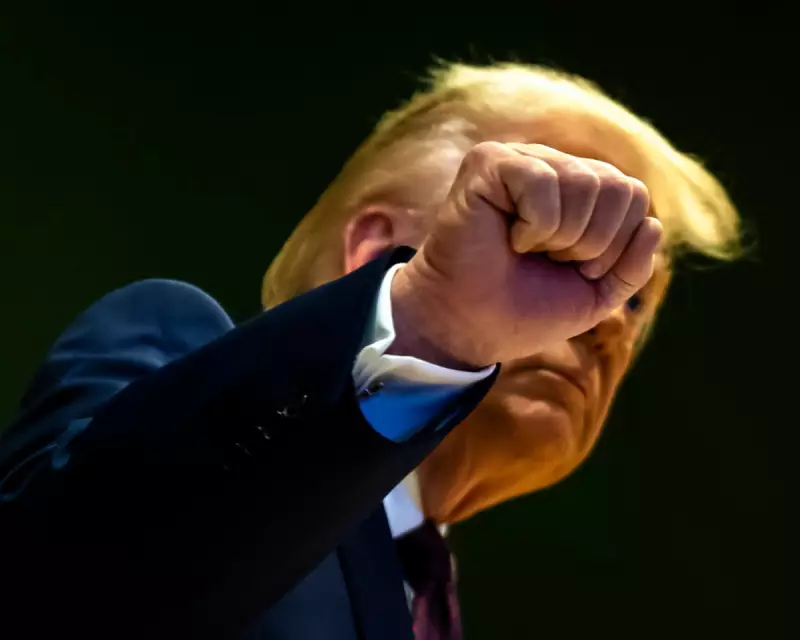
Donald Trump might simply have grown bored with Greenland. After fixating on it for nearly five days, he has already moved on to the next distraction. This pattern of rapid shifts in attention has become a hallmark of his unpredictable leadership style, leaving politicians and diplomats struggling to keep pace.
The Illusion of Political Control Shattered
In weeks like this, the carefully maintained facade of political control begins to crumble. Politicians typically cherish the illusion that they are in command, pulling all the levers of power with foresight and precision. This perceived authority sets them apart from the general public, offering a sense of stability and order. They present themselves as having answers to every challenge, never caught off guard by events.
However, when Trump enters the scene, this illusion is brutally dismantled. Our so-called emperors are revealed to have no clothes, their limitations laid bare for all to see. They find themselves scrambling merely to maintain their footing, attempting to interpret global events in real time just like everyone else. Their responses often appear improvised, lacking the strategic depth they claim to possess.

No Shame in Uncertainty, But Pretence is the Crime
To be fair, there is no inherent shame in admitting uncertainty. The real transgression lies in the persistent pretence of omniscience during calmer periods. Let's be honest: Trump himself likely has no clear idea of what he will do or say from one day to the next, making it improbable that anyone else could accurately predict his moves. He has even shown confusion over basic geography, such as mistaking Greenland for Iceland, quipping that both contain "land." This serves as a stark reminder that in Trump's world, the only certainty is uncertainty, much to the dismay of traditional politicians who crave predictability.
A Tumultuous Week of Contradictions and Chaos
The past few days have been particularly chaotic. Over the weekend, the US president threatened the UK and seven other European nations with tariffs for deploying troops to Greenland, shortly after demanding that NATO countries send military forces there. This contradictory stance left observers baffled, suggesting a scrambled thought process where synapses have not connected coherently in years.
Subsequently, Trump escalated by threatening a military invasion and sharing mock-ups depicting Greenland and Canada as US states, while disparaging his NATO allies. In a bewildering, borderline psychotic speech at Davos, he then claimed he would not seize Greenland by force but still desired to purchase it, vowing not to forget those who opposed him.
Political Leaders Grapple with a Shifting Global Order
Just as world leaders were attempting to process these developments, Trump announced on social media that he had met with NATO Secretary Mark Rutte and resolved the issue, declaring a deal had been struck—perhaps the "best deal in history." This sudden reversal triggered widespread surprise and confusion, as politicians raced to interpret a global order being rewritten in real time.
Some, primarily in the US, hailed it as a triumph of Trump's negotiation tactics, while others labelled it "Taco"—Trump Always Chickens Out—suggesting he backed down when unable to prevail. In the UK, Foreign Secretary Yvette Cooper was tasked with explaining the situation from the government's perspective. During an interview on the Today programme, when pressed by Amol Rajan about the deal's specifics, she offered vague platitudes about "determined diplomacy" and "unwavering principles," revealing she was as clueless as the public.
Speculation and Spin Fill the Information Vacuum
The deal could signify anything or nothing at all. Rutte might have reminded Trump of existing US rights in Greenland under a 1951 treaty, or Senator Marco Rubio may have persuaded him to retreat following stock market declines. Alternatively, Trump may have simply lost interest, having exhausted his attention span after five days. Cooper attempted to spin this vacuum, asserting that any deal was preferable to none, though subject to change, and crediting Keir Starmer's support for Greenland's sovereignty—a claim unchallenged in a world of relative truths.

Meanwhile, Nigel Farage offered his own reaction in Davos, displaying ignorance while criticising figures like Mark Carney, despite widespread praise for others' handling of the crisis. Farage's comments highlighted a fragmentation into national interests, though many observed a united European response, suggesting he relished being deliberately incorrect.
Ultimately, this episode underscores how Trump's capriciousness exposes the fragility of political certainty, forcing leaders to navigate a landscape where reality is constantly in flux.