Trump's Davos Display Highlights a Global Crisis of American Making
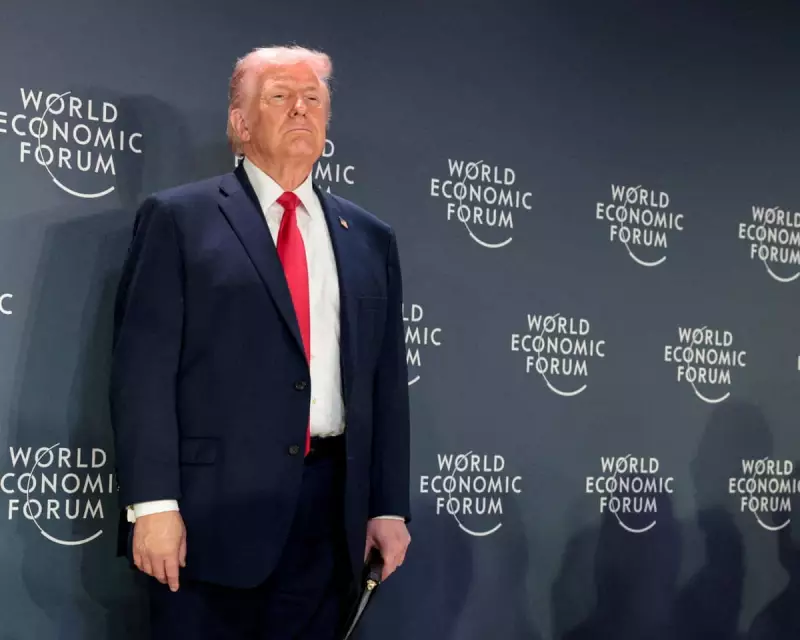
Donald Trump's appearance at the World Economic Forum in Davos on 21 January 2026 has crystallised international fears about his presidency. Photographic evidence from the event shows the 47th US president delivering what observers describe as a norm-shattering, profoundly ignorant speech that has sent shockwaves through diplomatic circles.
The Singular Problem of Trump's Presidency
Current analysis suggests that rather than representing a collapse of the global rule of law, the world faces a more specific crisis: Donald Trump himself. The president's approval ratings are plummeting dramatically, with most Americans now viewing him as a dangerous aberration in their political system. This perspective is increasingly shared by European allies who have borne the brunt of his contemptuous bullying and erratic policymaking.
The recent Greenland crisis exemplifies Trump's neo-imperial overreach, following similar interventions in Venezuela, Gaza and Iran. Rather than pursuing legitimate security concerns through established diplomatic channels, the administration appears determined to seize territory and resources regardless of local wishes or international law.

Davos Performance Reveals Unchecked Ambition
Trump's excruciatingly undignified performance in Davos revealed a leader whose egotism knows no limits. His proposal for a "board of peace" - essentially a $1 billion club for dictators with himself as chair-for-life - represents a transparent attempt to supplant the United Nations and establish an alternative global order based on personal loyalty rather than democratic principles.
European leaders responded with something approaching panic. EU Commission President Ursula von der Leyen warned that "the shift in the international order is not only seismic, it is permanent," while Canadian Prime Minister Mark Carney delivered what observers described as an eloquently apocalyptic assessment of the situation.
The American Dimension of the Crisis
Critically, this crisis represents a made-in-America problem requiring a made-in-America solution. Despite Trump's claims of a "landslide" victory in 2024, he actually edged the election with just 1.5% of the popular vote. Out of a registered electorate of 174 million Americans, approximately 97 million voted for somebody else or abstained entirely. Today, the anti-Trump majority has grown substantially larger.
The president's mishandling of the economy, particularly through destructive tariff wars, is fuelling an affordability crisis that affects ordinary Americans. Meanwhile, his violent anti-migrant paramilitary assaults on US cities are producing scenes reminiscent of dystopian fiction, while daily violations of constitutional principles, separation of powers, and civil liberties have become routine.
European Response and Limitations
European nations, including Britain under Keir Starmer's government, have maintained unfailingly polite diplomacy despite repeated betrayals over Ukraine, big-tech regulation, trade agreements, climate policy, Gaza aid, Palestinian statehood, and now the UK's record in Afghanistan. The diplomatic tone has hardened considerably since Davos, with one European diplomat describing the moment as a "Rubicon moment" in transatlantic relations.
There is growing consensus that Europe must do more to defend and promote its own security and values as an independent geopolitical player. However, significant limitations exist regarding what external actors can achieve against a determined American administration.
The Path Forward: American Democratic Action
Hope lies in the fact that most Americans recognise Trump as a mistake, if not an outright repulsive aberration in their political system. Polls consistently show that the majority remain firmly pro-Europe and pro-NATO, suggesting that Trump's isolationist tendencies do not reflect mainstream American sentiment.
The upcoming midterm elections represent one potential mechanism for reining in presidential excesses, though they feel distant to many observers. More fundamentally, the situation demands that America's silenced majority mobilises with speed, determination and unity to curtail what analysts describe as a despotic reign before matters deteriorate further.

Since 1945, Americans have assumed the role of global freedom's standard-bearer. The current crisis requires them to first liberate themselves from a presidency that threatens both domestic democracy and international stability. To escape the nightmare, rescue democratic institutions, and rebuild what was once described as the city on the hill, many argue that peaceful democratic action must prevail to remove what they characterise as a gaudy, gormless usurper of American values.