Davos Diplomacy Descends into Reality TV Spectacle
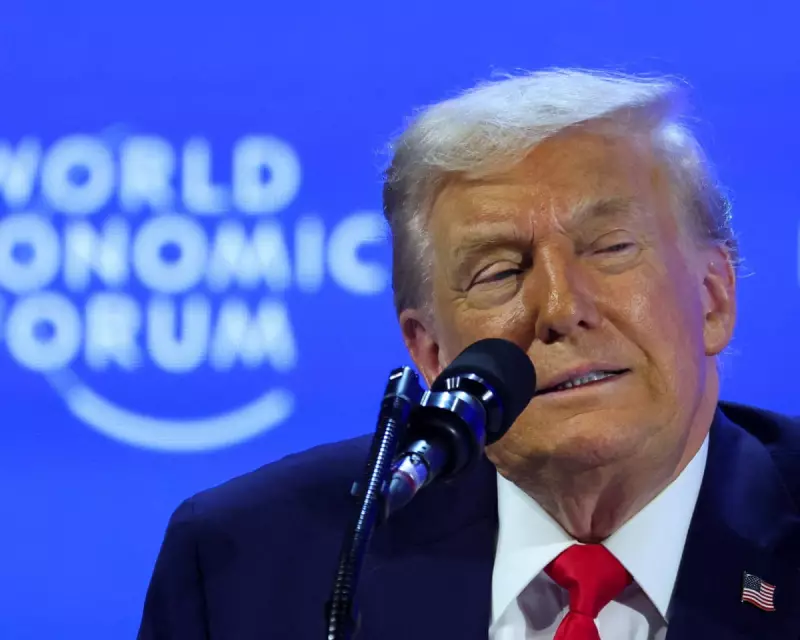
The annual World Economic Forum in Davos typically represents the pinnacle of sober global economic discourse. This week, however, it was transformed into an unlikely stage for high-stakes political theatre, courtesy of Donald Trump's rumbustious presidential presence. With his compulsive addiction to high-octane drama, Trump managed to turn the normally somnolent Swiss Alpine resort into a setting for a potential geopolitical confrontation that had diplomats holding their breath.
The Greenland Gambit: From Brinkmanship to Backdown
The extraordinary backdrop to Trump's Davos appearance was his startling demand to annex Greenland, which threatened to turn US military might against Denmark - a founding NATO member that hasn't suffered territorial attack since Nazi occupation in 1940. The collective exhaling of relief was palpable across the international community when Trump announced he was foregoing this option, though he pointedly stressed it remained available to him.
Trump presented his subsequent decision to drop planned tariffs on eight European countries as a personal triumph, claiming he had reached a "deal" allowing increased US presence in Greenland without encroaching on Danish sovereignty. Yet details of this supposed agreement with NATO Secretary General Mark Rutte remained conspicuously vague, bearing suspicious resemblance to rights the US has held in Greenland for decades.

European Pushback and Diplomatic Disarray
What emerged from the Davos gathering was evidence that European leaders are beginning to push back against Trump's mercurial approach. French President Emmanuel Macron, European Commission President Ursula von der Leyen, and Canadian Prime Minister Mark Carney all delivered fighting rhetoric challenging Trump's worldview. Carney notably told the forum that changes in US-allied relations signaled not "transition" but "rupture."
Trump's diplomatic efforts elsewhere proved equally problematic. His much-vaunted Gaza "board of peace" initiative gained little traction, particularly after he insisted on inviting Russian President Vladimir Putin despite Russia's refusal to agree to a Ukraine ceasefire. This undermined the initiative's potential appeal and highlighted the contradictions in Trump's foreign policy approach.
Reality Television Presidency Meets Global Diplomacy
Trump's Davos performance revealed the fundamental challenge of applying orthodox diplomatic measures to his presidency. His meandering speech contained multiple factual errors, including repeatedly referring to Greenland as Iceland - a mistake his press secretary attempted to deny despite clear video evidence. He also recycled familiar grievances, claiming no one had done as much for NATO while questioning whether allies would support the US in crisis, despite NATO's Article 5 only being invoked after the September 11 attacks.
The president's assertion that without the US military all Europeans would be speaking German was particularly ironic given his location in a German-speaking region of Switzerland. Such glaring inconsistencies have become increasingly characteristic of Trump's public appearances, making claims of diplomatic victory difficult to sustain for all but his most ardent supporters.
A Temporary Respite in an Era of Uncertainty
Fundamental questions remain about Trump's true intentions. Was the Greenland demand ever genuine, or merely a strategic ploy to keep allies off-balance and vulnerable to presidential whims? Some domestic critics suggest it may have been designed to divert attention from other controversies, including the Epstein files that continue to shadow his administration.
What remains undeniable is the palpable sense of relief among America's traditional allies that immediate catastrophe was averted. Yet this relief is tempered by profound uncertainty. Trump's capricious nature and reality television approach to governance mean that any perceived diplomatic gain may prove illusory. For NATO partners and European allies, the avoidance of disaster over Greenland represents not resolution but merely temporary respite before the next unpredictable crisis emerges from a presidency that continues to turn global affairs inside out.

The enduring lesson from Davos may be that in the Trump era, traditional diplomatic victories are being replaced by the mere avoidance of catastrophe - a precarious foundation for international relations in an increasingly volatile world.