Trump's 'Board of Peace' Transforms into a Global Executive Experiment
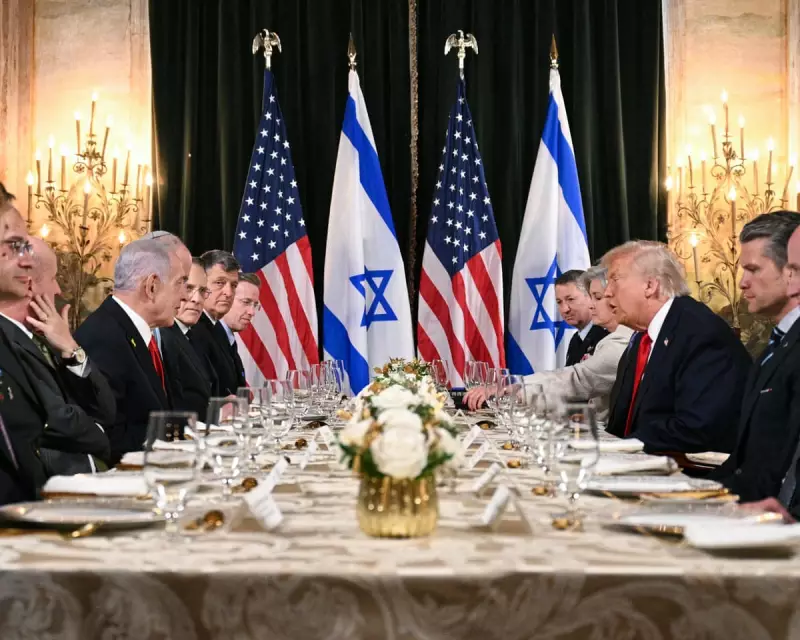
Donald Trump and Benjamin Netanyahu are conducting a bold experiment in executive control, with implications far beyond the Middle East. What began as a temporary oversight mechanism for Gaza's reconstruction is quietly evolving into a permanent system of external governance, raising urgent questions about the future of Palestinian self-determination and global power structures.
From Gaza Focus to Global Ambitions
In recent announcements, the so-called "Board of Peace" has shifted dramatically from its original narrow focus on Gaza. Initially framed as a tool to manage post-conflict rebuilding, it is now being positioned as a standing global institution, chaired by Trump himself and operating parallel to the United Nations. The chair holds significant authority, including setting agendas, calling meetings at will, and issuing unilateral resolutions. Over 60 world leaders have reportedly been invited to participate, with membership fees set at $1 billion for terms exceeding three years.
During a marathon speech at Davos, European leaders expressed relief as Trump ruled out using force against Greenland or imposing crippling tariffs. However, his announcement of a "framework for a future deal" on the Arctic territory was met with profound scepticism locally, highlighting the contentious nature of his diplomatic manoeuvres.

Historical Parallels and Imperialist Fears
Palestinian-American historian Rashid Khalidi offers a stark perspective on these developments. He argues that Trump's actions represent a return to a pre-First World War era of naked imperialism, not just in Palestine but in regions like Venezuela, Canada, and Mexico. Khalidi emphasises that while the mechanisms may differ, the underlying dynamics of corporate and billionaire-driven policy resemble 19th-century colonial practices, such as those seen in South Africa with mining magnates dictating British policy.
The board's charter, circulated among global leaders, recasts it as a permanent body promoting peace and "good governance" worldwide. Its structure includes an executive body with figures like US Secretary of State Marco Rubio, former British Prime Minister Tony Blair, and Trump's son-in-law Jared Kushner, alongside a Gaza-specific committee where Palestinians have limited roles. Security would be managed by an international stabilisation force under US command.
Impact on Palestinian Governance and Sovereignty
Khalidi describes the current situation as a joint "condominium" between American and Israeli governments, with Palestinians subject to external control. He notes that Israel has opposed any return of Palestinian governance to Gaza, yet Netanyahu accepted a position on the board despite initial objections to countries like Turkey and Qatar. This arrangement, Khalidi argues, makes the US an open partner in Israel's policies, abandoning any pretence of being an honest broker.
Recent events underscore this dynamic. Israel barred a committee of Palestinian technocrats from entering Gaza, despite agreements for their role in day-to-day administration. Khalidi points to ongoing violence, with over 464 Palestinians killed since a ceasefire was announced, and highlights issues like starvation and hypothermia among children. He criticises the Palestinian Authority as "subcontractors for the Israeli occupation," lacking genuine representation.
Future Prospects and Resistance
Looking ahead, Khalidi doubts that Gaza will ever be fully demilitarised, citing historical failures by Israel in 1956 and 1967. He suggests that while Hamas may offer to decommission heavier weapons, Israel is likely to remain unsatisfied, potentially leading to renewed conflict if Trump's whims shift. However, he believes widespread public awareness is growing, with people seeing through mainstream media narratives and recognising the realities of Israeli control over Palestinian lives.

Despite what he calls "one of the worst periods in Palestinian history," Khalidi notes resilience on the ground, with communities refusing to leave their land despite harassment. In Gaza, where casualties exceed 70,000, he emphasises that Palestinians prefer to endure hardships rather than become refugees, a testament to their enduring connection to their homeland.
Broader Implications and Global Context
This experiment in executive control extends beyond Palestine, reflecting broader trends in global politics. Trump's board challenges the United Nations' authority, potentially reshaping international diplomacy. As Khalidi puts it, "People have changed. They've seen what cannot be unseen," indicating a shift in public perception that may influence future movements for justice and self-determination worldwide.