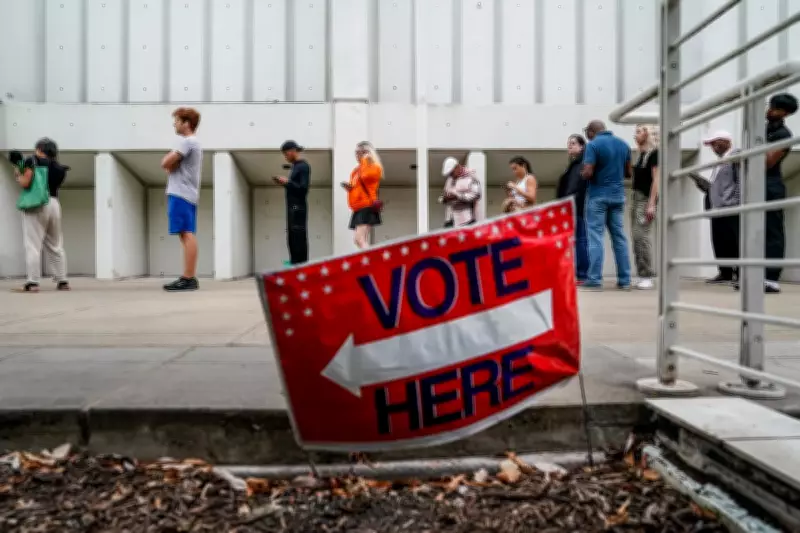
Trump's 'Take Over Voting' Comments Trigger Democracy Concerns Ahead of US Election
Democracy experts across the United States are sounding alarm bells following Donald Trump's recent call for the federal government to "take over the voting" in certain states. The former president's comments, made during an interview this week, have raised serious questions about potential interference in the upcoming November elections and the integrity of America's democratic processes.
Escalating Rhetoric and Unprecedented Actions
The concerning remarks came shortly after an unprecedented FBI raid on the election office in Fulton County, Georgia, where federal agents seized ballots and other materials related to the 2020 presidential election. Trump escalated his attack on election integrity during a recent interview, stating: "The Republicans should say, 'We want to take over.' We should take over the voting, the voting in at least many – 15 places. The Republicans ought to nationalize the voting."
For months, the Trump administration has been stoking doubts about American election integrity through various legal challenges and public statements. However, democracy experts believe this latest development represents a significant escalation that leaves little doubt about Trump's intentions regarding the upcoming elections.

Constitutional Limitations and Emergency Power Concerns
While election experts are clear that the president has no constitutional authority over state-run elections, they warn that Trump's rhetoric could be laying groundwork for potential interference. The US Constitution explicitly gives states the power to run elections under Article I, section 4, with Congress only able to pass nationwide rules for federal elections.
Despite these clear limitations, Trump and his allies have suggested the president might be able to wield emergency powers to take control of electoral processes. Conservative lawyer Cleta Mitchell, a Trump ally, suggested on a podcast last year that "maybe the president is thinking he will exercise some emergency powers to protect the federal elections going forward."
Wendy Weiser, vice-president for democracy at the Brennan Center for Justice, strongly refuted this possibility: "The president has zero emergency powers over elections. None of those powers even come close to giving the president any authority over elections."
Wider Implications and Expert Warnings
The presence of Tulsi Gabbard, the director of national intelligence, at the Fulton County raid has further amplified concerns about potential overreach. Gabbard's involvement in a domestic election matter has caused widespread concern among democracy advocates and constitutional experts.
Weiser warned that Trump's comments represent part of a broader pattern: "There is a full-blown effort to seize control of some of the mechanisms of our elections and to lay the foundation for interfering in upcoming elections. We should not be waiting for the next shoe to drop."
Other concerning developments include calls from influential conservative figures like Steve Bannon for Trump to deploy ICE agents at polling stations, which would violate federal laws prohibiting federal troops from being present at polls except under extreme circumstances.
Historical Context and Legal Precedents
The Trump administration has previously shown willingness to test the boundaries of emergency powers. Last spring, the administration invoked the 18th-century Alien Enemies Act to justify deporting immigrants without full due process, though federal judges have since blocked this order. Trump has also claimed emergency powers to impose tariffs, though the Supreme Court appears likely to reject this argument.
Experts suggest Trump's current rhetoric about nationalizing elections may represent an attempt to normalize ideas that are fundamentally at odds with American democratic principles. Weiser explained: "He is trying to socialize an idea that has nothing to do with what our actual system is and that is actually against the law, to change public expectations about what's actually valid and allowed."

Despite ongoing claims about election integrity, there remains no evidence of widespread fraud in the 2020 election or any other recent American elections. The White House press secretary has attempted to frame Trump's comments as being about the need to change federal voting laws, but Trump himself has undercut these efforts by criticizing Democratic-led cities and suggesting they cannot count votes legally.
As the November elections approach, democracy experts continue to warn that Trump's rhetoric represents a significant threat to electoral integrity and democratic norms in the United States.