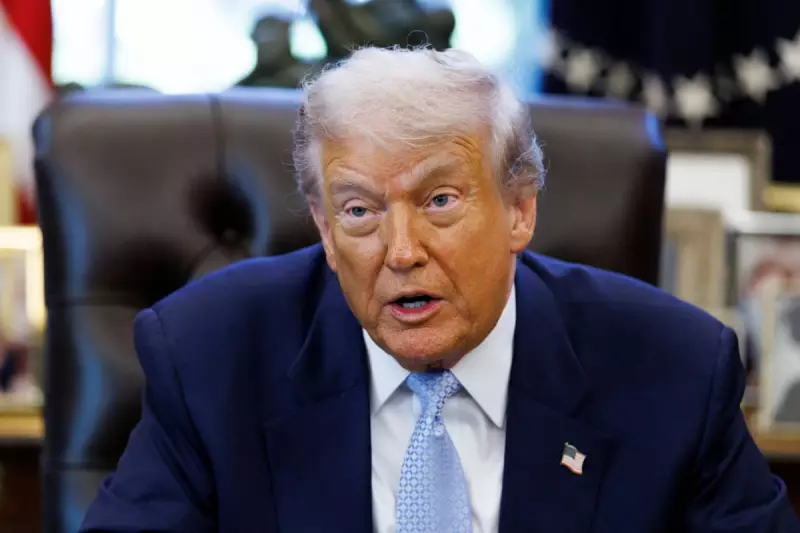
In a significant political reversal, former President Donald Trump is expected to sign a bill that will compel the US Justice Department to release a trove of previously undisclosed files related to the late financier and convicted sex offender, Jeffrey Epstein.
A Swift Reversal on Epstein Document Release
The move marks a dramatic shift in position for Trump, who had previously fought vigorously against making the Epstein files public. He had repeatedly labelled the issue a "hoax" and criticised those pushing for transparency. However, his stance changed abruptly in recent days as it became clear the House of Representatives would pass the legislation regardless.
Justifying his about-face, Trump stated, "we have nothing to hide" and that it was time to move on from what he called a "Democrat Hoax perpetrated by Radical Left Lunatics." He framed the decision as a way to deflect from what he termed the Republican Party's recent successes.
Following Trump's indication of support, Republican holdouts swiftly moved the bill through the House and then the Senate. This followed months of stalling by House Speaker Mike Johnson, who had expressed hope the Senate would amend the bill, a hope that was not realised.
What the Epstein Bill Demands
The newly passed legislation mandates that the US Attorney General make a wide array of unclassified Epstein-related documents publicly available in a searchable and downloadable format within 30 days. The required materials include:
- All investigations into Epstein and his associate, Ghislaine Maxwell.
- Epstein's flight logs and travel records.
- Details on individuals named in connection with his crimes.
- Entities linked to his trafficking or financial networks.
- Immunity deals and other plea agreements.
- Internal communications regarding charging decisions.
- Documentation of his detention and death.
The bill does, however, provide specific exceptions to protect sensitive information. Redactions will be made to conceal victims' identities, personal files, depictions of child sexual abuse, and any material that could jeopardise active investigations.
Context and Contentious History
This development comes after the Justice Department asserted earlier this year that it had already released all possible documents without hindering investigations or violating court orders protecting victims. A July memo from the department clarified that much of the material remains subject to court-ordered sealing, intended primarily to safeguard victims rather than to shield third parties from allegations.
Previous document releases by members of Congress have already shed light on Epstein's relationships with prominent figures, including former Treasury Secretary Larry Summers and Trump biographer Michael Wolff. These files also contained several references to Trump himself, with whom Epstein was once friends.
In one disclosed email, Epstein told Wolff, "Of course, he knew about the girls as he asked Ghislaine to stop." In other communications, Epstein made derogatory remarks about Trump, calling him "the dog that hasn't barked" and stating, "I have met some very bad people. None as bad as Trump. Not one decent cell in his body." It is crucial to note that these mentions do not imply Trump was involved in any criminal activity.
The impending release of further documents is poised to reignite public and political scrutiny of one of the most notorious criminal cases in recent history, potentially revealing new details about the scope of Epstein's network.