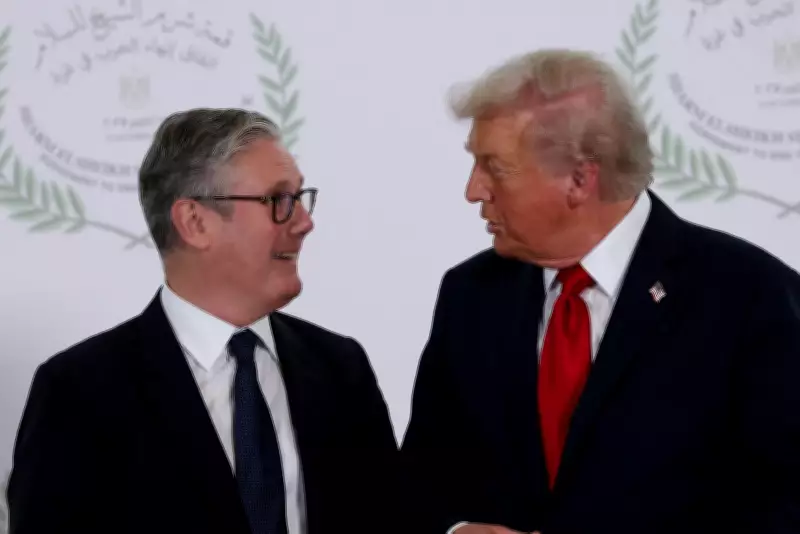
Trump Voices Sadness Over Special Relationship Breakdown in Escalating Dispute with Starmer
Former United States President Donald Trump has publicly lamented what he describes as the collapse of the historic special relationship between the United States and the United Kingdom. This emotional declaration comes amid an escalating diplomatic spat with British Prime Minister Keir Starmer over the UK's refusal to permit American forces to utilize military bases for offensive operations against the Iranian regime.
"Very Sad" Decline of a Historic Alliance
In candid remarks published on Tuesday morning, Trump characterized the deterioration of the bilateral relationship as profoundly disappointing. "This was the most solid relationship of all. And now we have very strong relationships with other countries in Europe," Trump told The Sun newspaper, expressing his disbelief at the current state of affairs. "I never thought I'd see that. I never thought I'd see that from the UK. We love the UK."
The former president emphasized that the alliance has fundamentally changed, stating, "It's not like it used to be. It's a different world, actually. It's just a much different kind of relationship that we've had with your country before. It's very sad to see that the relationship is obviously not what it was." These comments represent Trump's second consecutive day of criticism directed at Prime Minister Starmer, whom he accused of not being "helpful" in the ongoing geopolitical tensions.

Military Base Dispute at the Heart of the Conflict
The core of Trump's grievance stems from a decisive move by the British government on Saturday morning. UK authorities explicitly prevented American military forces from using bases located within the United Kingdom and the Chagos Islands to launch attacks targeting Iran. This decision occurred against the backdrop of escalating conflict involving Israel, the United States, Iran, and its proxy militant groups, including Hezbollah, with Israeli troops having recently entered Lebanese territory.
Trump first signaled his displeasure in an interview with The Telegraph on Monday, stating he was "very disappointed" in Prime Minister Starmer. This public rebuke marked the clearest indication of the former president's anger regarding the UK's strategic positioning.
Starmer's Firm Rebuttal and Appeal to International Law
Later on Monday, Prime Minister Starmer delivered a pointed response during a statement to the House of Commons. He appeared to directly challenge Trump's justification for military engagement, asserting that the British government "does not believe in regime change from the skies." This statement was widely interpreted as a direct critique of Trump's proposed military planning and strategic approach.
"President Trump has expressed his disagreement with our decision not to get involved in the initial strikes, but it is my duty to judge what is in Britain's national interest," Starmer told Members of Parliament. He further elaborated that the UK had learned critical lessons from past interventions, specifically referencing the "mistakes of Iraq," and underscored the necessity of establishing a "lawful basis" for any military engagement.
Domestic Political Criticism and Subsequent Compromise
The Prime Minister's stance has not been without domestic detractors. Both Conservative Party figure Kemi Badenoch and Reform UK leader Nigel Farage have launched scathing criticisms against Starmer. They condemned his reliance on international law frameworks, with each leader arguing that Starmer made a fundamental error by failing to support the United States from the outset of the conflict.
In a subsequent development, the UK government has since authorized a more limited use of its military facilities. British bases can now be used by US forces for "specific and limited defensive purposes." This compromise notably includes permitting strikes against military assets belonging to Iran, provided such actions occur within Iran's own borders, marking a nuanced shift in the UK's operational permissions amid continued diplomatic strain.