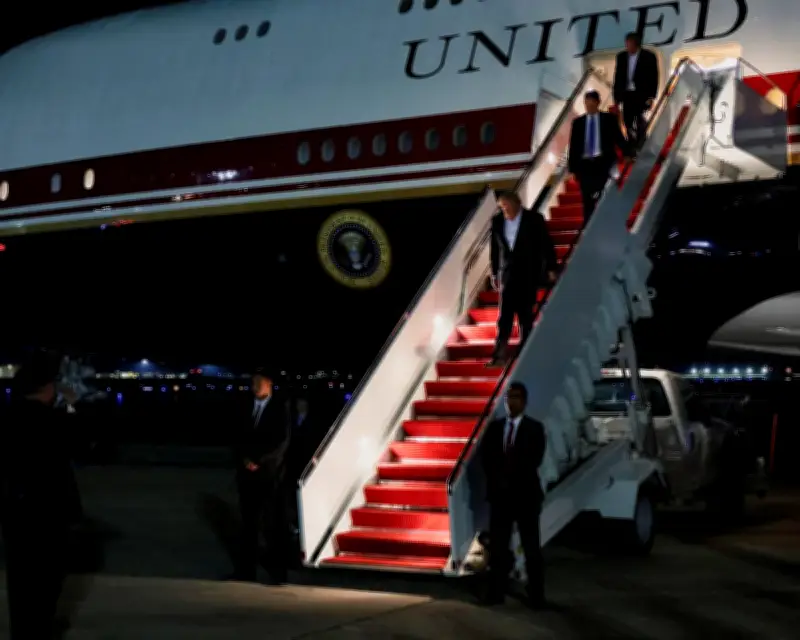
The Trump administration has escalated its attacks on the press by issuing subpoenas to New York Times reporters, targeting journalism that is protected by the First Amendment. Federal agents delivered the subpoenas to reporters' homes, demanding testimony about their reporting on a Boeing 747 jet donated to Trump by Qatar.
Subpoenas Target Reporters' Sources
The subpoenas compel reporters to testify before a grand jury, threatening the confidentiality of their sources. The Times reported that the plane, intended as a new Air Force One, lacked sufficient security features, based on information from anonymous sources briefed on the plane's capabilities. These sources spoke at significant personal risk, trusting the Times to protect their identities.
Stephen Adler, chairperson of the Reporters Committee for Freedom of the Press, said, 'When the public’s right to know is crushed, as the Trump administration is trying to do … all of us suffer irreparable harm.' The Times' top editor, Joseph Kahn, called the subpoenas 'a naked attempt to intimidate individual reporters and to prevent The Times and other independent news media from doing important reporting protected by the First Amendment.'
Public Interest Reporting Under Fire
The reporting in question revealed that the donated aircraft, which Trump wanted as a new Air Force One, did not have all the security features of the older plane. The Secret Service advised Trump not to use it when leaving Turkey, and a full upgrade could cost up to $1 billion. This reporting is clearly in the public interest, exposing potential taxpayer costs and national security concerns.
Trump's administration launched a leak investigation, asking the Times to withhold the story for national security reasons before publication. The Times proceeded, upholding its journalistic duty.
A History of Antagonism
Trump has long been antagonistic toward the press, but his second term has seen increased aggression. In January, FBI agents seized phones and laptops from Washington Post reporter Hannah Natanson amid an investigation into a government contractor accused of retaining classified documents. Natanson had reported on the administration's efforts to cut the federal workforce through the now-disbanded Doge program.
The Times and Trump are also embroiled in other legal battles, including a defamation claim by Trump and the paper's lawsuit against the Defense Department over restrictions on Pentagon reporters. However, delivering subpoenas to reporters' homes represents a new level of attack.
Threat to Democratic Accountability
This action is a shameless effort to deny citizens their right to know what the government is doing and how it spends their money. As former Washington Post editor Martin Baron famously said of his staff's journalism, 'We’re not at war with the administration. We’re at work.'
The Trump administration, once again and more brazenly than ever, has its relationship with the press backwards, undermining a foundational right to gather information in the public interest.