Donald Trump has withdrawn his threat to impose a 20% toll on ships passing through the Strait of Hormuz, instead announcing investment and trade deals with Gulf Arab states, as US and Iranian airstrikes resumed for a third day. The US president said he made the decision based on "highly productive conversations with Middle East leadership" and touted "massive" investments, just five hours before the toll was due to take effect. He confirmed the US would continue to blockade Iranian ports.
US and Iran exchange strikes
The US military launched strikes on Iran early Tuesday, targeting port cities of Bushehr and Bandar Abbas in a five-hour operation. The US said the strikes aimed to "degrade Iran's ability to attack commercial shipping." Iranian state TV reported explosions west of Bandar Abbas, as well as in Bushehr and Choghadak, and later on Qeshm Island near the Strait of Hormuz.
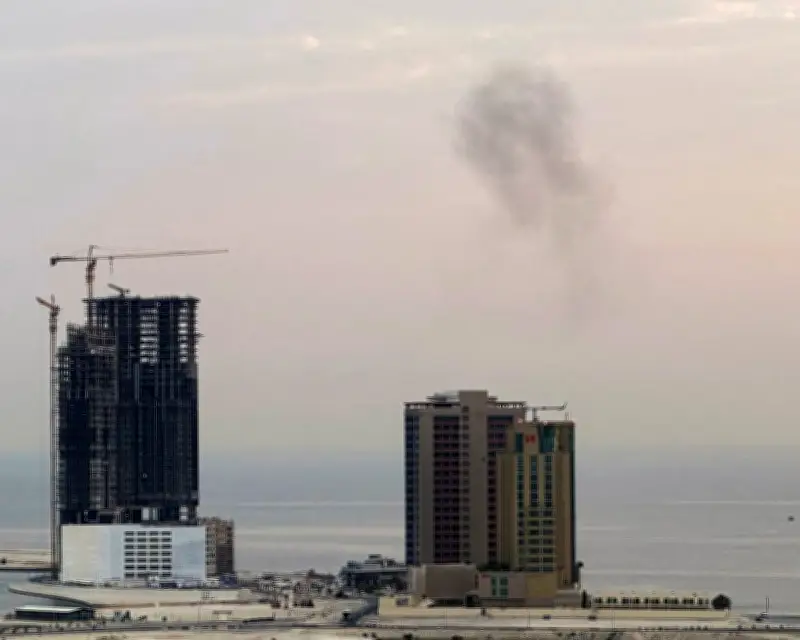
In retaliation, Iran targeted Bahrain, home to the US Navy's fifth fleet; Jordan, which hosts US air force assets; and two tankers associated with the United Arab Emirates in the Strait of Hormuz. Kuwait's army reported intercepting "hostile" projectiles on Tuesday evening. Bahrain said it intercepted several attacks and accused Iran of targeting civilians after explosions in Manama. Jordan confirmed it intercepted four Iranian missiles.
Impact on strait reopening and oil prices
The attacks hinder efforts to reopen the Strait of Hormuz, which Iran effectively closed during a four-month war with the US. A memorandum of understanding (MoU) between the two countries was intended to reopen the strait, but violence and stalled negotiations have blocked progress. The countries are nearly halfway through the 60-day negotiation period set by the MoU, with little progress on key issues including the strait, Iran's nuclear program, and regional disputes.
Crude oil prices rose to a four-week high of over $86 a barrel on Tuesday, though still below the peak of nearly $120 during the war. Analysts have warned that reopening the strait by force would require a military campaign involving tens of thousands of US troops.
International reactions and casualties
US attacks on Iran have killed at least 28 people since last week, according to Agence France-Presse. India lodged a strong protest with Iran after one Indian seafarer was killed and 10 others seriously wounded in Iranian attacks on two tankers. The European Union Aviation Safety Agency warned airlines to avoid flying over Bahrain, Kuwait, Qatar, the UAE, and the Gulf of Oman due to "unpredictable military developments."
Iranian Foreign Minister Abbas Araghchi reiterated that Tehran would be the guardian of the Strait "for ever." On Trump's toll threat, he said on X: "20% is of course too much. We will be fair."
Lebanon-Israel talks continue
Lebanese and Israeli delegations met in Rome on Tuesday for US-mediated negotiations. Lebanon seeks Israeli withdrawal from over 600 sq km of occupied territory. Last month, a framework agreement was reached for Israeli withdrawal from "pilot areas" in south Lebanon, with the Lebanese army to prevent Hezbollah's return. Israeli Foreign Minister Gideon Saar said Israel was ready to implement two pilot zones, calling the framework "the only way forward." Lebanese President Joseph Aoun demanded immediate Israeli withdrawal from the pilot zones before other discussions. Hezbollah, not a party to the talks, has called on the government to stop negotiations.