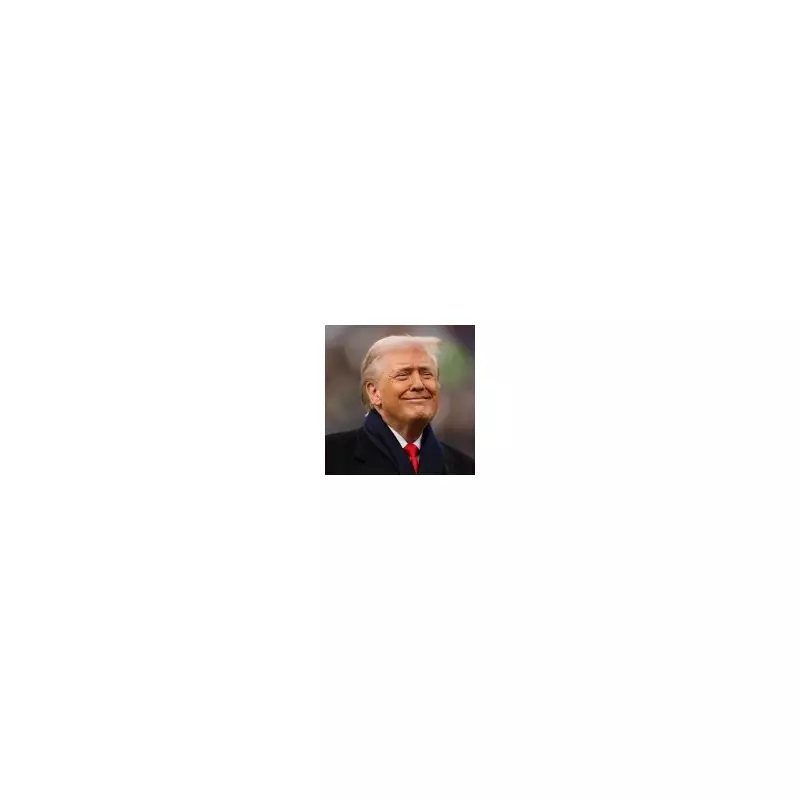
Former US President Donald Trump has ignited a fresh political firestorm by declaring himself the 'Acting President of Venezuela' in a brazen online post. The provocative move, described by many as classic 'rage bait', has thrown a spotlight on the deepening US involvement in the South American country's turbulent affairs.
The Viral Provocation and Military Backdrop
On 12 January 2026, Trump shared an image on his Truth Social platform of a fabricated Wikipedia entry. The mock-up listed him as the 'incumbent' leader of Venezuela, dating from January 2026. The page cleverly mimicked his genuine biography, which correctly identifies him as the 45th and 47th President of the United States.
The post rapidly went viral, amassing more than 25,000 likes and 6,600 reshares. User reactions ranged from calling Trump a controversy-lover to praising the prank as 'absolutely hilarious'. This online stunt followed a significant real-world event: the US military's capture of Venezuelan President Nicolás Maduro. He was taken to New York and charged with drug trafficking, though he has pleaded not guilty and maintains he is Venezuela's legitimate leader.

Trump later elaborated on his ambitions at a press conference held at his Mar-A-Lago estate. He stated his intention to 'run' Venezuela and plans to harness the nation's vast oil reserves for international sales. This has been followed by meetings with executives from America's leading oil corporations to discuss managing Venezuela's natural resources.
Corporate Hesitance and a Daunting To-Do List
However, Trump's commercial vision has already hit a snag. Darren Woods, CEO of ExxonMobil, reportedly told Trump that the corporation currently views Venezuela as 'uninvestable'. An evidently displeased Trump criticised Exxon's response as 'playing too cute' while speaking to reporters on Air Force One.
Should Trump seriously attempt to govern Venezuela, the scale of the crisis he would inherit is staggering. The nation faces a catastrophic array of problems that any acting president would need to address immediately:
- Narcoterrorism & Crime: A rampant flow of narcotics and one of the world's highest murder rates.
- Economic Collapse: An employment crisis where only 19% of adults were in full-time employment last year, compounded by hyperinflation and poverty.
- Humanitarian Disaster: Severe food insecurity, a refugee exodus of roughly 8 million people since 2014, and dire risks to children including malnutrition and forced recruitment by armed groups.
- Infrastructure & Social Services: Collapsing public transport, inadequate healthcare, and threats to the rights of women, girls, and indigenous peoples.
Political Maneuvering and Economic Control
Following Maduro's capture, his former vice president, Delcy Rodriguez, was sworn in as Venezuela's interim leader last week. She has vowed to seek 'respectful relations' with the US. Trump, however, has issued a stark warning, suggesting she will face a fate 'worse than Maduro's' if she fails to overhaul Venezuela in line with US interests.
The White House is framing its intervention in stark economic terms. Actions already underway include:
- Seizing tankers carrying Venezuelan oil.
- Taking over sales of 30 million to 50 million barrels of previously sanctioned crude.
- Planning to control worldwide sales indefinitely.
To cement this control, Trump signed an executive order designed to shield Venezuelan oil revenue from being seized in judicial proceedings. The order argues such seizures could 'undermine critical U.S. efforts to ensure economic and political stability in Venezuela'. This move occurs against a backdrop of decades of political uncertainty, state asset seizures, and ongoing US sanctions.
The situation remains highly volatile, with Trump's social media bravado acting as a loud and controversial amplifier for a complex, high-stakes geopolitical power play.