
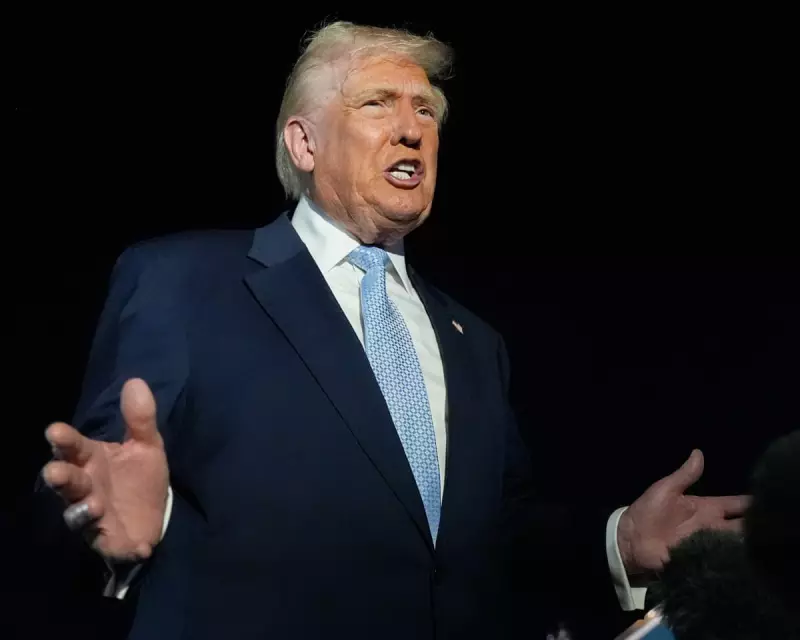
Former President Donald Trump has dramatically reversed his previous position by urging Republican lawmakers to support the release of documents related to the Jeffrey Epstein case, marking a significant shift in his approach to the controversial matter.
Trump's Surprising Change of Heart
In a post on his Truth Social platform, Trump declared that House Republicans should vote to release the Epstein files, stating emphatically that "we have nothing to hide." This unexpected move comes after House Speaker Mike Johnson indicated that releasing justice department documents concerning Epstein could help dispel allegations connecting Trump to the scandal.
The timing of Trump's announcement is particularly noteworthy, as the House was already expected to vote on releasing the files as early as this week. The reversal appears aimed at addressing growing suspicions within Trump's loyal "Make America Great Again" base that authorities might be concealing details about Epstein's crimes to protect wealthy elites associated with the financier.
Ongoing Tensions with Republican Colleagues
Despite his change of position on the Epstein documents, Trump maintained his attacks against Republican lawmaker Marjorie Taylor Greene, who has been vocal in demanding the files' release. Greene has expressed hope for reconciliation, but Trump's continued criticism suggests ongoing divisions within the Republican party.
The Epstein case continues to generate intense public interest, with the financier having associated with numerous high-profile figures across political and business circles before his death in prison while awaiting trial on sex trafficking charges.
Disturbing Findings on Palestinian Detainee Deaths
In separate developments, an Israel-based human rights organisation has revealed alarming data showing that at least 98 Palestinians have died in Israeli custody since October 2023. Physicians for Human Rights - Israel warns that the actual death toll is likely substantially higher due to hundreds of missing individuals detained in Gaza.
The organisation compiled its findings through freedom of information requests, forensic reports, and interviews with lawyers, activists, relatives and witnesses. Their investigation identified physical violence, medical neglect and malnutrition as primary causes of death among detainees.
Official Israeli data covering the first eight months of the conflict shows an unprecedented casualty rate among Palestinian detainees, with one death occurring every four days on average during this period.
Chile's Presidential Race Takes Shape
Meanwhile in South America, ultra-conservative lawyer José Antonio Kast has emerged as the frontrunner to become Chile's next president after advancing to the second round of elections. Kast secured approximately 24% of votes in Sunday's first-round ballot, running a campaign with distinctly Trumpian themes.
The hard-line candidate has promised to crack down on crime and immigration while making a "put Chileans first" pledge reminiscent of Trump's political rhetoric. He will face Communist party candidate Jeannette Jara, who won slightly more support with about 26% of votes, in the runoff scheduled for 14 December.
Kast's position strengthened significantly after other right-wing candidates, who collectively captured nearly 30% of votes, threw their support behind him, making him the clear favourite for the upcoming decisive vote.
Other Significant Developments
In Bangladesh, deposed prime minister Sheikh Hasina has been sentenced to death in absentia for crimes against humanity related to her government's crackdown on a student-led uprising last year. Hasina currently lives in exile in neighbouring India.
The United States military reported attacking another alleged drug trafficking vessel in the eastern Pacific on Saturday, resulting in three fatalities onboard according to Pentagon statements.
In cultural news, Paul McCartney is releasing a track featuring an almost completely silent recording studio as part of music industry protests against copyright theft by artificial intelligence companies.
Financial markets reacted to geopolitical tensions as shares in Japanese tourism and retail firms fell sharply, with cosmetics company Shiseido experiencing a 9% slump. The decline followed China advising its citizens against travel to Japan amid escalating disputes over comments by Japanese Prime Minister Sanae Takaichi concerning Taiwan.




