Trump's Endorsement Bolsters Orbán Amid Tight Election Race
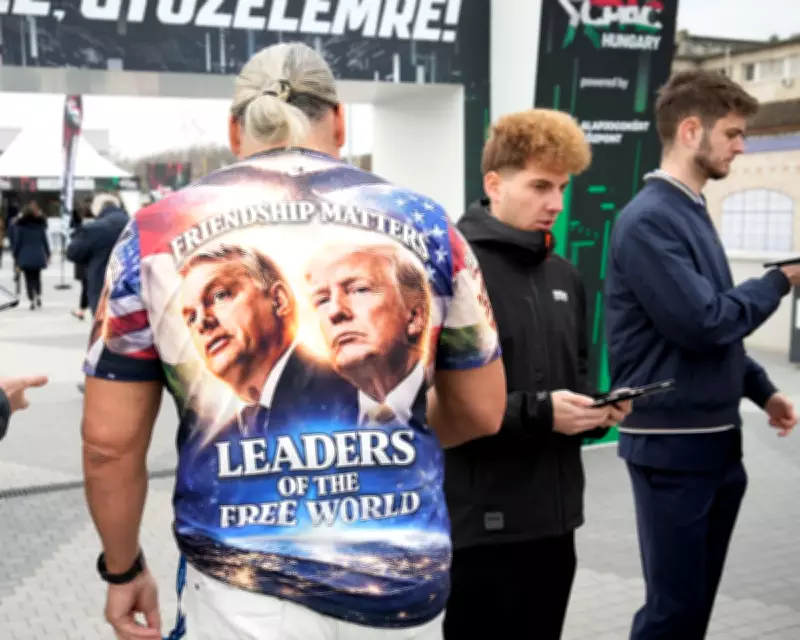
In a significant show of transatlantic support, former US President Donald Trump has publicly endorsed Hungarian Prime Minister Viktor Orbán, who is facing his most formidable electoral challenge in 16 years. The endorsement came via a video message broadcast at the national-conservative CPAC Hungary conference, held at the MTK sports arena in Budapest over the weekend.
Praise from Across the Atlantic
Trump, who previously backed Orbán on social media last month, described the Hungarian leader as a "fantastic guy" and commended his leadership. "He has shown the entire world what's possible when you defend your borders, your culture, your heritage, your sovereignty and your values," Trump stated. He concluded with a clear political wish: "I hope he wins, and I hope he wins big."
Orbán responded by asserting that the Western world has improved since Trump's return to power, citing a rollback of progressive policies and a revival of traditional family and Christian values. This exchange highlights the deepening ideological alliance between Trump's movement and Europe's nationalist right.
A Pivotal Election Looms
The political stakes are exceptionally high. Polling averages indicate that Orbán's main challenger, Péter Magyar and his Tisza party, could outperform the incumbent by 9 to 11 percentage points in the parliamentary election scheduled for April 12. This contest is poised to be one of Europe's most consequential elections this year, potentially ending Orbán's long-standing dominance.
Far-Right Convergence in Budapest
The CPAC event served as a prelude to a larger gathering. Several prominent European far-right figures were in attendance, including:
- Santiago Abascal of Spain's Vox party
- André Ventura of Portugal's Chega
- Martin Helme of Estonia's Ekre
- Mateusz Morawiecki of Poland's Law and Justice party
This assembly will expand on Monday with the addition of Marine Le Pen of France's National Rally, Matteo Salvini of Italy's League, and Geert Wilders of the Dutch Freedom Party for a "Patriots' Grand Assembly." This event is named after their coalition group in the European Parliament, underscoring their coordinated political strategy.
Geopolitical Tensions and Allegations
Orbán's tenure has been marked by persistent friction with the European Union. His government has maintained friendly relations with Moscow, refused to supply weapons to Ukraine, and opposed Kyiv's EU membership aspirations—positions that starkly contrast with mainstream EU policy.
Adding to the controversy, a recent Washington Post report alleged that Russia's foreign intelligence service proposed an assassination attempt against Orbán to boost his electoral prospects. The report also claimed that Hungarian Foreign Minister Péter Szijjártó briefed his Russian counterpart, Sergei Lavrov, during EU summits.
Polish Prime Minister Donald Tusk remarked that it was unsurprising Hungary would leak EU summit details to Moscow. Szijjártó dismissed these allegations as "mad conspiracy theories" and part of an international smear campaign aimed at influencing the upcoming election.
Broader Political Endorsements
Many of the far-right leaders attending Monday's event previously endorsed Orbán in a campaign video released in January. In that video, Alice Weidel of Germany's Alternative für Deutschland declared, "Europe needs Viktor Orbán." This collective backing illustrates Orbán's central role within the European far-right movement.
Initially, media reports suggested US Vice-President JD Vance would attend the Budapest gathering, but Szijjártó clarified that the visit is now scheduled for early April. This adjustment indicates the ongoing, high-level political engagements surrounding Hungary's electoral dynamics.