In a significant development that has captured Westminster's attention, former Prime Minister Gordon Brown's recent commentary appears to have anticipated Donald Trump's latest foreign policy manoeuvre. Writing in The Guardian earlier this week, Brown suggested that history would record how Trump "could have declared a quick victory in negotiations over Greenland" by accepting Denmark's offer of military bases and access to the territory's twenty-five critical minerals.
A Strategic Retreat
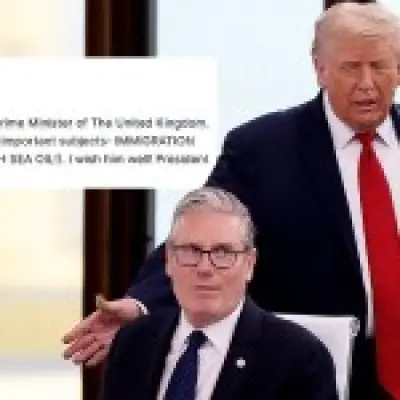
While Trump may not be a regular Guardian reader, events have unfolded in a manner that aligns remarkably with Brown's analysis. Overnight, the former US president dramatically scaled back his previous aggressive rhetoric regarding Greenland, abandoning talk of invasion or purchase in favour of heralding a more limited "deal" as a negotiating triumph.
This resolution concludes a four-day diplomatic crisis that had completely dominated political discourse in London, effectively wiping out Number Ten's carefully planned news grid. The government had intended to focus public attention on cost of living announcements throughout the week, but found its agenda comprehensively overshadowed by transatlantic developments.

Domestic Implications
Labour leader Keir Starmer will attempt to redirect attention toward domestic matters during a visit this morning, where he plans to promote the government's recently announced warm homes initiative. However, political observers note that he will inevitably face persistent questioning about the Greenland situation and its broader implications for UK foreign policy.
The events of recent days have made it increasingly difficult for Britain to maintain its traditional position regarding the United States as a steadfast and reliable ally. The Greenland episode represents merely the latest in a series of diplomatic challenges that have tested the special relationship between the two nations.
Cooper's Cautious Stance
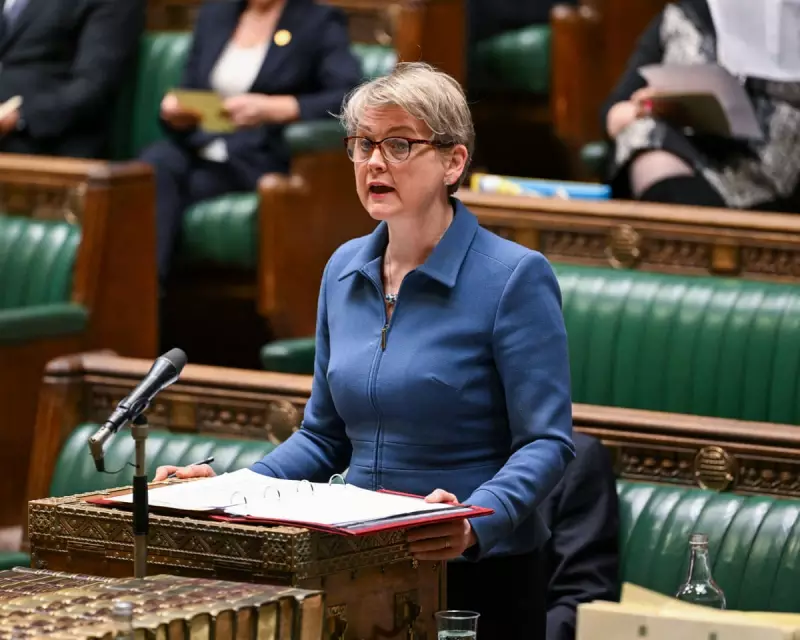
This morning, Foreign Secretary Yvette Cooper addressed another delicate aspect of UK-US relations during a series of media interviews. When questioned about Trump's proposed "board of peace" – a new body intended to oversee Gaza reconstruction that some view as a potential alternative to United Nations mechanisms – Cooper indicated that Britain would not be among the initial signatories.
"There's a huge amount of work to do," Cooper stated. "We won't be one of the signatories today, because this is about a legal treaty that raises much broader issues."
The Foreign Secretary elaborated on Britain's reservations, highlighting particular concerns about Russian involvement. "We do also have concerns about President Putin being part of something which is talking about peace, when we have still not seen any signs from Putin that there will be a commitment to peace in Ukraine," she explained. "And to be honest, that is also what we should be talking about."
Today's Political Agenda
As Westminster attempts to regain its equilibrium following the Greenland episode, a full schedule of political engagements awaits:
- 9.30am: Defence Secretary John Healey visits an aerospace facility in Edinburgh to announce details of the Typhoon upgrade programme
- Morning: Keir Starmer promotes the government's warm homes plan during a visit to Hertfordshire
- 11am: Welsh First Minister Eluned Morgan participates in a question and answer session at the Institute for Government
- 11.30am: Downing Street conducts its regular lobby briefing for political journalists
- Noon: Scotland's First Minister John Swinney faces questions from Members of the Scottish Parliament
- Lunchtime: Keir Starmer hosts Danish Prime Minister Mette Frederiksen at Chequers for bilateral discussions
The Greenland resolution may have concluded one diplomatic crisis, but it has opened broader questions about the future of UK-US relations and Britain's positioning in an increasingly complex international landscape. As political leaders navigate these challenges, the events of recent days serve as a reminder of how quickly international developments can reshape domestic political agendas and test longstanding alliances.