Political Fever Dreams Dominate Pre-Election Landscape
With a general election still years away, Westminster found itself gripped by political theatre on Tuesday as the Conservatives and Reform UK staged competing press conferences in central London. The events, featuring prominent figures Kemi Badenoch and Nigel Farage, unfolded within half a mile of each other, creating an atmosphere of intense rivalry despite public indifference.
Conservative Claims Meet With Skepticism
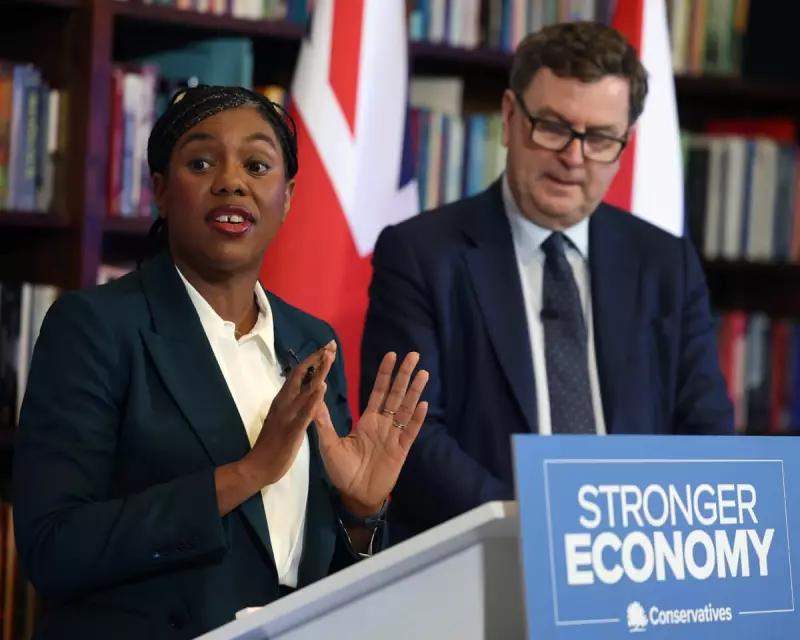
The Conservative presentation took place in a cramped annexe of the British Academy, where Business Secretary Kemi Badenoch appeared alongside Work and Pensions Secretary Mel Stride. The setting featured multiple Union Jack flags, underscoring what observers noted as a theme of competitive patriotism.
Badenoch launched a preemptive strike against Labour's upcoming budget narrative, dismissing claims about Brexit damage, energy prices and Trump tariffs as fiction. She presented the Conservative alternative: £47 billion in welfare savings achieved through maintaining the two-child benefit cap and implementing unspecified further cuts.
The credibility of these proposals faced immediate scrutiny, particularly when Mel Stride, who oversaw a 20% increase in benefits spending during his tenure as Work and Pensions Secretary, argued the welfare budget was now too high. The apparent contradiction highlighted what critics called a pattern of political amnesia.
Reform UK's Radical Alternative
Meanwhile, Nigel Farage and his colleague Zia Yusuf presented Reform UK's budget fantasies from another Westminster location. Their proposals included drastically reducing foreign aid, increasing NHS surcharges for foreigners, and stopping universal credit payments to EU nationals.
Farage positioned himself as a master negotiator who could prevent EU retaliation, despite the bloc's historical opposition to his policies. The proposals were described by observers as representing a form of political insanity, with critics questioning their feasibility and humanitarian implications.
A Political Irrelevance?
As both events concluded, the question remained whether these competing visions represented genuine policy alternatives or merely political posturing. The Conservative presentation descended into what one observer called increasingly wild claims, including assertions that Reform was actually a left-wing party and that previous austerity measures hadn't gone far enough.
The simultaneous events underscored the fragmented state of British politics, with multiple parties vying for attention despite being years from an election. With Labour leader Keir Starmer reportedly admonishing his own cabinet over budget briefings on the same day, the political landscape appeared increasingly chaotic and disconnected from public concerns.