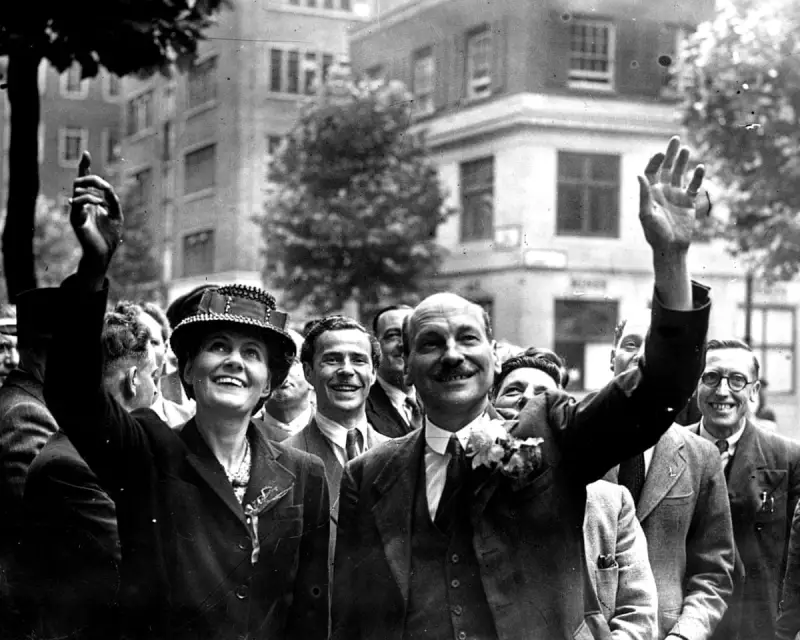
The enduring legacy of Clement Attlee's transformative post-war government continues to spark vital conversations about social equality and opportunity in modern Britain, as revealed in a series of poignant reader letters published by the Guardian.
The Luck of Historical Timing
Multiple correspondents emphasised the profound role that sheer luck and historical circumstance play in determining life outcomes. Julian Richer's original article about recognising that meritocracy is largely a myth resonated deeply with readers who have benefited from Britain's post-war settlement.
Mary Mullarkey, born in 1948, described her birth year as "a total privilege" following a 2009 Guardian article that identified it as the best year to have been born in Britain. She highlighted the unparalleled advantages available to that generation including free education, the newly established NHS, abundant employment opportunities, final-salary pensions, and accessible house prices.
The Attlee Legacy and Modern Parallels
Michael McLoughlin, born in 1940, provided powerful testimony about the radical changes implemented by the 1945-1951 Labour government led by Clement Attlee. "I have had the support of the health service virtually all my life," he wrote, noting he was enabled to become the first university graduate in his family while his family moved into "smart new social housing" when he was twelve.
Despite inheriting a war-bankrupt economy, McLoughlin argued that Attlee's government demonstrated extraordinary vision in creating foundational social institutions. He made an explicit connection to contemporary politics, stating: "Young people desperately need a Labour government with an equivalent vision today."
Philosophical Dimensions of Luck and Merit
The discussion deepened into philosophical territory with Mark de Brunner's contribution questioning the very nature of personal attributes we typically consider within our control. Drawing on American neuroscientist Robert Sapolsky's work, de Brunner suggested that characteristics like hard work, determination and talent are themselves products of preceding causes rather than purely individual achievements.
Other readers offered more balanced perspectives. John Marriott invoked Shakespeare's Twelfth Night through Malvolio's famous line: "Some are born great, some achieve greatness and some have greatness thrust upon them." He advocated acknowledging luck's importance while still valuing determination.
Alan Walker described unsubscribing from the "No one ever gave me anything" narrative as "a huge leap forward in one's personal development," suggesting this recognition fosters greater empathy and compassion in society.
Derek Heptinstall offered a cautionary note, warning that critiques of unequal society shouldn't lead to abandoning meritocracy entirely. Instead, he proposed focusing on how to ensure political representatives are selected for merit rather than party popularity.
These collective reflections paint a compelling picture of intergenerational differences in opportunity while raising urgent questions about how contemporary Britain might recreate the visionary policies that transformed post-war society.