
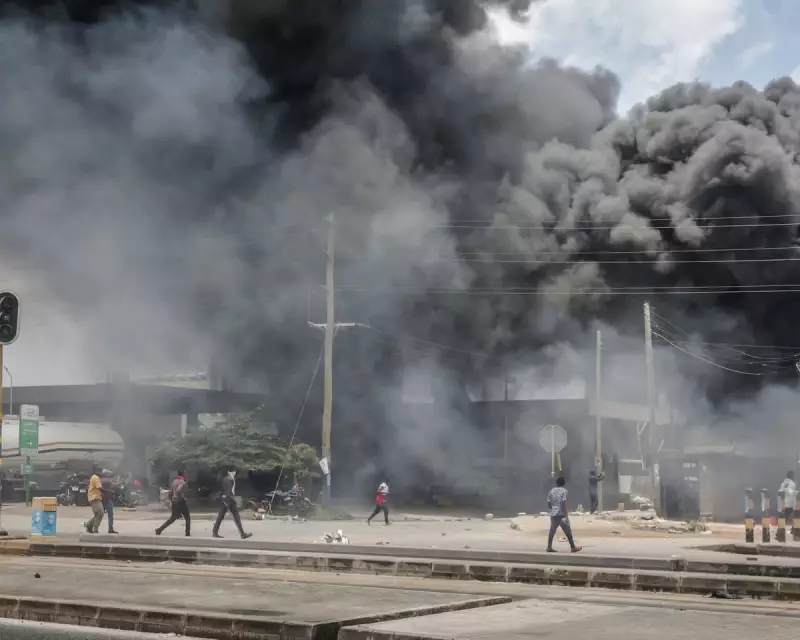
The descent of Tanzania into political repression and electoral violence represents a stark warning about how rapidly democratic progress can unravel across Africa, according to governance experts and human rights observers.
From Beacon of Hope to Democratic Decline
When Samia Suluhu Hassan assumed Tanzania's presidency in 2021 following the sudden death of her predecessor John Magufuli, she initially offered hope for democratic renewal. Her early actions included allowing media organisations previously banned by Magufuli to reopen, meeting with opposition leaders, and promising national reconciliation.
However, that promise has dramatically crumbled during her re-election campaign this year, with Tanzania sliding into what analysts describe as outright authoritarianism.
Election Violence and Systematic Repression
The October presidential election marked what human rights groups describe as the nadir of Tanzania's democratic decline. Major opposition leaders, including Tundu Lissu of the Chadema party, faced arrest or were barred from contesting the election. Other prominent figures such as Luhaga Mpina of the Alliance for Change and Transparency (ACT Wazalendo) were disqualified on technical grounds.
On polling day, the government implemented widespread internet blackouts, deployed military forces extensively, and restricted independent election observers. The National Electoral Commission subsequently declared Hassan the winner with 97.6% of the vote, figures widely criticised as implausible and reminiscent of autocratic regimes rather than democratic processes.
Observers from the Southern African Development Community (SADC) and numerous civil society groups condemned the election as neither free nor fair, prompting growing calls for independent investigations into human rights abuses and killings.
Bloodshed and Disappearances
In the days following the contested election, protests erupted across major Tanzanian cities including Dar es Salaam, Mwanza and Arusha. Eyewitness accounts described scenes of horror with soldiers firing on crowds, homes raided during night operations, and morgues overwhelmed with casualties.
Death estimates have varied dramatically, with the United Nations reporting "hundreds" of fatalities while an umbrella group of African human rights organisations suggested that as many as 3,000 people may have been killed. Their calculations, based on observations at several hospitals and morgues overwhelmed with bodies, indicate a scale of violence far beyond official government figures.
Several prominent activists and political figures have disappeared under suspicious circumstances:
- Mdude Nyagali, an outspoken opposition organiser abducted from his home in May 2025 after repeated threats
- Edgar Edson Mwakabela, known as "Sativa", a digital activist who survived a gunshot to the head after being kidnapped in June 2024
- Ali Mohammed Kibao, a former intelligence officer for the opposition, found murdered with acid poured on his face in early 2025
- John Heche, Chadema's deputy leader, reportedly detained incommunicado since last month
Opposition sources and humanitarian groups have accused state forces of digging mass graves outside Dar es Salaam and Arusha to conceal the scale of the killings. The government has consistently denied any wrongdoing, with Tanzania's foreign minister Mahmoud Thabit Kombo insisting in a BBC interview that there were no confirmed reports of deaths - a statement contradicted by substantial photographic and video evidence circulating on encrypted networks and social media.
Regional Implications and Continental Concerns
Tanzania's democratic collapse represents more than just a national tragedy - it serves as a regional warning about the fragility of democratic institutions across Africa. The country, once celebrated as a pillar of stability and a host for liberation movements during Africa's anti-colonial struggles, now mirrors the very autocracies it once opposed.
This degeneration occurs against a backdrop of concerning continental trends. The Mo Ibrahim Foundation's 2024 African Governance Report reveals that governance scores have declined for the first time in a decade across Africa. Nearly 30 African countries have experienced either coups, armed insurgencies or democratic backsliding since 2020.
The report notes that "the democratic dividend is at risk", citing the systematic silencing of opposition parties, manipulation of electoral commissions, and the use of security forces to consolidate power.
In neighbouring Uganda, another East African nation once celebrated for its liberation struggle, President Yoweri Museveni - now 81 and in power since 1986 - has announced he will contest yet another election. Should he win again, it would extend his rule beyond four decades, perpetuating constitutional manipulation and generational disillusionment.
Meanwhile, Africa's deadliest conflicts in Sudan and the Democratic Republic of Congo continue to cause immense human suffering, destroying precisely the institutional foundations the continent needs for its projected economic growth.
Economic Promise Versus Governance Reality
The democratic crisis in Tanzania and similar governance failures across the continent threaten not only human rights but the very economic gains that international financial institutions celebrate. The African Development Bank (AfDB) projects that Africa's combined GDP could reach $4 trillion by 2030, driven by green-energy investments, urbanisation and digital innovation.
As Mo Ibrahim, the prominent Sudanese-British billionaire and governance advocate, warned: "Good governance is the foundation upon which Africa's progress must rest. Without it, development will crumble under the weight of corruption and repression."
If the vision outlined by the African Development Bank and other optimistic forecasts is to be realised, governance experts argue that the international community must act decisively to prevent the erosion of democratic institutions that threatens to derail Africa's rise.
The UN Human Rights Council faces calls to urgently launch an independent investigation into the killings, detentions and disappearances during Tanzania's 2025 election. Regional bodies including the African Union and SADC are being pressed to demand accountability and remind member states of their democratic commitments under the African Charter.
For Africa's much-anticipated century to truly belong to Africans, analysts contend that leaders must understand that prosperity without liberty remains hollow. The same youthful generation that powers Africa's demographic boom deserves the right to speak, to organise and to vote without fear. If the continent is to harness its mineral and technological promise, it must first safeguard the dignity and lives of its people.
The world cannot celebrate Africa's economic rise while ignoring the blood staining the streets of Dar es Salaam and other cities. Tanzania's tragedy reflects not an isolated event but the broader struggle for democracy across the continent. Until the cries of the silenced are heard, the dream of an African future will remain tragically unfinished.




