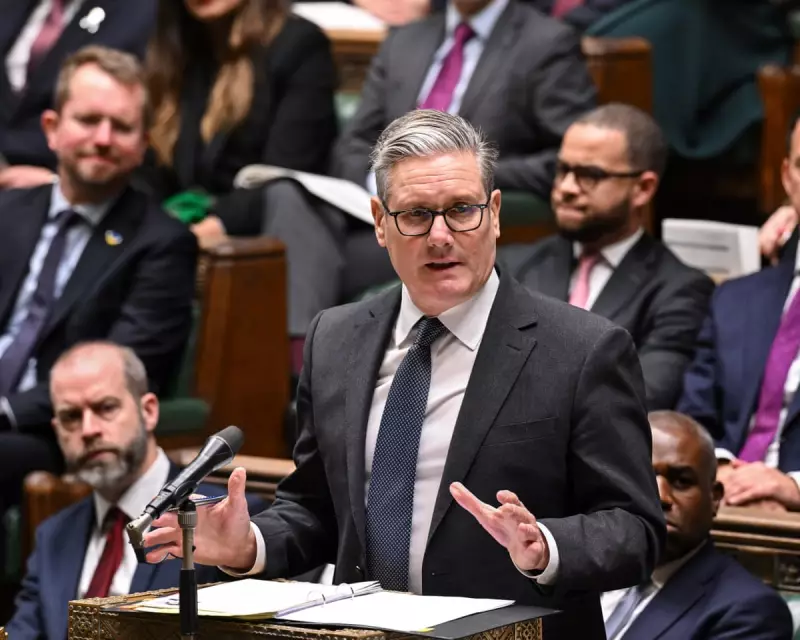
The House of Commons witnessed a session of prime minister's questions that felt more like watching ghosts of political futures past, with both Keir Starmer and Kemi Badenoch appearing as dead leaders walking through a drama-free exchange that left backbenchers in a state of sullen resignation.
A Chamber Devoid of Energy
Normally raucous backbenchers from both sides of the aisle had the fight beaten out of them, moving beyond the traditional five stages of grief into a previously unknown sixth stage: sullen resignation. MPs appeared to be present merely because the whips had bullied them into attendance, managing only collective guttural groans as a primitive Pavlovian response to the proceedings.
The atmosphere suggested both major parties are preparing for significant changes within the next year, with many Labour MPs reportedly in despair over budget chaos and Number 10's curious briefings against itself. The government's apparent inability to handle basic functions has left even cabinet ministers looking barely capable of dressing themselves.
Tax Thresholds Take Centre Stage
Kemi Badenoch used the session as a dry run for the upcoming budget, though she struggled to get basic facts right, including the budget date itself. Her opening salvo questioned why Starmer's government became the first to float tax rises only to cancel them after the budget - a line that prompted laughter of relief from the Labour leader who had been dreading a more effective attack.
For her subsequent five questions, Badenoch focused relentlessly on stealth taxes and frozen income tax thresholds, creating what observers described as her own "space-time continuum" where different realities could coexist. She appeared to argue that when the Conservatives froze thresholds for seven years in 2021 - raising £40 billion despite a manifesto pledge not to do so - it represented fiscal prudence, while Labour considering similar measures constituted the ultimate betrayal.
Starmer responded with what amounted to a series of non-denials regarding threshold freezes, appearing no more convincing than his opponent as the exchanges descended into personal slanging matches about relative incompetence.
Golden Rules and Dog-Whistle Politics
Badenoch's reference to her "golden rule" prompted sniggers from the few MPs still awake, with the sketch suggesting she and her shadow chancellor might be the only people in the world who take it seriously. The concept appeared to cause information overload among listeners, who seemed to treat it as a "drug-induced psychosis" that would never actually happen.
The session concluded with Reform's Lee Anderson accusing Labour of dog-whistle politics through its new immigration policies - an ironic criticism given his own party's specialization in such tactics. Anderson seemed particularly aggrieved that Starmer might be treading on Reform's political territory, boasting about the success of Reform-led councils despite most being in chaos and planning maximum council tax increases.
Starmer responded by referencing Nigel Farage's social media timelines and wondering whether he would apologise for alleged racist remarks made during his school days. The exchange highlighted the peculiar quantum reality of Westminster politics, where politicians can choose between realities where things either happened or didn't happen based on temporal distance.
The overall picture emerging from PMQs was one of exhausted politicians going through the motions, with both major parties appearing to be led by figures whose positions seem increasingly precarious as the country moves toward potentially transformative elections.