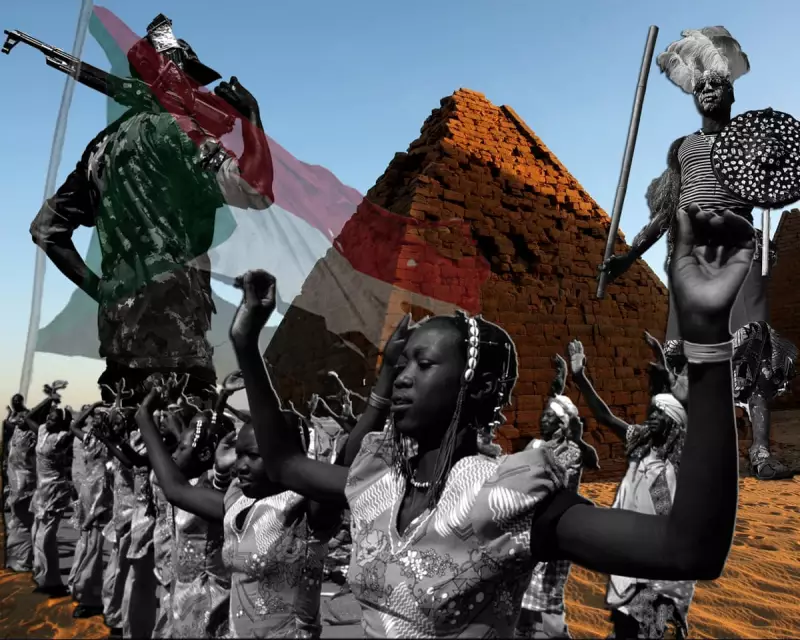
The Unfolding Catastrophe in Sudan
Across Sudan, a brutal power struggle has transformed what was once a peaceful existence into a devastating conflict that continues to baffle observers and devastate citizens. The war, now entering its third year, has created one of the world's most severe humanitarian crises while receiving disproportionately little international attention.
Roots of the Conflict: Two Histories Collide
The current violence has deep historical roots stretching back decades. Sudan has long been governed by a small elite that concentrated political and economic power while marginalising regions like Darfur. This area has suffered from resource competition and ethnic conflicts between Arab and African groups for generations.
In the early 2000s, the central government supported Arab militias known as the Janjaweed in perpetrating genocide against Darfur's non-Arab population. This legacy of violence led to the formalisation of armed groups into the Rapid Support Forces (RSF), which now battles the official Sudanese Armed Forces (SAF) for control of the country.
The Sabotaged Revolution
The more immediate catalyst emerged from Sudan's 2019 popular revolution, which successfully ousted President Omar al-Bashir after his nearly 30-year rule. The uprising had two clear objectives: removing the dictator and ending military dominance in politics, given that Bashir himself came to power through a military coup in 1989.
Following the revolution, a transitional power-sharing agreement between the RSF, SAF, and civilian representatives was established to pave the way for civilian governance. This arrangement proved short-lived as both military factions turned against the civilians and then each other, revealing that Sudan could not accommodate two powerful armed entities.
Understanding What This War Really Is
This conflict is frequently mischaracterised as a civil war, yet civilians have not taken up arms against each other. Instead, ordinary citizens pay the price through loss of life, displacement, and destruction of livelihoods in a power struggle between two militarised factions.
The war is also described as forgotten, but this terminology obscures the reality that the conflict receives inadequate international concern despite its duration and intensity. The United Nations' humanitarian response plan remains severely underfunded, and reduced humanitarian aid has hit Sudan particularly hard.
While some frame the conflict as a proxy war with equal external backing for all sides, the primary international influence comes from the United Arab Emirates, which has channeled funds and weapons to the RSF while publicly denying involvement. For the UAE, securing influence in strategically positioned, resource-rich Sudan represents a significant expansion of its political and economic reach.
At its core, this is an existential battle between the old guard represented by the Sudanese army and its associated interests, and an emboldened new militia that accumulated substantial influence outside official state structures and now seeks to claim power.
The Human Cost: A Nation in Agony
The statistics barely capture the individual tragedies unfolding across Sudan. Millions have been displaced, with hundreds of thousands estimated killed amid widespread sexual violence and a deepening hunger crisis.
The RSF has systematically targeted the African population in Darfur, reopening wounds from the earlier genocide. The recent fall of El Fasher, the last major SAF stronghold in Darfur, to RSF forces after a year-and-a-half-long brutal siege has consolidated the militia's control over western Sudan.
Personal stories abound of loss and destruction, including homes being looted and gutted by combatants. Elderly citizens find themselves spending their final days in painful, impoverished exile, while reports of summary executions continue to emerge from conflict zones.
An Uncertain Future
With the RSF controlling the west and the SAF maintaining authority over other regions, Sudan has become essentially divided into two territories. Neither faction appears capable of decisively overwhelming the other, and Western powers show little appetite for meaningful intervention that would pressure external sponsors like the UAE or apply leverage to the warring parties.
The psychological impact of the conflict includes difficulty envisioning any future different from the violent present. While many hope for reconciliation and restoration, the realistic prospects appear dim. The continuing violence demands that Sudan's war transition from being merely a lamentable headline to becoming a matter of intolerable urgency for the international community.