Starmer's Balancing Act: From Burnham Row to Beijing Diplomacy
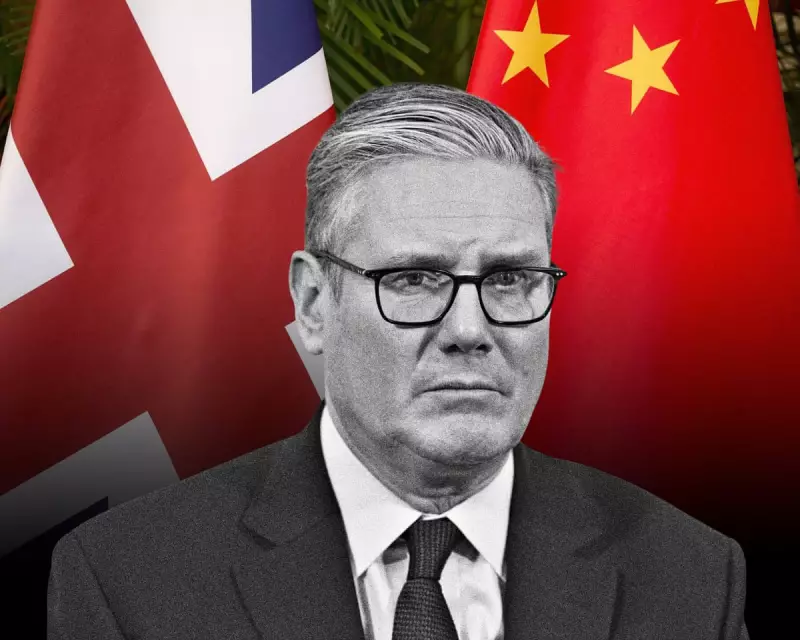
Prime Minister Keir Starmer finds himself navigating turbulent waters both at home and abroad, with his current visit to China providing temporary respite from domestic Labour party disputes. The controversy surrounding Andy Burnham's blocked candidacy in the Gorton and Denton byelection has created internal friction, yet Starmer appears more focused on the diplomatic significance of becoming the first UK prime minister to visit China since 2018.
The Domestic Backdrop: Labour's Internal Tensions
While Starmer views the China trip as a major diplomatic milestone, he cannot afford to ignore the brewing discontent within his own party. The decision by Labour's national executive committee to prevent Burnham from standing has sparked petitions from MPs demanding a reversal, creating precisely the kind of internal political drama that Starmer has consistently sought to avoid.
Starmer's journey to the party leadership was marked by a deliberate distancing from traditional Labour political culture. Unlike many of his predecessors, he arrived at the top with limited experience of the party's internal dynamics and procedural complexities. Much of the political manoeuvring that secured his position was delegated to chief of staff Morgan McSweeney, allowing Starmer to maintain a focus on broader strategic goals.

The Foreign Policy Doctrine: Pragmatism as Principle
Since entering Number 10, Starmer has discovered a particular affinity for international diplomacy, where his pragmatic approach finds natural expression. Whether resetting relations with the European Union, managing the UK's relationship with Donald Trump's America, or now engaging with China, Starmer consistently prioritises practical engagement over ideological positioning.
This foreign policy philosophy was articulated in a speech last December, where Starmer outlined his vision of Britain navigating between major power blocs without having to make difficult choices. "I am often invited to simply choose between countries," he remarked ahead of his Beijing trip. "I don't do that." His approach seeks to maximise British interests through engagement on all fronts, rejecting the notion that security and economic priorities must sometimes conflict.
The Limits of Engagement
However, this strategy of perpetual balance faces significant challenges. Relations with the European Union have progressed slowly, with negotiations limited to marginal adjustments rather than fundamental rethinking of the Brexit settlement. Meanwhile, the unpredictable nature of Trump's presidency serves as a constant reminder that pragmatic engagement offers no guarantees against sudden policy reversals.
Similarly, cooperation with China remains vulnerable to disruption by espionage scandals or geopolitical tensions. Starmer's diplomatic formulations aim to express concern about human rights issues, support for Vladimir Putin, and other contentious matters without appearing confrontational, but this delicate balancing act has inherent limitations.
A Consistent Pattern of Avoidance
Starmer's approach to foreign policy mirrors his handling of domestic challenges. During his leadership campaign, he promised to bridge Labour's factional divides rather than choosing between left and right. Only when convinced that Corbynism threatened electoral prospects did he authorise its removal from the party - a decision framed as practical necessity rather than principled stand.
The 2024 election campaign followed a similar pattern, with Starmer promising national renewal without painful choices, only to implement austerity measures later while struggling to articulate a compelling justification. This consistent avoidance of difficult decisions and clear ideological positioning defines what might be called the Starmer doctrine.
The Coming Challenges
As global power dynamics become increasingly polarised, Starmer's strategy of pragmatic engagement in all directions may prove unsustainable. The current era of geopolitical rivalry demands clearer strategic choices than his approach allows. While pragmatism has its place in any political toolkit, elevating it to the status of overriding principle risks leaving Britain unprepared for the hard choices that inevitably arise in international relations.

Starmer's political identity remains that of a problem-solver who dislikes naming problems, a leader whose first instinct is to avoid choosing. As both domestic and international pressures mount, this approach will face its sternest test yet, revealing whether perpetual pragmatism can serve as an adequate substitute for clear strategic vision in an increasingly divided world.