
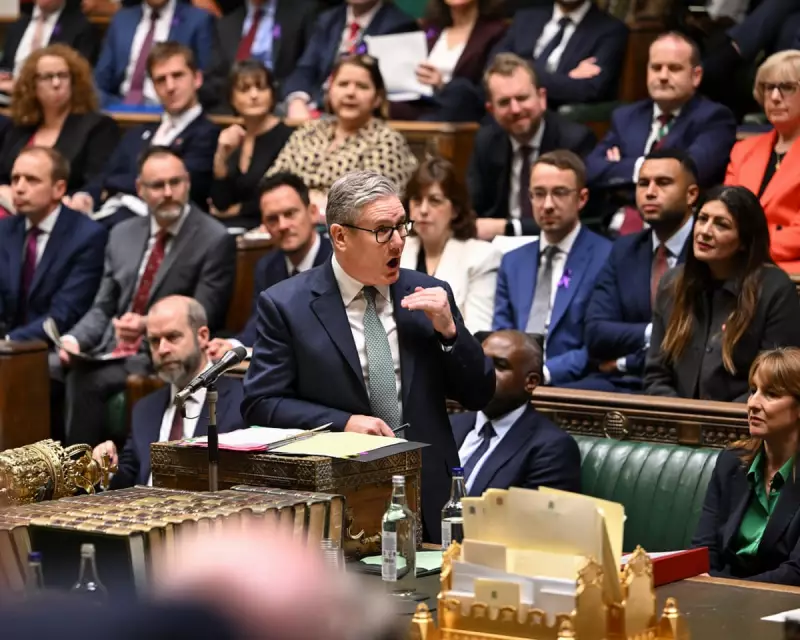
Keir Starmer is fighting for his political survival as prime minister, with his leadership facing unprecedented challenges from within his own party. The Labour leader's dramatic fall from grace has created one of the most volatile political situations in recent British history.
The Unfolding Crisis
Downing Street attempted to control the narrative this week by briefing that Starmer expects to face and defeat a leadership challenge. However, this strategy appears to have backfired spectacularly. Instead of quelling dissent, the move has amplified discussions about Starmer's future and revealed deep divisions within the Labour government.
The prime minister's unpopularity has reached critical levels, with approval ratings that make grim reading for his team. Public opinion has turned decisively against Starmer, creating a political environment where even his most loyal supporters are questioning his ability to lead the party into the next general election.
Internal Party Turmoil
Conversations with Labour MPs and government officials reveal profound anxiety about the party's direction. Many parliamentarians want change at the top but hesitate when considering the practicalities of removing a sitting prime minister. The situation is described as serious, chaotic and incoherent by one government member, while a veteran MP notes there's lots of discontent, but no plan.
The briefing strategy particularly targeted Health Secretary Wes Streeting, who was scheduled for media appearances on Tuesday. Rather than bringing him into line, this gave Streeting a national platform to demonstrate his loyalty while simultaneously highlighting the toxic atmosphere in Number 10. Streeting emerged from the confrontation looking like a more adept media performer than the prime minister himself.
Historical Precedents and Future Scenarios
Labour has traditionally shown remarkable loyalty to its leaders, especially when in government. Unlike the Conservatives, who have ousted three prime ministers in recent years - Theresa May, Boris Johnson and Liz Truss - Labour has rarely forced out a leader against their will in modern times.
The current crisis is particularly striking because it comes so soon after Labour's emphatic election victory. Past Labour prime ministers like Gordon Brown and Harold Wilson faced leadership challenges, but none emerged this quickly after taking power.
Several potential triggers for a leadership contest loom on the horizon. The upcoming budget in two weeks could force a challenge if it proves unpopular with Labour MPs. More likely, however, are the Scottish, Welsh and English local elections next May, where a landslide defeat might prove the final straw for Starmer's leadership.
The mechanics of removing Starmer remain complex. One scenario would require 20% of Labour MPs - approximately 81 of the current 405 - to trigger a leadership contest. This would then open the decision to Labour affiliates and members, creating an unprecedented situation for a governing Labour party.
Like John Major in 1995, Starmer could attempt to resolve the situation by resigning and standing again. However, this strategy did little to strengthen Major's authority and would likely prove equally ineffective for Starmer.
The stakes extend far beyond one man's political career. Recent polling suggests Labour could collapse to under 100 seats in the next election, which would represent the party's worst-ever performance. Some analysts suggest this crisis indicates that both major British political parties may be undergoing irreversible disintegration.
For now, Starmer remains prime minister, but his authority appears severely diminished. The coming weeks will determine whether he can regain control of his party or become another casualty of Britain's increasingly volatile political landscape.




